観音か仏陀か?中国美術における観音の見分け方
観音は菩薩であり、歴史的な仏陀ではありません。最も確実な識別は、衣装、宝冠、髪型、持物、姿勢、銘文、博物館の文脈といった複数の手がかりを合わせて読むことから得られます。
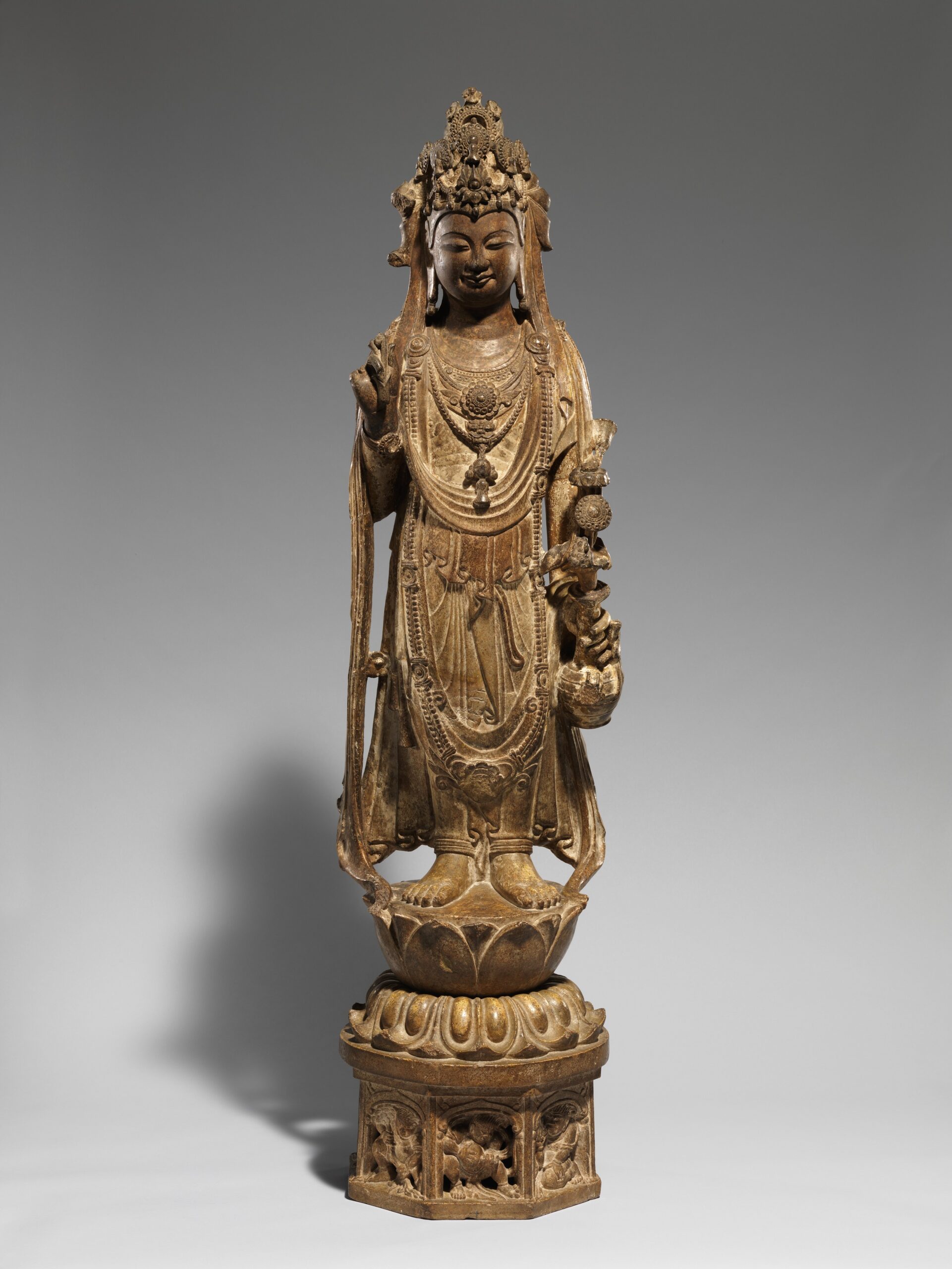
中国美術で観音と仏陀を見分けるには、まず分類から始め、次に目に見える手がかりを確認します。 仏陀の像はしばしば僧衣をまとい、頭部の肉髻や髪形、眉間の白毫などの特徴を示すことがあります。観音はアヴァローキテーシュヴァラ、慈悲と結びついた菩薩であり、宝冠、装身具、蓮、花瓶、あるいは頭飾りの中に小さな阿弥陀仏を伴って現れることがあります。
これらの特徴のいずれも万能の近道にはなりません。中国の観音像は世紀や地域によって変化しました。初期の作例には豪華な衣装の王子のような姿もあり、後代の白衣観音像には意図的に簡素なものもあります。したがって、ラベル、銘文、記録された寺院や博物館の文脈は、顔の外見よりも決定的な手がかりとなり得ます。
第一の区別:観音は菩薩です
観音 は中国語名で 観音を指します。博物館の記録では、この像を観世音、観音、観世音とも結びつけています。仏教の分類では、観音は慈悲と結びついた菩薩であり、歴史上の仏陀である釈迦牟尼ではありません。
その語 仏 は一人の人物よりも広い意味を持ちます。釈迦牟尼、阿弥陀、毘盧遮那、仏陀の姿をとった弥勒、その他の覚者を指すことがあります。したがって実際的な問いは、単に「これは仏陀のように見えるか」ではなく、「特徴、衣服、文脈からどの像が支持されるか」です。“
観音と仏陀の早見表
簡素な衣は両肩を覆うことも、片肩を裸にすることもあります。装身具は通常見られません。
宝冠、首飾り、臂釧、流れる天衣、精巧な髪形は、王子のような菩薩の姿を示唆することがあります。
仏陀の像はしばしば頭部の隆起や様式化された髪形、眉間の印を示します。
頭飾りの中の小さな坐像の阿弥陀は、アヴァローキテーシュヴァラを示す最も強い反復的な手がかりの一つです。
これらは傾向であり、採点システムではありません。長い耳垂、蓮華座、光背、穏やかな顔、印相は仏教美術全般に見られ、それだけでは観音を特定できません。
手がかり1:衣装と装身具
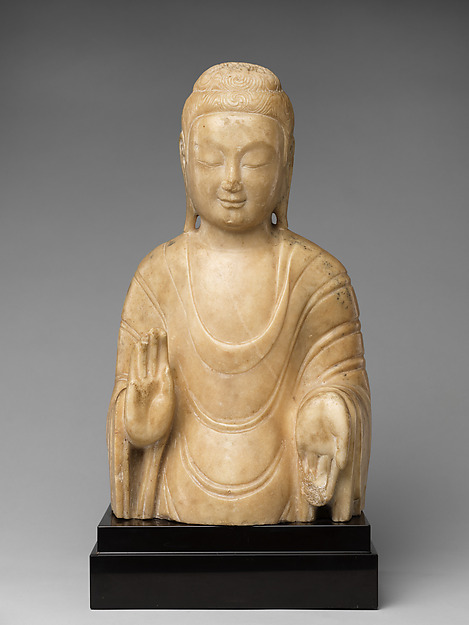
メトロポリタン美術館の図像ガイドによると、仏陀は通常僧衣を着ているとされます。多くの彫刻では、衣は視覚的に簡素で、胸部は王子の装身具で覆われていません。これは芸術的細部の欠如ではなく、仏陀の宮廷生活の放棄を表しています。
菩薩はしばしば王子のような姿で表されます。観音の彫刻には、高い宝冠、首飾り、耳飾り、臂釧、帯やスカーフがある場合があります。中国の初期のアヴァローキテーシュヴァラ像は、この豊かに装飾されたモデルを保つことがあります。人物が精巧な装身具と宝冠を身に着けている場合、「仏陀」よりも「菩薩」の方が最初の仮説として適切なことが多いです。“
しかし衣装は証拠にはなりません。白衣観音は中国で重要な姿となり、王室の装飾一式を伴わない場合があります。逆に、特定の密教の伝統では、一部の仏像が宝冠を戴くこともあります。衣装は可能性を絞り込むべきであり、調査を終わらせるものではありません。
手がかり2:宝冠と小さな阿弥陀
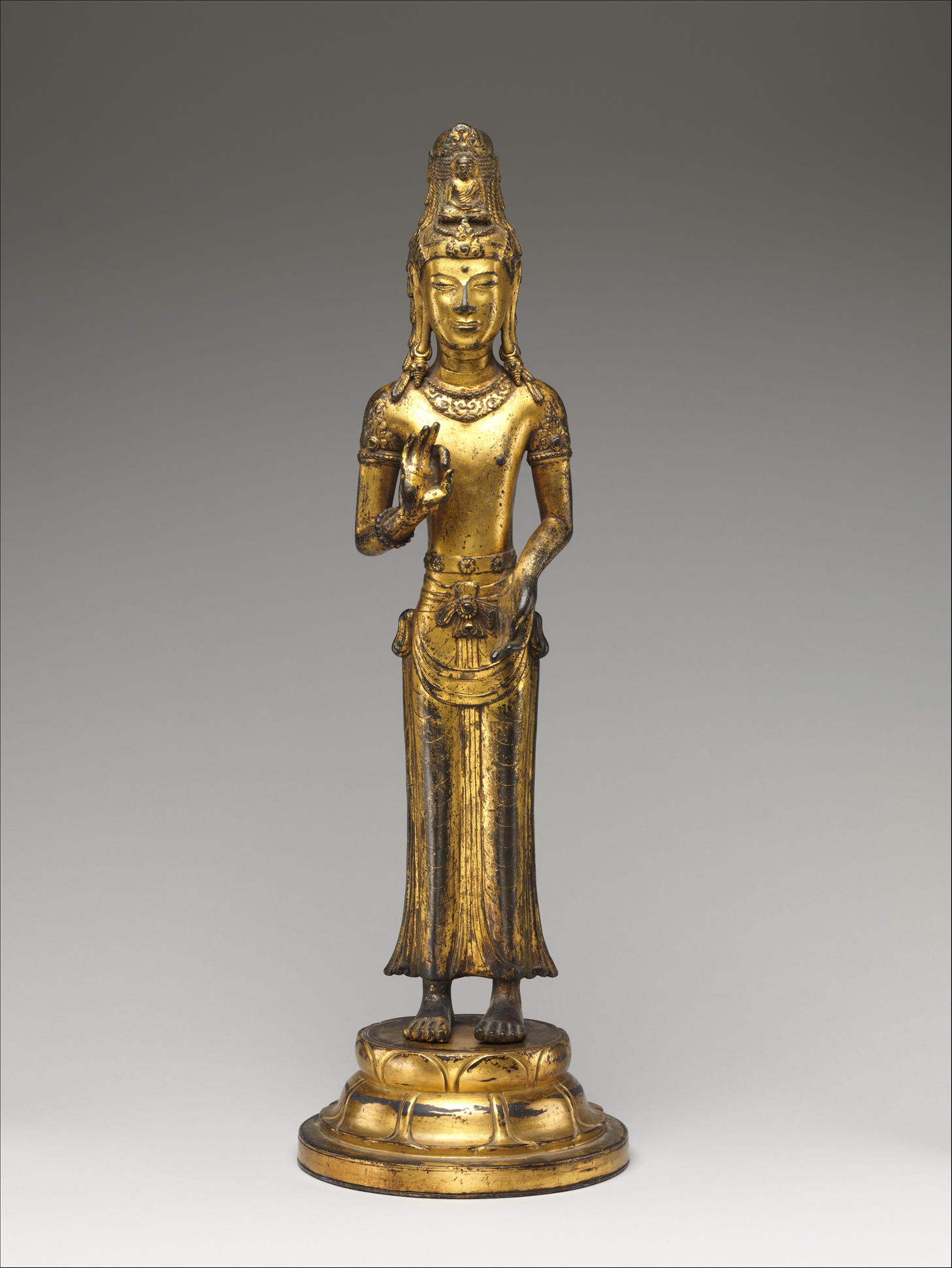
宝冠の中の小さな仏像は、アヴァローキテーシュヴァラを特定する最も有用な指標の一つです。その像は通常、次のように理解されています 阿弥陀であり、アヴァローキテーシュヴァラはこれと密接に関連しています。国立アジア美術館は、龍門石窟の中国の観音頭部を紹介しており、その宝冠には植物の形と宝珠に囲まれた坐像の阿弥陀が含まれています。
この手がかりを使う前に注意深く見てください。中央の装飾、損傷した浮彫り、または漠然とした彫刻の形が自動的に阿弥陀であるわけではありません。像は目に見えて座っており、判読可能であるべきか、信頼できるカタログ、銘文、または文書化された資料によって特定が裏付けられるべきです。
手がかり3:蓮、花瓶、柳、その他の持物
蓮はアヴァローキテーシュヴァラのよく知られた持物であり、初期の姿は時々パドマパーニ、「蓮を持つ者」と呼ばれます。後代の中国の観音像は花瓶を持つこともあり、時には柳の枝と組み合わされます。多臂の姿は追加の儀式用の物体を持ったり、掌に目を示すことがあります。
各手がかりには文脈が必要です。蓮は多くの仏教の人物と共に現れます。花瓶は弥勒や他の神々と共に現れることがあります。柳と花瓶の組み合わせは、後代の中国の観音図像ではより示唆的ですが、すべての姿に現れるわけではありません。互いに一致する持物を数え、どの予想される細部が欠けているか不明瞭かに注意してください。
手がかり4:姿勢と設定
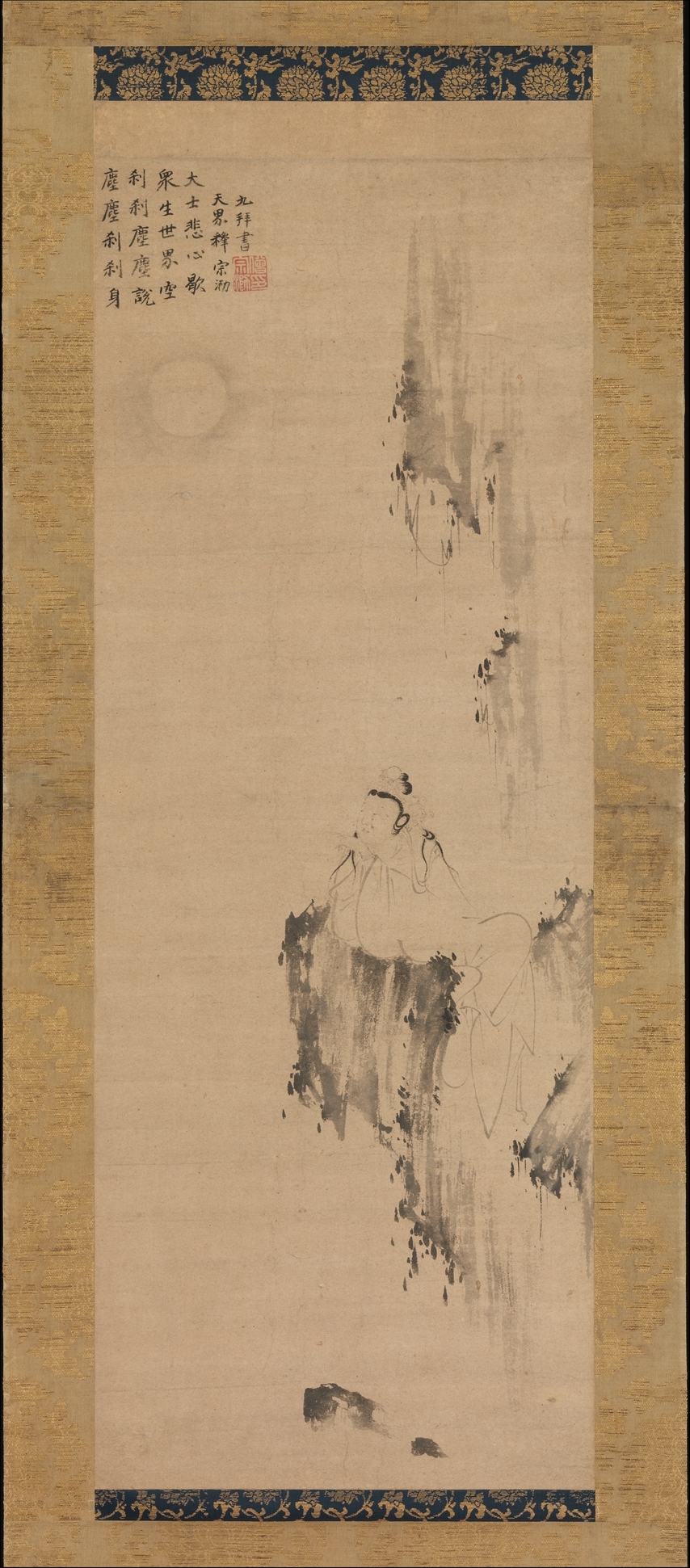
水月観音はしばしばリラックスした姿勢で表され、時々「安楽座」と呼ばれます:片膝を上げ、腕を自然に休め、体は水や竹の近くの岩の上に座っています。白衣観音は、中国の伝統で普陀山と関連付けられる岩の島に現れることがあります。
A cross-legged lotus pose does not settle the question. Buddhas, bodhisattvas and other Buddhist figures can all sit on lotus thrones. Likewise, a halo, downcast eyes or a serene expression indicates a sacred image but does not name the individual figure.
Three mistakes that cause misidentification
Guanyin has masculine, feminine and androgynous historical forms. A soft or feminine face is not enough.
Calm expression, lotus seats and halos are shared across Buddhist art.
A lotus or vase supports an identification only when other attributes and context agree.
Museum catalogues, dedicatory inscriptions and documented provenance can outweigh visual guesswork.
The popular English phrase “goddess of mercy” can also confuse the classification. It reflects the strongly feminine Guanyin forms familiar in later Chinese culture, but “bodhisattva of compassion” is the more precise starting point for Buddhist art.
A five-step recognition method
- Start with the supplied name and context.
Record the museum title, inscription, temple setting or seller’s subject label, but do not treat an unsupported retail title as final proof.
- Classify the clothing.
Ask whether the figure wears a monastic robe, princely jewelry, a high crown, white robes or a regionally specific costume.
- Inspect the head and headdress.
Look for an ushnisha and urna on a Buddha image, or a readable Amitabha figure, crown and elaborate hair on Guanyin.
- List the visible attributes.
Note the lotus, vase, willow, hands, arms, posture and setting. Mark damaged or ambiguous details as uncertain.
- Test the whole combination.
Compare the clues with a museum record from the same tradition or period. If they conflict, keep the identification qualified.
How to read a modern Guanyin statue
A modern product photograph can show a crown, face, hands, lotus, vase, robe, base and visible finish. Multiple real views are useful because projecting details or a small crown image may disappear in a single front photograph.
Images cannot establish the exact wood species, metal alloy, age, maker, production method, temple use, consecration or spiritual status. Cultural research can explain an iconographic tradition, but it cannot fill missing facts in an individual product record.
Identification describes the represented figure and visible attributes. A Guanyin image may have devotional or personal significance, but an object does not guarantee protection, healing, fertility, luck, prosperity or spiritual results.
よくある質問
観音は仏ですか?
Guanyin is Avalokiteshvara, a bodhisattva associated with compassion. The small Buddha sometimes shown in Guanyin’s crown is usually Amitabha; it does not mean the larger figure is Amitabha.
Can a Buddha wear a crown?
Yes. Crowned Buddha images appear in particular traditions, so a crown alone cannot prove that a figure is Guanyin. The crown’s central image, the clothing, attributes and documented context still matter.
Does every Guanyin statue carry a vase?
No. The vase and willow are familiar in later Chinese forms, but Guanyin also appears with a lotus, in royal-ease poses, in white robes, with multiple arms or without a clearly visible handheld attribute.
Is a female-looking figure always Guanyin?
No. Feminine Guanyin forms became especially prominent in China, but gender presentation alone cannot identify a Buddhist image. Other bodhisattvas and deities can also appear feminine.
What is the strongest visual clue for Guanyin?
A clearly readable Amitabha Buddha in the crown is one of the strongest recurring clues. Even then, a museum label, inscription or documented context provides the safest identification.
出典と参考文献
- The Metropolitan Museum of Art: Recognizing the Gods
- メトロポリタン美術館:菩薩 アヴァローキテーシュヴァラ(観音)、6世紀後半~7世紀前半
- The Metropolitan Museum of Art: Buddha Shakyamuni, Sui dynasty
- メトロポリタン美術館:菩薩 アヴァローキテーシュヴァラ(観音)、大理国
- メトロポリタン美術館:白衣観音、14世紀後半
- British Museum: Avalokiteshvara / Guanyin / Kannon
- National Museum of Asian Art: Bodhisattva Avalokiteshvara (Guanyin), Head
- Carvzen: Guanyin Meaning: Avalokiteshvara, Symbols and Statue Forms
This article uses four public-domain museum images and one approved Carvzen product image. It contains no AI-generated editorial illustrations.
現在のオブジェクト
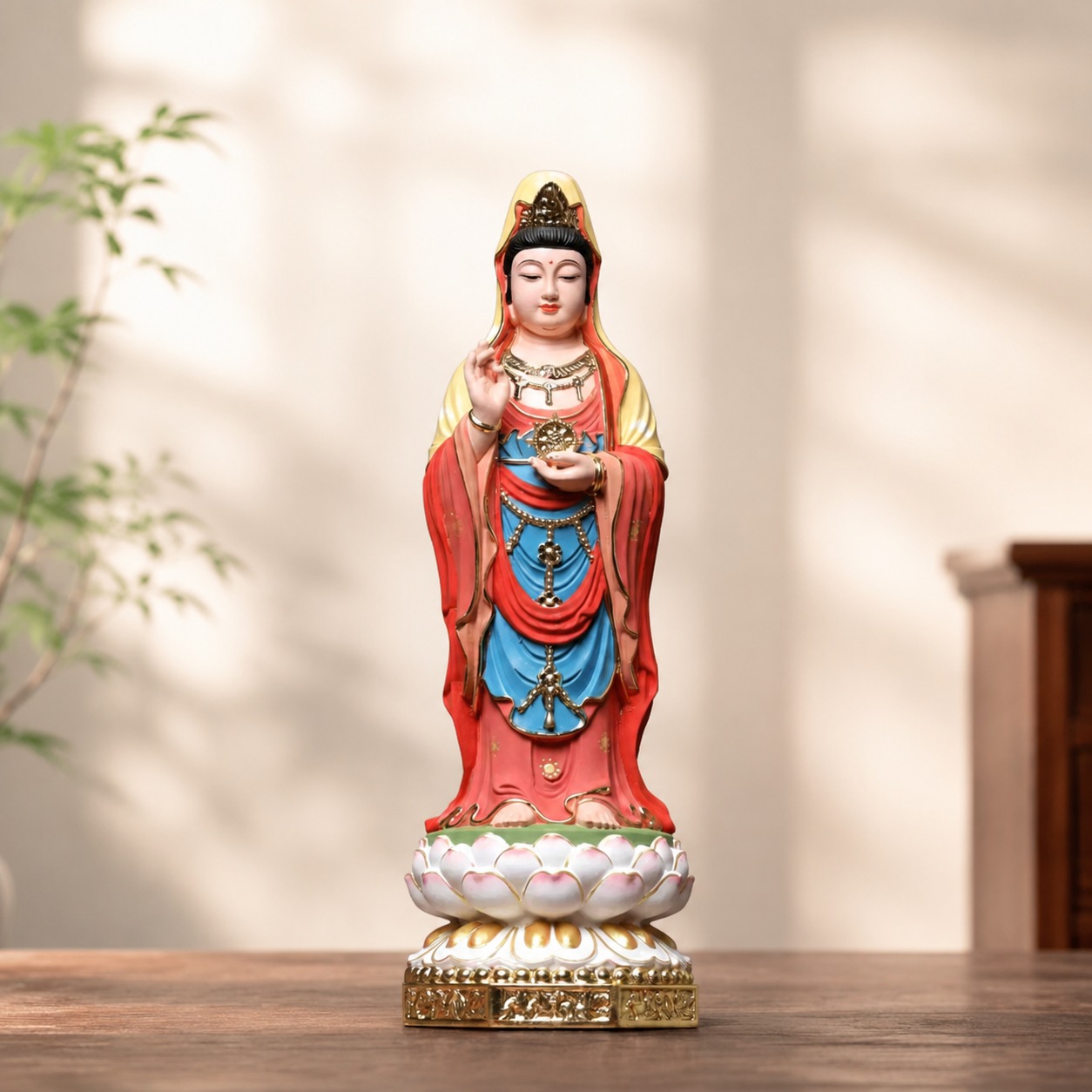
南海観音木彫像
Use the current product gallery to inspect the crown, hands, lotus, robes, base and visible finish from several angles.
Read the product page for verified dimensions, current material wording, availability and policies. Cultural identification is not a promised result.
現在のギャラリーを見る