阿弥陀如来の意味:浄土、印相、仏像の形式
瞑想して坐る、あるいは片手を下げて人を迎えるように立つ仏陀。このガイドでは、阿弥陀とは誰か、浄土や「南無阿弥陀仏」という言葉の意味、そして中国・日本・韓国・チベットの造像が阿弥陀とその脇侍をどのように表すかを解説します。
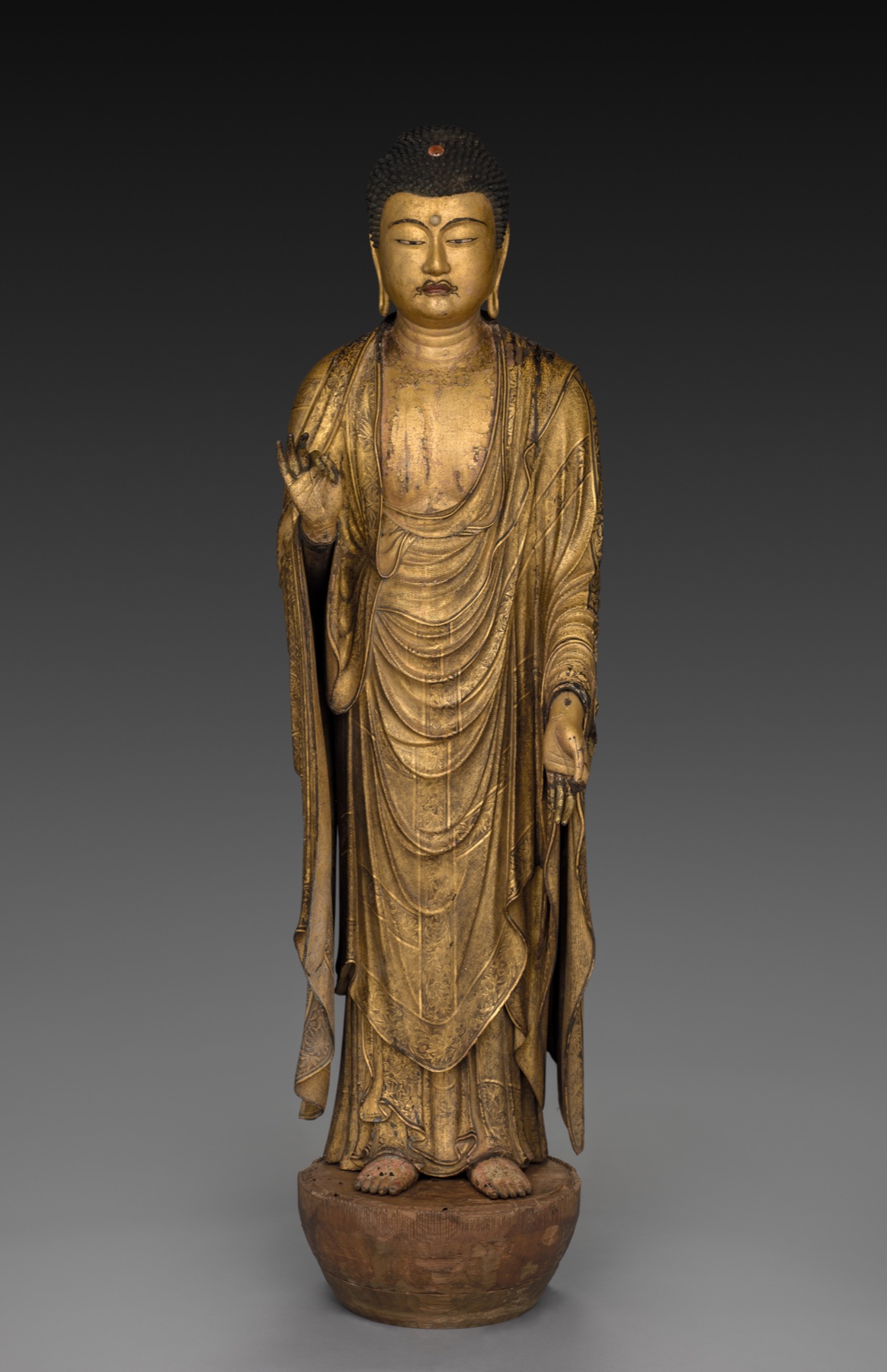
あなたを迎えに来る仏陀
東アジア美術のほとんどの仏陀は、一見するとよく似ています。簡素な僧衣、細かく巻いた髪、頭頂の丸い肉髻、そしてわずかな種類の印相です。見分ける鍵は、細部と、そばにいる脇侍にあります。
阿弥陀は最も頻繁に表される仏陀です に向かって 観る者に向けて。絵画では雲を踏んで降り立ち、立像では手を差し伸べるかのように片手を下ろします。坐像では通常、両手を膝の上に置いて瞑想します。これらの図像は、東アジアで最も広く普及した仏教信仰の一つ、すなわち彼の浄土への往生を願う信仰から生まれました。
本ガイドでは、中国・日本・韓国・チベットの博物館所蔵品を通じてその伝統をたどり、阿弥陀仏を特定する手がかりと、誤解を招きかねない手がかりを解説します。
阿弥陀とは誰か?
阿弥陀仏は大乗仏教の仏で、そのサンスクリット名は「無量光」を意味します。浄土経典は、覚りに達するのに理想的な環境が整うとされる「極楽」または西方浄土、スカーヴァティーを主宰する仏として彼を描いています。
中国語では阿弥陀仏(阿彌陀佛)、日本語では阿弥陀如来または阿弥陀仏、韓国語では阿弥陀仏、チベット語ではオパメと呼ばれます。彼は「無量寿」を意味する第二の名、阿弥陀耶と深く結びついており、中国語や日本語ではしばしば両者が統合されます。上の像に対するクリーブランド美術館の名称 無量寿無量光仏が示すとおりです。チベット美術では通常、両者は区別されます(下記参照)。
メトロポリタン美術館は、阿弥陀仏への信仰が6世紀以来、中国仏教実践の主要な一部であり、精神的理解に適した環境が整う浄土への往生を目的としてきたと指摘しています。彼は歴史的な仏である釈迦牟尼ではなく、大乗経典が他の世界に位置づける多くの仏の一人です。
本ガイドでは、経典、信仰の歴史、図像の伝統を解説します。阿弥陀仏の像は学習、追悼、個人的な実践にとって意義深いものとなり得ますが、往生、保護、幸運、その他の結果を保証するものではなく、当サイトで販売されるいかなる像もそのような約束として解釈されるべきではありません。
法蔵と四十八願
阿弥陀仏の物語は主に三つの経典で語られ、しばしば浄土三部経としてまとめられます。すなわち、長い 無量寿経 (『無量寿経』)、短い 阿弥陀経、そして 観無量寿経で、浄土の観想を説いています。
長い経典は、はるか昔に法蔵という名の僧が、自ら創る仏国土と救済する衆生について述べる一連の誓願を立てたことを伝えています。彼が阿弥陀仏となったとき、誓願は成就し、スカーヴァティーが現れました。最もよく知られる版は四十八願を列挙しています。初期の中国語訳に関する文献学的研究によれば、より古い版には二十四願が含まれていたため、よく知られるこの数自体も時代とともに発展したものです。
図像にとって最も重要なのは二つの誓願です。後の浄土教の師たちは、往生を誠実な信仰と阿弥陀仏の名を称えることに関連づける第十八願を特に重視しました。また、アジア・ソサエティ美術館が説明するように、彼の来迎を描いた絵画は第十九願を図示しており、そこでは彼の国に往生することを願う人々の臨終の瞬間に現れると約束されています。
これらは経典の中で枠づけられた宗教的教えです。解釈は宗派によって異なり、本ガイドはそれらについて立場を取るものではありません。
「南無阿弥陀仏」の意味
“「南無阿弥陀仏」は、「阿弥陀仏に帰依します」を意味する短い句の中国語形です。日本語では「南無阿弥陀仏」と言います。唱えることは 念仏 中国語で 念仏 と言います。これは阿弥陀如来に関連する最も一般的な修行です。
下の南宋の絵画は、この修行を目に見える形で示しています。クリーブランド美術館によれば、人物の上の書ではこの文言が十回書かれ、それぞれの行は蓮の花から立ち上がり、継続的な唱説を強調しています。

中国語を話す仏教コミュニティでは、この文言は修行者同士の日常の挨拶、感謝、別れの言葉としても使われます。この日常的な用法は生きている習慣であり、像を必要とせず、像もそれを必要としません。
瞑想印と来迎印
阿弥陀如来は薬師如来の瓶のような固定の持物を持たないため、手の形が識別に最も重要な役割を果たします。
禅定。 坐像の阿弥陀如来はしばしば両手を膝の上で手のひらを上に置いて休ませ、親指と人差し指で二つの輪を描くことがあります。メトロポリタン美術館は、下の唐代像(現在は手を失っている)の腕の位置を、かつてこの禅定印を結んでいた証拠と読み、「おそらく阿弥陀如来」と分類しています。“
来迎。 立像では、左手を下げ、右手を手のひらを外に向けて上げる姿がよく見られます。メトロポリタン美術館は南宋の絵画の右手を来迎の印とし、クリーブランド美術館はこのページ冒頭の鎌倉時代像を、臨終の者を迎える姿勢として説明しています。後の中国の立像の多く——しばしば 接引 (接引、「迎え入れ導く」)像と呼ばれます——は、一方の手で胸の前にお小さな蓮華または蓮華座を持ち、もう一方の手は下ろして鑑賞者の方に開いています。
説法の変化。 東アジアの浄土教美術では、 観無量寿経に記される往生の「九品」に関連した手の印も発展しました。クリーブランド美術館のエッセイでギチュル・チョンは、このガイド後半に示す韓国の三尊像がこのうちの一つを結んでいると説明しています。右手を胸に上げ、左手を下げ、親指が中指に触れている印です。
印は仏の間で重複し、古い像の手はしばしば破損しているか後補されています。禅定印だけでは釈迦如来のものである可能性もあります。手は脇侍や背景と合わせて読み解いてください。
観音、勢至、そのほか
Amitabha usually appears between two bodhisattvas: Avalokiteshvara, known in China as Guanyin, and Mahasthamaprapta (Dashizhi in Chinese, Seishi in Japanese). Together they form the Western Paradise triad. Guanyin often wears a small seated buddha in the crown, representing Amitabha; our 観音ガイド explains that detail and Guanyin’s many other forms.
This is the clearest difference from the Medicine Buddha, whose attendants are the Sunlight and Moonlight bodhisattvas. In many later Chinese temples Amitabha also sits beside Shakyamuni and the Medicine Buddha in a row of three buddhas; our Medicine Buddha guide compares those three figures side by side, so the comparison is not repeated here.
Not every triad follows the standard pair. Korean artists sometimes replaced Mahasthamaprapta with Ksitigarbha, as the Korean section below shows.
中国の阿弥陀仏
The Tang-dynasty figure below, made in the early seventh century, is one of the most impressive early Chinese images thought to show Amitabha. It was made with the dry-lacquer technique: according to the Met, a core was covered with clay and wrapped in layers of lacquer-soaked cloth, with further layers of lacquer added on top. The museum notes that this technique spread from China to Japan in the eighth century.

From the twelfth century onward, paintings of Amitabha descending to welcome the dying became common. The Met notes that images of Amitabha, alone or with bodhisattvas, were among the most widely produced in China from the twelfth to the fourteenth century. In its painting below, he stands on two lotuses with the right hand raised in welcome.

日本の阿弥陀
Pure Land devotion grew strongly in Japan from the late tenth century. The Met notes that the monk Genshin (942–1017) wrote The Essentials of Rebirth in the Pure Land (Ōjōyōshū), which described the hells and explained practices, including 念仏, aimed at rebirth in paradise. The Tokyo National Museum describes Hōnen (1133–1212) as the founder of Jōdo Shū, Japan’s first Pure Land school, who taught repeated recitation of “Namu Amida Butsu.”
Paintings of Amida’s welcoming descent, called 来迎, became one of the great subjects of Japanese Buddhist art. The Cleveland Museum of Art notes that such images could be placed before a dying person to help them remain faithful.
The standing Amida at the top of this page belongs to the same world. The museum records that documents placed inside its hollow body include a copy of the Amida Sutra, a list of donors who joined in dedicating the statue, and a record that it was completed in 33 days in 1269 at Shitennōji temple in Osaka. The lead sculptor was Kōshun.
韓国の阿弥陀
Amitabha was also central in Korea from the Unified Silla period onward. The small Joseon-dynasty bronze below shows how a triad could vary. Ghichul Jung’s Cleveland Museum of Art essay notes that Amitabha sits slightly larger at the centre. The crowned figure is Avalokiteshvara, and the figure with a shaven head, like a monk, holding a jewel, is Ksitigarbha, who here replaces Mahasthamaprapta. The essay says this pairing was in vogue in Korea in the 1300s and 1400s.

Readers who know Ksitigarbha from our Ksitigarbha (Jizo) guide will recognise the shaven head and jewel. Seeing him beside Amitabha is a useful reminder that companions identify a scene only when read together.
チベットの阿弥陀と無量寿
Tibetan painting shows Sukhavati as a crowded, jewelled landscape. In the Met’s painting below, made in Central Tibet around 1700, the buddha sits in meditation at the heart of his Pure Land, surrounded by palaces, trees, pools and assemblies of figures.

Himalayan art usually separates Amitabha from Amitayus, the “Buddha of Infinite Life.” Himalayan Art Resources describes Amitayus as normally red, wearing a crown and jewels, with a long-life vase held above his hands in meditation. Museums such as the Met and LACMA describe the vase as holding the elixir of immortality and link Amitayus with prayers for long life. Amitabha, by contrast, is usually shown in a buddha’s plain monastic robes without a crown.
Himalayan Art Resources also notes a great deal of overlap between the two in Tibetan tradition, while in early sutra literature they were not the same figure. A crowned buddha holding a vase in the lap is therefore usually Amitayus, not the Medicine Buddha and not a plain Amitabha.
How to identify an Amitabha statue
Both hands resting in the lap in meditation, or a standing figure with one hand raised, sometimes holding a small lotus, and one lowered in welcome. No medicine jar in the lap.
Guanyin, often with a small buddha in the crown, and Mahasthamaprapta at the sides point clearly to Amitabha. Korean triads may show Ksitigarbha instead.
A plain robe and no crown suggest Amitabha; a crown, jewellery and a vase in the lap usually indicate Amitayus in Himalayan art.
Use listed material, measurements, finish and provenance. Do not infer age, material or ritual status from colour, patina or a room scene.
A seller’s title is a clue, not proof. “Amitabha,” “Amituofo,” “Amida,” “Buddha of Infinite Light” and sometimes “Amitayus” can describe the same or closely related figures, and some listings use the name for any seated buddha. A smiling, round-bellied figure with a sack is the Laughing Buddha; our 弥勒と布袋尊ガイド explains that separate tradition, and our 観音または仏像ガイド explains how to tell crowned bodhisattvas from buddhas.
生きた実践、展示、購入時の確認
Amitabha is at the centre of living Pure Land practice in China, Japan, Korea, Vietnam and elsewhere, and many temples hold recitation services in his name. Anyone looking for ritual guidance, such as which direction an image should face or which texts to recite, should ask a relevant temple or teacher rather than rely on a retail article.
For decorative display, choose a stable, clean surface at or above eye level where the figure will not be knocked. Some people echo the temple arrangement by placing Amitabha on the western side of a group, matching his Western Pure Land; this is a convention, not a rule. Keep the piece away from standing moisture, strong heat and long direct sun. For wooden figures, our 木像のお手入れガイド covers dry and humid rooms, and our antique wooden Buddha guide explains why “old-looking” finishes do not prove age.
Before buying, compare real front, side, detail and base views where available, check what the hands are actually doing, and confirm the listed measurements rather than estimating scale from a room photo. Review the current 配送ポリシー および 返品・返金 情報です。これらの確認事項はどのような像が提供されているかを示すものであり、像が何を「する」かを示すものではありません。“
よくある質問
What does Amitabha Buddha represent?
In Pure Land Buddhism, Amitabha is the buddha of the Western Pure Land, whose vows describe a realm where beings can be reborn and continue toward awakening. His name means “Infinite Light,” and he is closely associated with compassion through his attendant Guanyin.
Why do people say “Amitabha” or “Namo Amituofo”?
The phrase means “Homage to Amitabha Buddha.” Pure Land practitioners recite it as their main practice, and in Chinese-speaking Buddhist communities it is also used as a greeting or expression of thanks.
How is Amitabha different from Shakyamuni?
Shakyamuni is the historical Buddha who taught in India. Amitabha is a buddha described in Mahayana scriptures as presiding over another realm. In art the two can look almost identical; Amitabha is more often shown in welcome or with Guanyin and Mahasthamaprapta, while Shakyamuni is more often shown touching the earth or teaching, or at the centre of a row of three buddhas.
What is the Amitabha hand gesture?
Seated figures usually hold the meditation gesture, hands resting in the lap. Standing figures often raise the right hand and lower the left in welcome. East Asian art also developed variations linked to the nine grades of rebirth.
Are Amitabha and Amitayus the same buddha?
In Chinese and Japanese tradition the names are often merged. In Tibetan art they are usually shown differently: Amitabha in plain robes, Amitayus crowned and holding a long-life vase. Early scriptures treat them as distinct.
Where should an Amitabha statue be placed?
There is no single rule. Temples often associate him with the west, matching his Western Pure Land. At home, most people simply choose a clean, stable and respectful place at or above eye level. For religious guidance, ask a temple or teacher.
出典と参考文献
- クリーブランド美術館: 無量寿・無量光の仏(阿弥陀如来), Kamakura period, 1269, 1960.197
- メトロポリタン美術館: Buddha, probably Amitabha, Tang dynasty, early 7th century, 19.186
- クリーブランド美術館: 両脇侍菩薩を従える阿弥陀如来, Southern Song dynasty, 1974.35
- メトロポリタン美術館: Buddha Amitabha Descending from His Pure Land, Southern Song dynasty, 1987.148
- クリーブランド美術館: Amitabha Triad, Joseon dynasty, 1918.501, and Ghichul Jung, “Korea in Focus: The Amitâbha Triad” (2021)
- メトロポリタン美術館: Amitabha, the Buddha of the Western Pure Land (Sukhavati), Central Tibet, ca. 1700, 2004.139
- クリーブランド美術館: Welcoming Descent of Amida (Amida Raigō), Kamakura period, 1953.123
- Asia Society Museum: Buddha Amitabha (Amida Nyorai), 1979.204
- メトロポリタン美術館: The Essentials of Rebirth in the Pure Land (Ōjōyōshū)
- Tokyo National Museum: Hōnen and the history of Japanese Pure Land Buddhism (special exhibition, 2024)
- メトロポリタン美術館: Amitayus, the Buddha of Eternal Life, Tibet
- Himalayan Art Resources: Amitayus and its conflation with Amitabha
- BDK English Tripiṭaka: The Three Pure Land Sutras (translation, 2003)
- “On the Vows in the Earliest Version of the Larger Sukhāvatīvyūha Sūtra,” Journal of Indian and Buddhist Studies
- Wikipedia: Amitābha (names, scriptures and regional traditions)
画像開示: This guide uses six Public Domain or CC0 museum images and three approved Carvzen product images. It contains no AI-generated editorial illustrations.
現在の品物
Amitabha statues at Carvzen
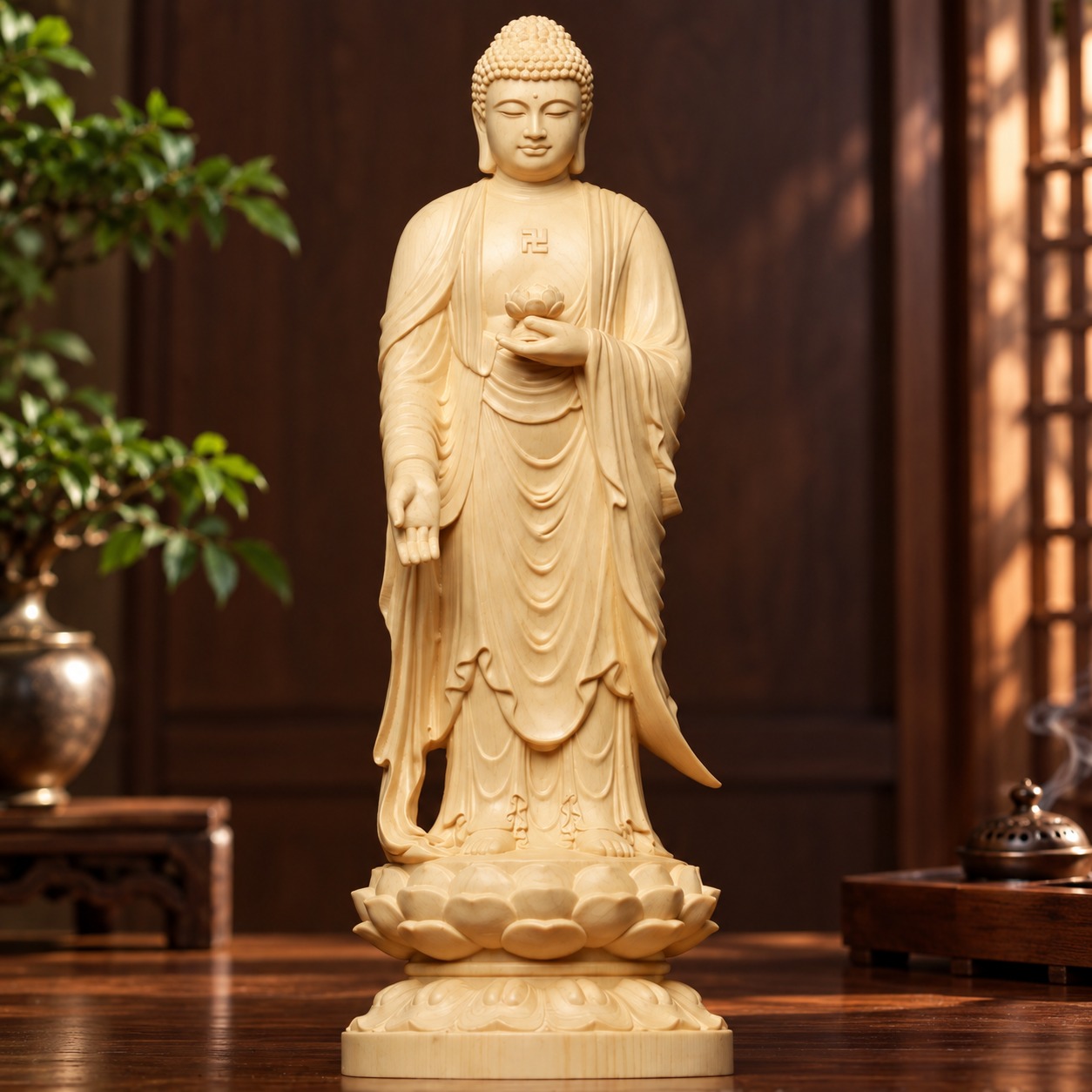
阿弥陀仏 木製 像
The product record lists wood and dimensions of 3.9 × 3.9 × 11.8 in (10 × 10 × 30 cm).
現在のギャラリーを見る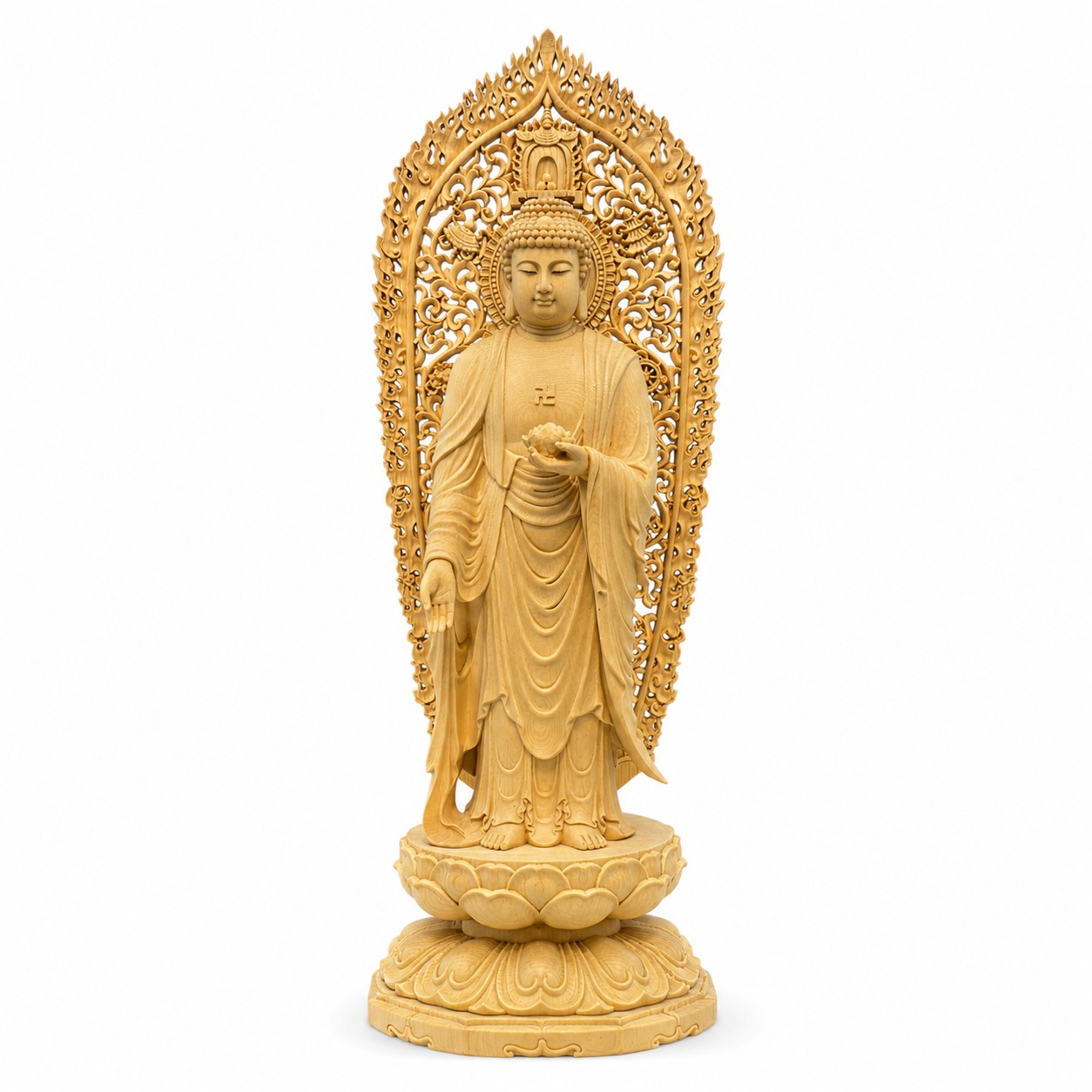
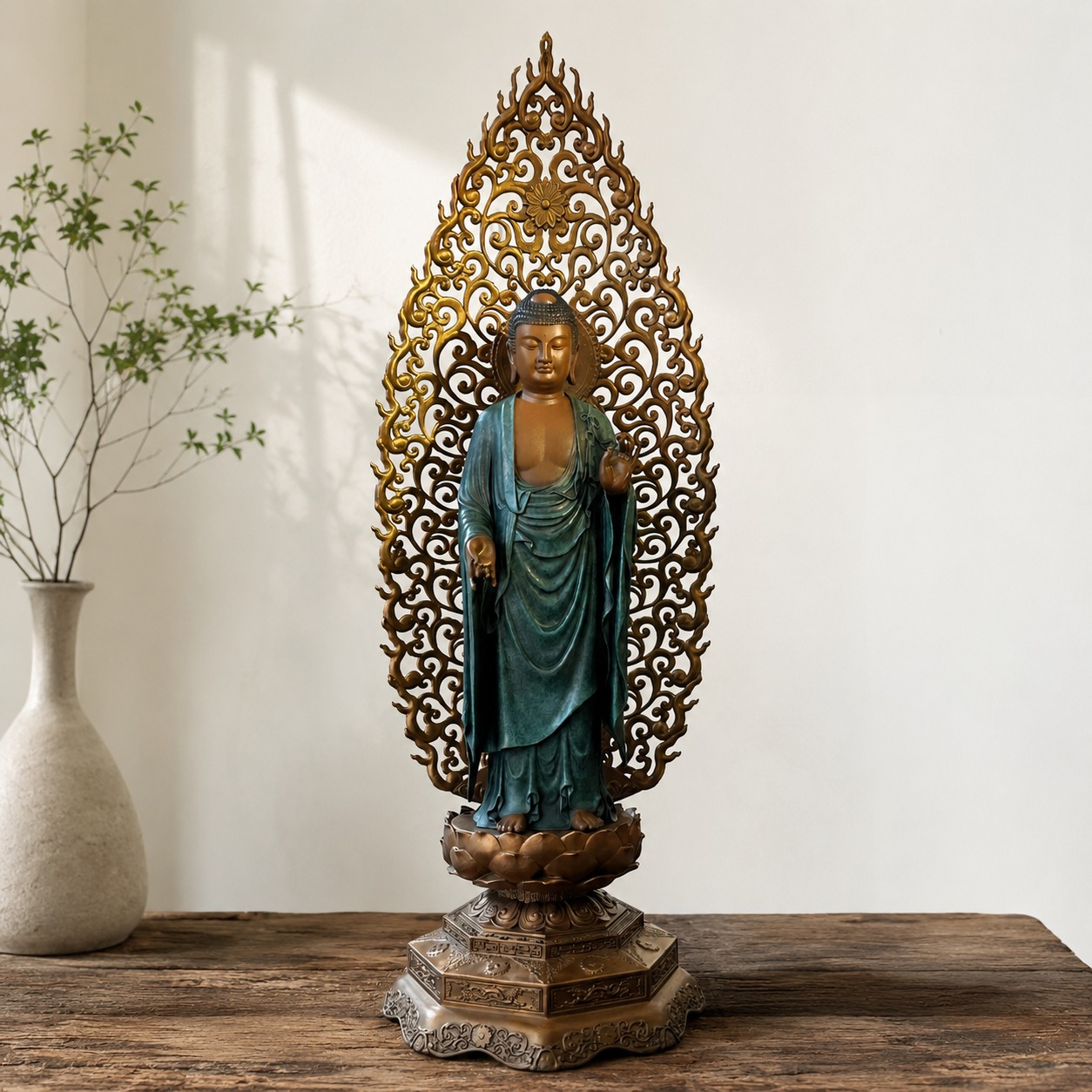
阿弥陀仏 銅合金製 像
The product record lists copper alloy and dimensions of 7.2 × 8.1 × 22.0 in (18.3 × 20.5 × 56 cm).
現在のギャラリーを見る実際のギャラリー、記載寸法、見える仕上げ、現在のポリシーを比較してください。文化的意味は約束された結果ではありません。