아미타불의 의미: 정토, 수인과 불상 형태
명상에 잠긴 채 앉아 있거나, 누군가를 맞이하듯 한 손을 내려뜨리고 서 있는 부처. 이 안내서는 아미타불이 누구인지, 정토와 “나무아미타불’이라는 말의 의미, 그리고 중국·일본·한국·티베트의 이미지에서 그와 그의 권속이 어떻게 표현되는지를 설명합니다.
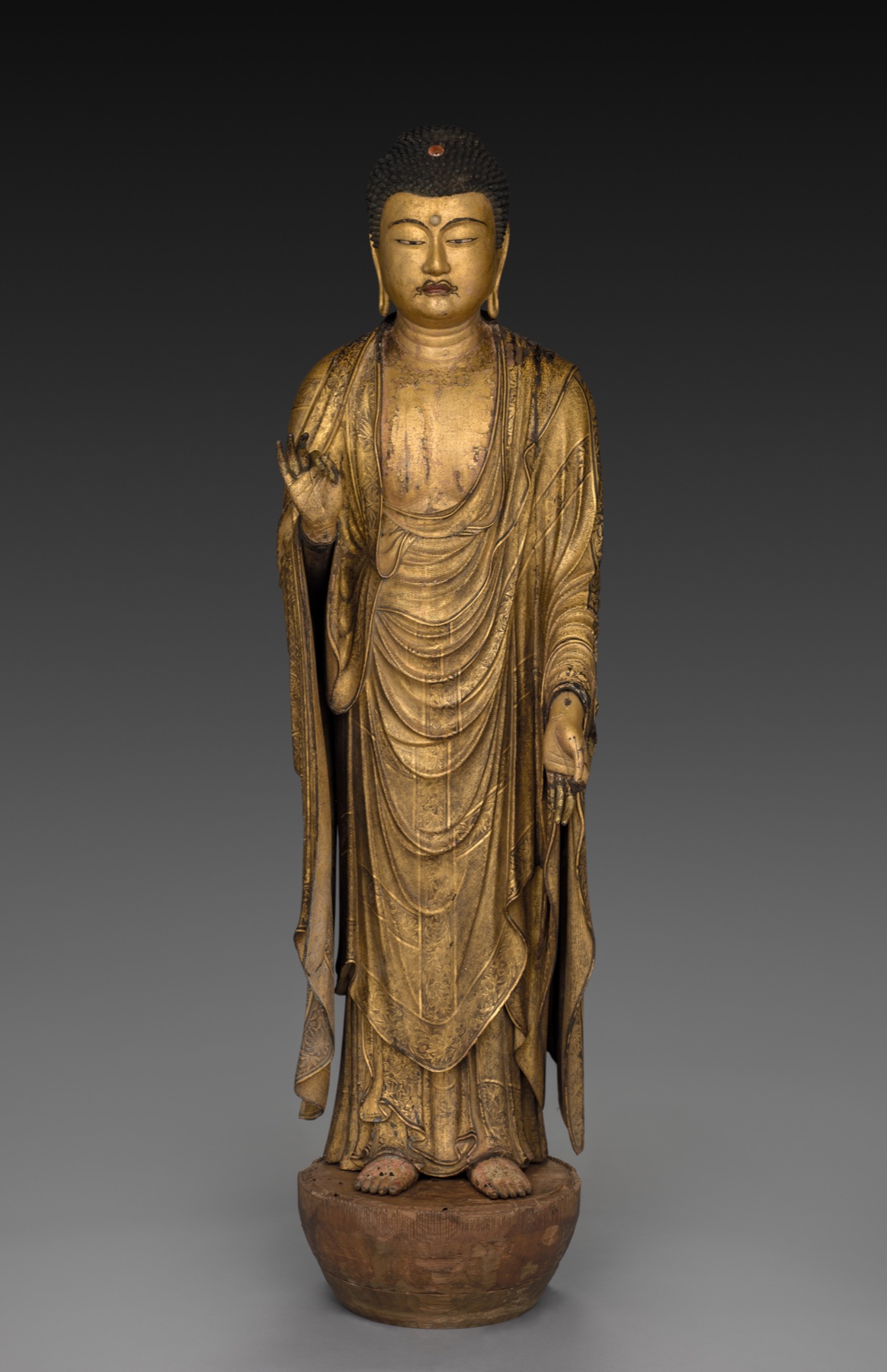
당신을 맞이하러 오는 부처
동아시아 미술 속 대부분의 부처는 첫눈에는 비슷해 보입니다. 소박한 승복, 촘촘히 말린 머리카락, 정수리의 둥근 육계, 그리고 몇 가지 손 모양입니다. 이들을 구별하는 것은 작은 세부와 함께하는 권속입니다.
아미타불은 가장 자주 표현되는 부처입니다 다가가는 관람자입니다. 회화에서는 구름 위를 내려오시고, 입상에서는 마치 손을 내미는 듯 한 손을 내리십니다. 좌상일 때는 보통 두 손을 무릎 위에 모아 명상하십니다. 이러한 도상은 동아시아에서 가장 널리 퍼진 불교 신앙 형태 중 하나, 즉 그의 정토에 왕생하려는 염원에서 비롯되었습니다.
이 안내서는 중국, 일본, 한국, 티베트의 박물관 소장품을 통해 그 전통을 따라가며, 아미타불을 식별하는 단서와 오해를 부를 수 있는 단서를 설명합니다.
아미타불은 누구인가?
아미타불은 대승불교의 부처로, 산스크리트 이름은 “무한한 빛’을 뜻합니다. 정토 경전은 그가 ”극락“ 또는 서방정토라 불리는 수카바티를 다스린다고 묘사하며, 그곳의 조건은 깨달음에 이르기에 이상적이라고 전합니다.
중국어로는 아미타불(阿彌陀佛)입니다. 일본어로는 아미다 뇨라이 또는 아미다 붓스, 한국어로는 아미타불, 티베트어로는 외빠메입니다. 그는 “무한한 생명’을 뜻하는 두 번째 이름 아미타유스와 밀접하게 연결되며, 중국과 일본에서는 둘이 흔히 합쳐지는데, 위 조각상에 대한 클리블랜드 미술관의 명칭 무한한 생명과 빛의 부처에서도 그렇습니다. 티베트 미술에서는 보통 둘을 구분합니다(아래 참조).
메트로폴리탄 미술관은 아미타불 신앙이 6세기부터 중국 불교 수행의 주요 부분이었으며, 그 목적은 영적 이해에 유리한 조건을 갖춘 정토에 왕생하는 것이라고 밝힙니다. 그는 역사적 부처인 석가모니가 아니라, 대승 경전이 다른 세계에 두는 여러 부처 가운데 한 분입니다.
이 안내서는 경전, 신앙의 역사, 도상 전통을 설명합니다. 아미타불 조각상은 공부, 추모, 개인 수행에 의미가 있을 수 있으나 왕생, 보호, 행운 또는 그 밖의 결과를 보장하지 않으며, 이 사이트에서 판매되는 어떤 조각상도 그러한 약속으로 읽혀서는 안 됩니다.
법장과 사십팔원
아미타불의 이야기는 주로 세 정토 삼부경으로 묶이는 세 문헌에 전합니다. 긴 수카바티비유하 경 (무량수경), 짧은 아미타경, 그리고 정토를 관상하도록 가르치는 관무량수경입니다.
긴 경전은 오래전 법장이라는 승려가 자신이 세울 불국토와 구제할 중생을 서술한 일련의 서원을 세웠다고 전합니다. 그가 아미타불이 되었을 때 서원이 성취되어 수카바티가 생겨났습니다. 가장 잘 알려진 판본은 48원을 나열합니다. 초기 중국어 역본에 대한 문헌학 연구에 따르면 더 오래된 판본에는 24원이 있었으므로, 익숙한 숫자 자체가 시간이 흐르며 형성된 것입니다.
도상에서 가장 중요한 것은 두 가지 서원입니다. 후대 정토 교사들은 왕생을 진실한 믿음과 아미타불의 이름을 부름에 연결한 제18원에 특별히 중점을 두었습니다. 또한 아시아 소사이어티 미술관이 설명하듯, 그의 내영을 그린 그림은 그의 땅에 왕생하기를 바라는 이들에게 임종의 순간 나타나겠다는 제19원을 보여줍니다.
이는 경전 안에 담긴 종교적 가르침입니다. 종파마다 다르게 해석하며, 이 안내서는 이에 대해 어떤 입장도 취하지 않습니다.
“나무아미타불’의 의미
“나무아미타불(南無阿彌陀佛)”은 “아미타불께 귀의합니다’를 뜻하는 짧은 구절의 중국어 형태입니다. 일본어로는 ”나무 아미다 붓스’입니다. 이를 염송하는 것을 염불 in Chinese and nenbutsu in Japanese. It is the most common practice connected with Amitabha.
The Southern Song painting below makes the practice visible. The Cleveland Museum of Art notes that the phrase is written ten times in the calligraphy above the figures, each line rising from a lotus blossom, to stress continual recitation.

In Chinese-speaking Buddhist communities the phrase is also used as an everyday greeting, thanks or farewell among practitioners. That everyday use is a living custom; it does not need a statue, and a statue does not need it.
명상의 손과 맞이하는 손
Amitabha has no fixed object like the Medicine Buddha’s jar, so his hands do most of the identifying work.
Meditation. Seated Amitabha figures often rest both hands in the lap, palms up, sometimes with the thumbs and index fingers forming two rings. The Met reads the arm position of the Tang statue below, whose hands are now lost, as evidence that it once held this meditation gesture, which is why it is catalogued as “probably Amitabha.”
Welcome. Standing figures often lower the left hand and raise the right, palm outward. The Met describes the right hand of its Southern Song painting as held in a gesture of welcome, and the Cleveland Museum of Art describes its Kamakura statue at the top of this page as standing in a posture of welcome for the dying. Many later Chinese standing figures, often called jieyin (接引, “receiving and guiding”) images, hold a small lotus or lotus seat at the chest in one hand while the other hangs down, open toward the viewer.
Teaching variations. East Asian Pure Land art also developed hand gestures tied to the “nine grades” of rebirth described in the 관무량수경. In a Cleveland Museum of Art essay, Ghichul Jung explains that the Korean triad shown later in this guide makes one of these, with the right hand raised to the chest, the left lowered and each thumb touching the middle finger.
Gestures overlap between buddhas, and hands on old statues are often damaged or replaced. A meditation gesture alone could equally belong to Shakyamuni. Read the hands with the companions and setting.
관음, 대세지보살과 그 밖의 권속
Amitabha usually appears between two bodhisattvas: Avalokiteshvara, known in China as Guanyin, and Mahasthamaprapta (Dashizhi in Chinese, Seishi in Japanese). Together they form the Western Paradise triad. Guanyin often wears a small seated buddha in the crown, representing Amitabha; our 관음 가이드 explains that detail and Guanyin’s many other forms.
This is the clearest difference from the Medicine Buddha, whose attendants are the Sunlight and Moonlight bodhisattvas. In many later Chinese temples Amitabha also sits beside Shakyamuni and the Medicine Buddha in a row of three buddhas; our Medicine Buddha guide compares those three figures side by side, so the comparison is not repeated here.
Not every triad follows the standard pair. Korean artists sometimes replaced Mahasthamaprapta with Ksitigarbha, as the Korean section below shows.
중국의 아미타불
The Tang-dynasty figure below, made in the early seventh century, is one of the most impressive early Chinese images thought to show Amitabha. It was made with the dry-lacquer technique: according to the Met, a core was covered with clay and wrapped in layers of lacquer-soaked cloth, with further layers of lacquer added on top. The museum notes that this technique spread from China to Japan in the eighth century.

From the twelfth century onward, paintings of Amitabha descending to welcome the dying became common. The Met notes that images of Amitabha, alone or with bodhisattvas, were among the most widely produced in China from the twelfth to the fourteenth century. In its painting below, he stands on two lotuses with the right hand raised in welcome.

일본의 아미타
Pure Land devotion grew strongly in Japan from the late tenth century. The Met notes that the monk Genshin (942–1017) wrote The Essentials of Rebirth in the Pure Land (Ōjōyōshū), which described the hells and explained practices, including nenbutsu, aimed at rebirth in paradise. The Tokyo National Museum describes Hōnen (1133–1212) as the founder of Jōdo Shū, Japan’s first Pure Land school, who taught repeated recitation of “Namu Amida Butsu.”
Paintings of Amida’s welcoming descent, called 내영, became one of the great subjects of Japanese Buddhist art. The Cleveland Museum of Art notes that such images could be placed before a dying person to help them remain faithful.
The standing Amida at the top of this page belongs to the same world. The museum records that documents placed inside its hollow body include a copy of the Amida Sutra, a list of donors who joined in dedicating the statue, and a record that it was completed in 33 days in 1269 at Shitennōji temple in Osaka. The lead sculptor was Kōshun.
한국의 아미타
Amitabha was also central in Korea from the Unified Silla period onward. The small Joseon-dynasty bronze below shows how a triad could vary. Ghichul Jung’s Cleveland Museum of Art essay notes that Amitabha sits slightly larger at the centre. The crowned figure is Avalokiteshvara, and the figure with a shaven head, like a monk, holding a jewel, is Ksitigarbha, who here replaces Mahasthamaprapta. The essay says this pairing was in vogue in Korea in the 1300s and 1400s.

Readers who know Ksitigarbha from our Ksitigarbha (Jizo) guide will recognise the shaven head and jewel. Seeing him beside Amitabha is a useful reminder that companions identify a scene only when read together.
티베트의 아미타불과 무량수불
Tibetan painting shows Sukhavati as a crowded, jewelled landscape. In the Met’s painting below, made in Central Tibet around 1700, the buddha sits in meditation at the heart of his Pure Land, surrounded by palaces, trees, pools and assemblies of figures.

Himalayan art usually separates Amitabha from Amitayus, the “Buddha of Infinite Life.” Himalayan Art Resources describes Amitayus as normally red, wearing a crown and jewels, with a long-life vase held above his hands in meditation. Museums such as the Met and LACMA describe the vase as holding the elixir of immortality and link Amitayus with prayers for long life. Amitabha, by contrast, is usually shown in a buddha’s plain monastic robes without a crown.
Himalayan Art Resources also notes a great deal of overlap between the two in Tibetan tradition, while in early sutra literature they were not the same figure. A crowned buddha holding a vase in the lap is therefore usually Amitayus, not the Medicine Buddha and not a plain Amitabha.
How to identify an Amitabha statue
Both hands resting in the lap in meditation, or a standing figure with one hand raised, sometimes holding a small lotus, and one lowered in welcome. No medicine jar in the lap.
Guanyin, often with a small buddha in the crown, and Mahasthamaprapta at the sides point clearly to Amitabha. Korean triads may show Ksitigarbha instead.
A plain robe and no crown suggest Amitabha; a crown, jewellery and a vase in the lap usually indicate Amitayus in Himalayan art.
Use listed material, measurements, finish and provenance. Do not infer age, material or ritual status from colour, patina or a room scene.
A seller’s title is a clue, not proof. “Amitabha,” “Amituofo,” “Amida,” “Buddha of Infinite Light” and sometimes “Amitayus” can describe the same or closely related figures, and some listings use the name for any seated buddha. A smiling, round-bellied figure with a sack is the Laughing Buddha; our 미륵과 미소부처 가이드 explains that separate tradition, and our 관음 또는 부처 안내 explains how to tell crowned bodhisattvas from buddhas.
살아있는 수행, 전시, 구매 확인 사항
Amitabha is at the centre of living Pure Land practice in China, Japan, Korea, Vietnam and elsewhere, and many temples hold recitation services in his name. Anyone looking for ritual guidance, such as which direction an image should face or which texts to recite, should ask a relevant temple or teacher rather than rely on a retail article.
For decorative display, choose a stable, clean surface at or above eye level where the figure will not be knocked. Some people echo the temple arrangement by placing Amitabha on the western side of a group, matching his Western Pure Land; this is a convention, not a rule. Keep the piece away from standing moisture, strong heat and long direct sun. For wooden figures, our 목조 불상 관리 안내 covers dry and humid rooms, and our antique wooden Buddha guide explains why “old-looking” finishes do not prove age.
Before buying, compare real front, side, detail and base views where available, check what the hands are actually doing, and confirm the listed measurements rather than estimating scale from a room photo. Review the current 배송 정책 와 반품 및 환불 정보입니다. 이러한 확인은 어떤 오브제가 제공되는지를 알려줄 뿐, 불상이 무엇을 “할 것인지”를 알려주지는 않습니다.”
자주 묻는 질문
What does Amitabha Buddha represent?
In Pure Land Buddhism, Amitabha is the buddha of the Western Pure Land, whose vows describe a realm where beings can be reborn and continue toward awakening. His name means “Infinite Light,” and he is closely associated with compassion through his attendant Guanyin.
Why do people say “Amitabha” or “Namo Amituofo”?
The phrase means “Homage to Amitabha Buddha.” Pure Land practitioners recite it as their main practice, and in Chinese-speaking Buddhist communities it is also used as a greeting or expression of thanks.
How is Amitabha different from Shakyamuni?
Shakyamuni is the historical Buddha who taught in India. Amitabha is a buddha described in Mahayana scriptures as presiding over another realm. In art the two can look almost identical; Amitabha is more often shown in welcome or with Guanyin and Mahasthamaprapta, while Shakyamuni is more often shown touching the earth or teaching, or at the centre of a row of three buddhas.
What is the Amitabha hand gesture?
Seated figures usually hold the meditation gesture, hands resting in the lap. Standing figures often raise the right hand and lower the left in welcome. East Asian art also developed variations linked to the nine grades of rebirth.
Are Amitabha and Amitayus the same buddha?
In Chinese and Japanese tradition the names are often merged. In Tibetan art they are usually shown differently: Amitabha in plain robes, Amitayus crowned and holding a long-life vase. Early scriptures treat them as distinct.
Where should an Amitabha statue be placed?
There is no single rule. Temples often associate him with the west, matching his Western Pure Land. At home, most people simply choose a clean, stable and respectful place at or above eye level. For religious guidance, ask a temple or teacher.
출처 및 추가 자료
- 클리블랜드 미술관: 무한한 생명과 빛의 부처 (아미타여래), Kamakura period, 1269, 1960.197
- 메트로폴리탄 미술관: Buddha, probably Amitabha, Tang dynasty, early 7th century, 19.186
- 클리블랜드 미술관: Buddha Amitābha with Two Attending Bodhisattvas, Southern Song dynasty, 1974.35
- 메트로폴리탄 미술관: Buddha Amitabha Descending from His Pure Land, Southern Song dynasty, 1987.148
- 클리블랜드 미술관: Amitabha Triad, Joseon dynasty, 1918.501, and Ghichul Jung, “Korea in Focus: The Amitâbha Triad” (2021)
- 메트로폴리탄 미술관: Amitabha, the Buddha of the Western Pure Land (Sukhavati), Central Tibet, ca. 1700, 2004.139
- 클리블랜드 미술관: Welcoming Descent of Amida (Amida Raigō), Kamakura period, 1953.123
- Asia Society Museum: Buddha Amitabha (Amida Nyorai), 1979.204
- 메트로폴리탄 미술관: The Essentials of Rebirth in the Pure Land (Ōjōyōshū)
- Tokyo National Museum: Hōnen and the history of Japanese Pure Land Buddhism (special exhibition, 2024)
- 메트로폴리탄 미술관: Amitayus, the Buddha of Eternal Life, Tibet
- Himalayan Art Resources: Amitayus and its conflation with Amitabha
- BDK English Tripiṭaka: The Three Pure Land Sutras (translation, 2003)
- “On the Vows in the Earliest Version of the Larger Sukhāvatīvyūha Sūtra,” Journal of Indian and Buddhist Studies
- Wikipedia: Amitābha (names, scriptures and regional traditions)
이미지 공개: This guide uses six Public Domain or CC0 museum images and three approved Carvzen product images. It contains no AI-generated editorial illustrations.
현재 상품
Amitabha statues at Carvzen
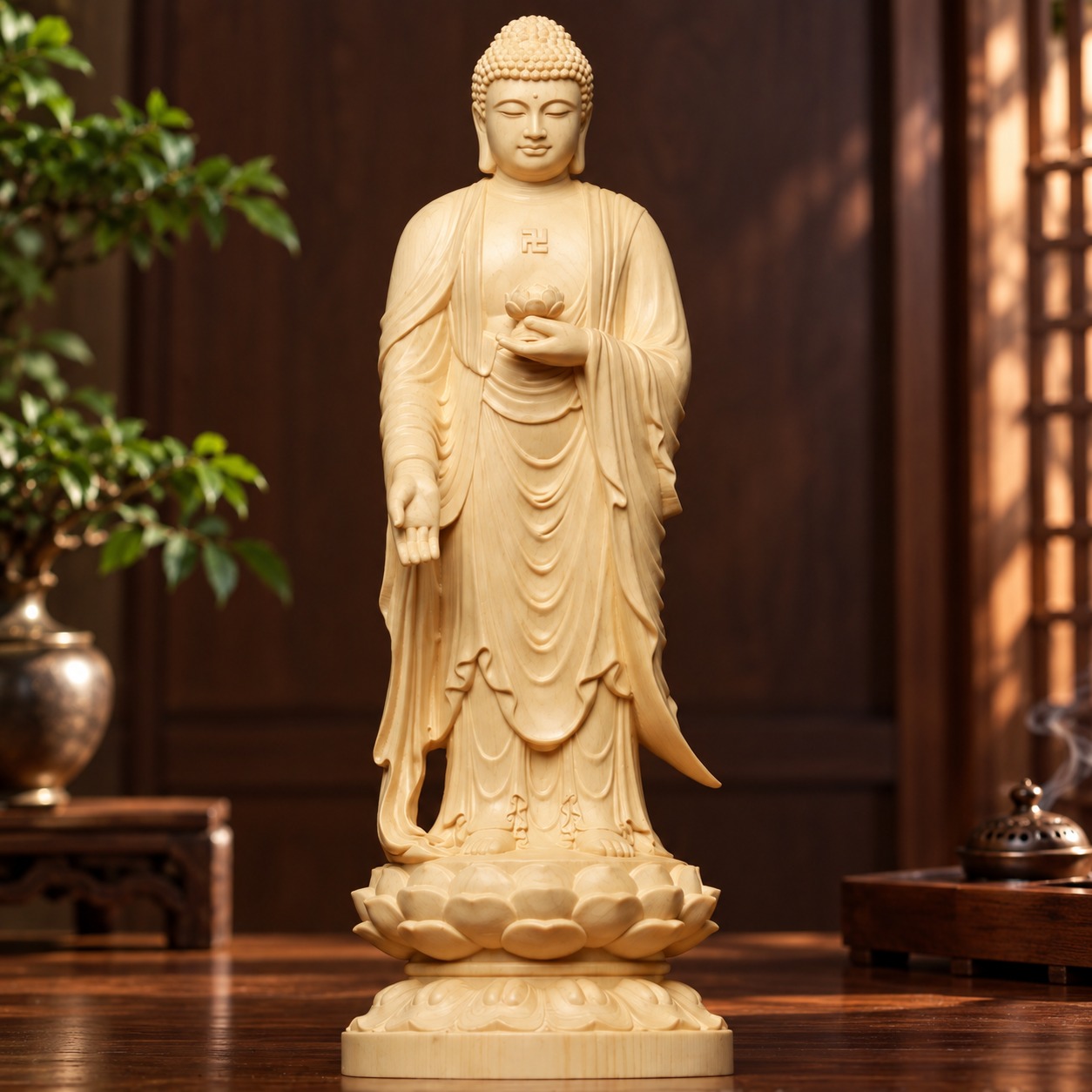
아미타불 목조 불상
The product record lists wood and dimensions of 3.9 × 3.9 × 11.8 in (10 × 10 × 30 cm).
현재 갤러리 보기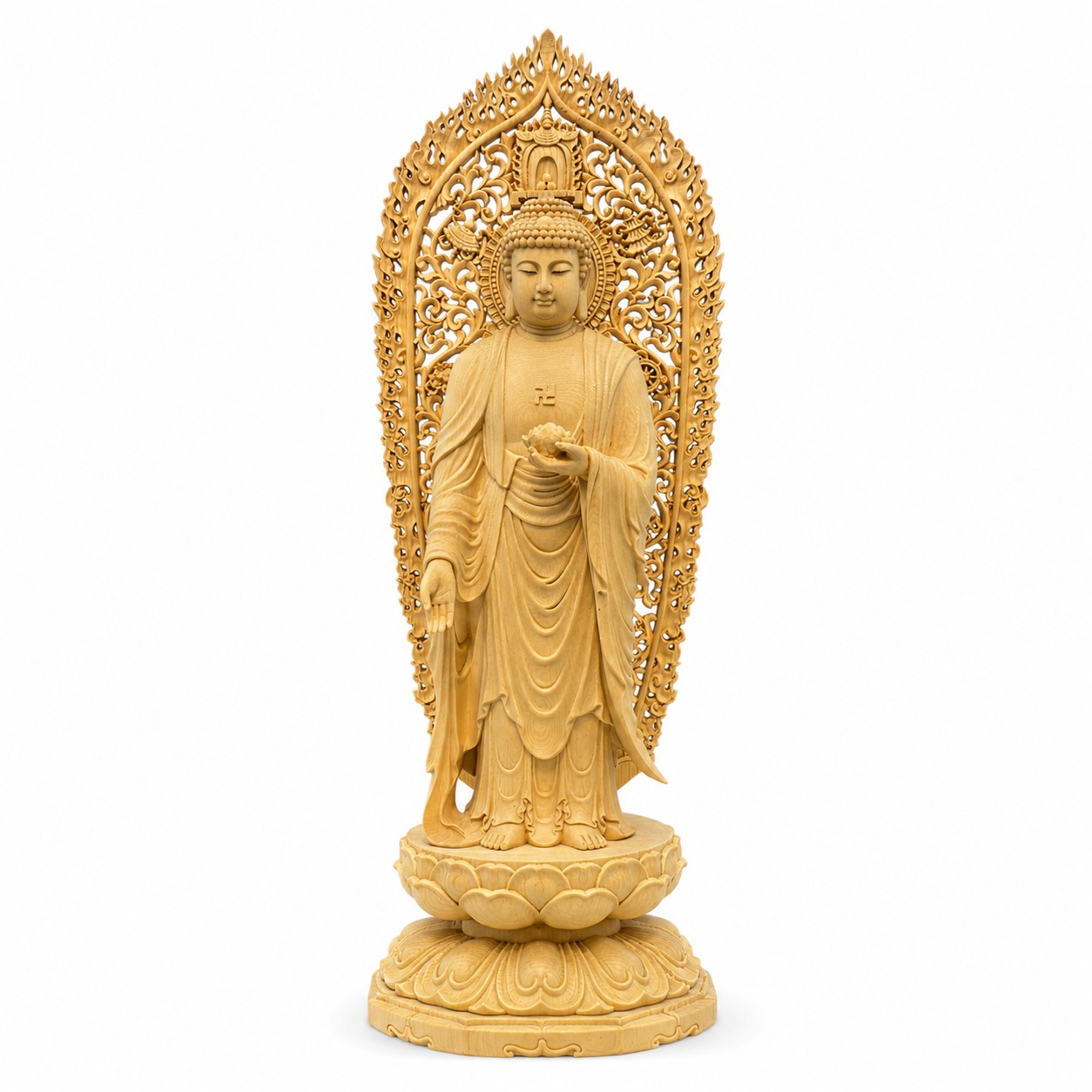
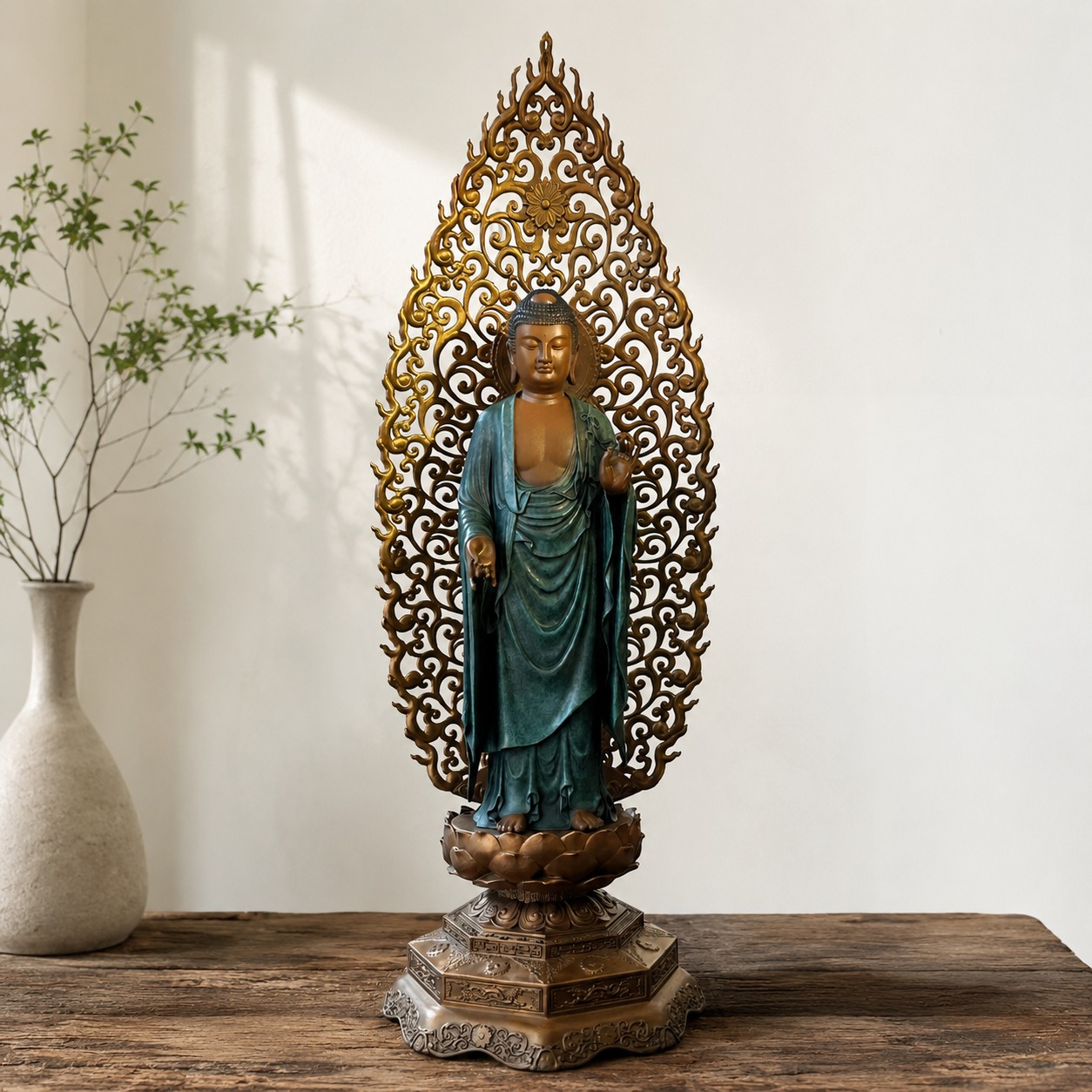
아미타불 구리 합금 불상
The product record lists copper alloy and dimensions of 7.2 × 8.1 × 22.0 in (18.3 × 20.5 × 56 cm).
현재 갤러리 보기실제 갤러리, 기재된 치수, 보이는 마감 및 현재 정책을 비교하세요. 문화적 의미는 보장된 결과가 아닙니다.