Guanyin or Buddha? How to Recognize Guanyin in Chinese Art
Guanyin is a bodhisattva, not the historical Buddha. The most reliable identification comes from several clues read together: clothing, crown, hairstyle, attributes, posture, inscription and museum context.
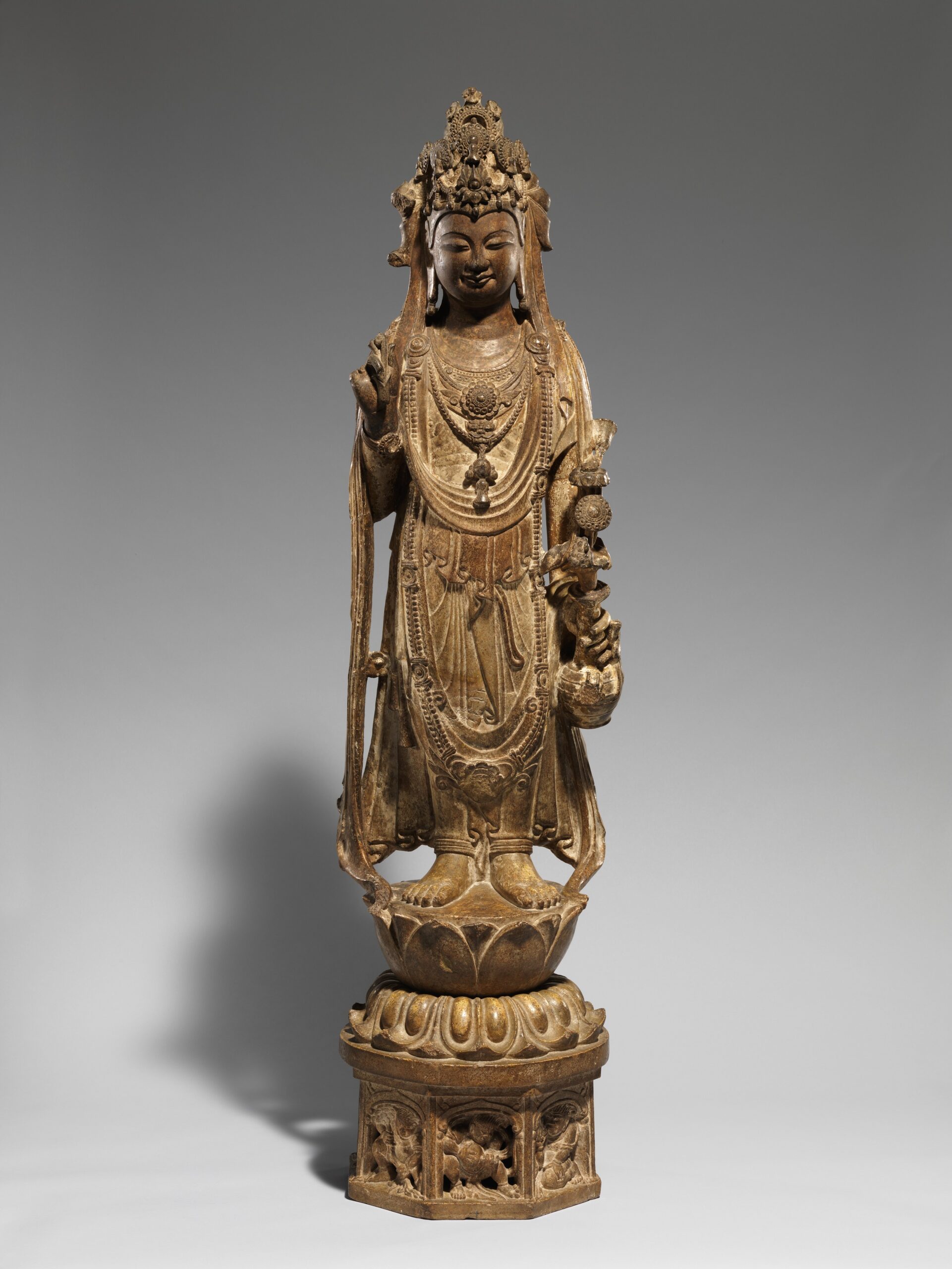
To tell Guanyin from a Buddha in Chinese art, begin with classification and then test the visible clues. A Buddha image often wears a monastic robe and may show marks such as the ushnisha, the rounded protuberance or hair form on the head, and the urna between the brows. Guanyin is Avalokiteshvara, the bodhisattva associated with compassion, and may appear with a crown, jewelry, a lotus, a vase or a small Amitabha Buddha in the headdress.
None of those features works as a universal shortcut. Chinese Guanyin images changed across centuries and regions. Some early forms look like richly dressed princes; some later White-Robed Guanyin images are deliberately plain. A label, inscription or documented temple and museum context can therefore be more decisive than facial appearance.
First distinction: Guanyin is a bodhisattva
Guanyin is the Chinese name for Avalokiteshvara. Museum records also connect the figure with the names Guanshiyin, Kannon and Kanzeon. In Buddhist classification, Guanyin is a bodhisattva associated with compassion, rather than the historical Buddha Shakyamuni.
The word Buddha is also broader than one person. It can refer to Shakyamuni, Amitabha, Vairocana, Maitreya in a Buddha form and other awakened figures. The practical question is therefore not simply “Does this look like a Buddha?” but “Which figure do the attributes, clothing and context support?”
Guanyin and Buddha at a glance
A plain robe may cover both shoulders or leave one shoulder bare. Jewelry is usually absent.
A crown, necklaces, armlets, flowing scarves and elaborate hair can suggest a princely bodhisattva form.
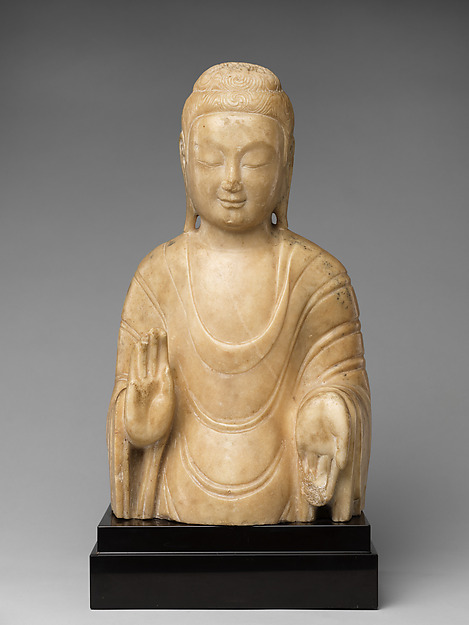
Buddha images often show a cranial protuberance or stylized hair form and a mark between the brows.
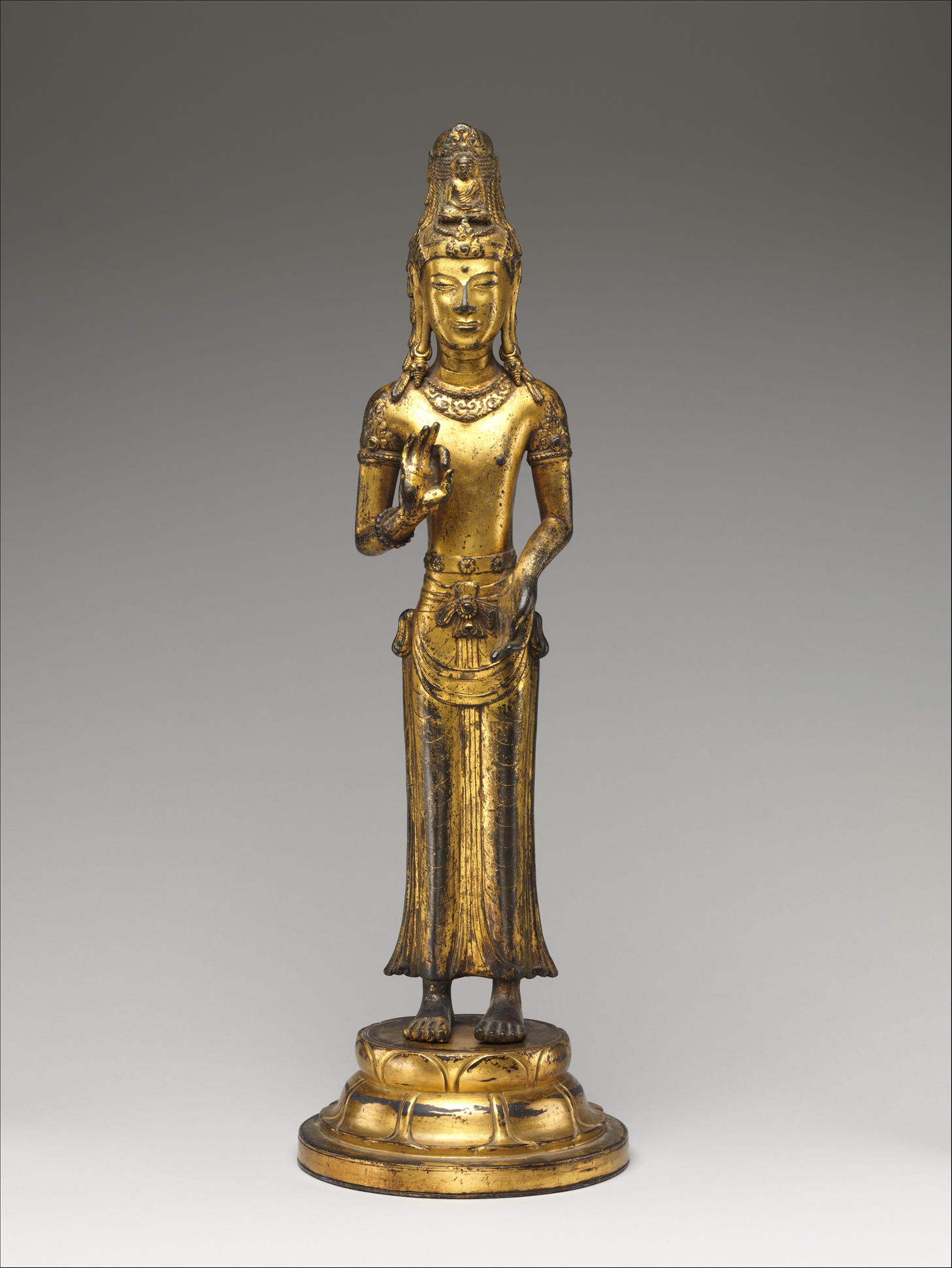
A small seated Amitabha in the headdress is one of the strongest recurring clues for Avalokiteshvara.
These are tendencies, not a scoring system. Elongated earlobes, lotus seats, halos, calm faces and hand gestures occur across Buddhist art and cannot identify Guanyin on their own.
Clue 1: clothing and jewelry
The Metropolitan Museum of Art’s iconography guide describes the Buddha as usually wearing a monastic robe. In many sculptures, the robe is visually simple and the chest is not covered with princely jewelry. This expresses the Buddha’s renunciation of palace life rather than a lack of artistic detail.
Bodhisattvas are often shown as princely figures. A Guanyin sculpture may have a high crown, necklaces, earrings, armlets, a sash or scarves. Early Chinese Avalokiteshvara images can preserve this richly adorned model. When a figure wears elaborate jewelry and a crown, “bodhisattva” is often a better first hypothesis than “Buddha.”
But clothing is not proof. White-Robed Guanyin became an important Chinese form and may appear without the full set of royal ornaments. Conversely, some Buddha images can be crowned in particular esoteric traditions. Clothing should narrow the possibilities, not end the investigation.
Clue 2: the crown and the small Amitabha
A small Buddha image in the crown is one of the most useful identifiers for Avalokiteshvara. The figure is usually understood as Amitabha, with whom Avalokiteshvara is closely associated. The National Museum of Asian Art describes a Chinese Guanyin head from the Longmen Grottoes whose crown contains a seated Amitabha surrounded by plant forms and jewels.
Look carefully before using this clue. A central ornament, damaged relief or vague carved shape is not automatically Amitabha. The image should be visibly seated and readable, or the identification should be supported by a reliable catalogue, inscription or documented source.
Clue 3: lotus, vase, willow and other attributes
A lotus is a familiar Avalokiteshvara attribute, and early forms are sometimes called Padmapani, “lotus bearer.” Later Chinese Guanyin images may also carry a vase, sometimes paired with a willow branch. Multi-armed forms can hold additional ritual objects or show eyes in the palms.
Each clue needs context. The lotus appears with many Buddhist figures. A vase may occur with Maitreya or other deities. A willow-and-vase pairing is more suggestive in later Chinese Guanyin imagery, but it does not appear in every form. Count the attributes that agree with one another and note which expected details are absent or unclear.
Clue 4: posture and setting
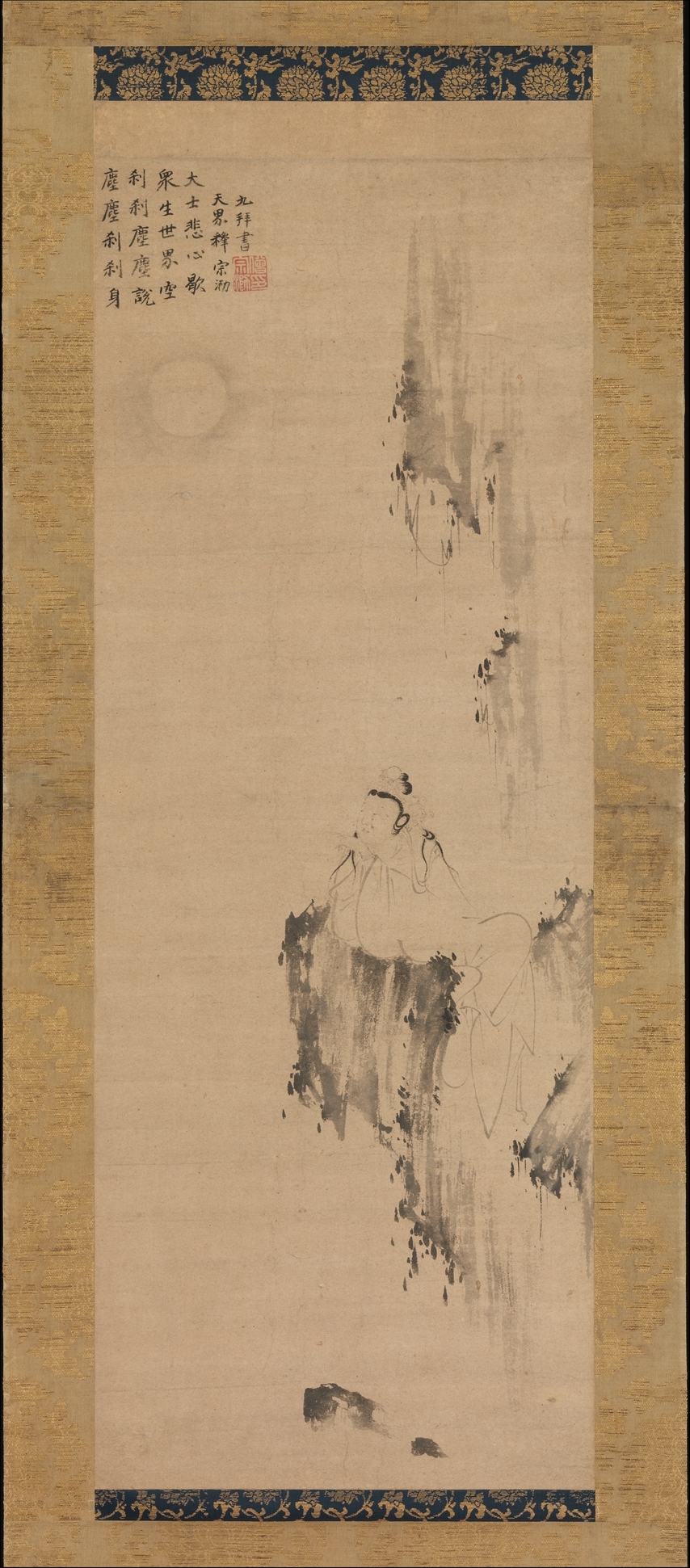
Water-Moon Guanyin is often shown in a relaxed pose sometimes called royal ease: one knee raised, an arm resting naturally, the body seated on rock near water or bamboo. White-Robed Guanyin may appear on a rocky island associated in Chinese tradition with Mount Putuo.
A cross-legged lotus pose does not settle the question. Buddhas, bodhisattvas and other Buddhist figures can all sit on lotus thrones. Likewise, a halo, downcast eyes or a serene expression indicates a sacred image but does not name the individual figure.
Three mistakes that cause misidentification
Guanyin has masculine, feminine and androgynous historical forms. A soft or feminine face is not enough.
Calm expression, lotus seats and halos are shared across Buddhist art.
A lotus or vase supports an identification only when other attributes and context agree.
Museum catalogues, dedicatory inscriptions and documented provenance can outweigh visual guesswork.
The popular English phrase “goddess of mercy” can also confuse the classification. It reflects the strongly feminine Guanyin forms familiar in later Chinese culture, but “bodhisattva of compassion” is the more precise starting point for Buddhist art.
A five-step recognition method
- Start with the supplied name and context.
Record the museum title, inscription, temple setting or seller’s subject label, but do not treat an unsupported retail title as final proof.
- Classify the clothing.
Ask whether the figure wears a monastic robe, princely jewelry, a high crown, white robes or a regionally specific costume.
- Inspect the head and headdress.
Look for an ushnisha and urna on a Buddha image, or a readable Amitabha figure, crown and elaborate hair on Guanyin.
- List the visible attributes.
Note the lotus, vase, willow, hands, arms, posture and setting. Mark damaged or ambiguous details as uncertain.
- Test the whole combination.
Compare the clues with a museum record from the same tradition or period. If they conflict, keep the identification qualified.
How to read a modern Guanyin statue
A modern product photograph can show a crown, face, hands, lotus, vase, robe, base and visible finish. Multiple real views are useful because projecting details or a small crown image may disappear in a single front photograph.
Images cannot establish the exact wood species, metal alloy, age, maker, production method, temple use, consecration or spiritual status. Cultural research can explain an iconographic tradition, but it cannot fill missing facts in an individual product record.
Identification describes the represented figure and visible attributes. A Guanyin image may have devotional or personal significance, but an object does not guarantee protection, healing, fertility, luck, prosperity or spiritual results.
Frequently asked questions
Is Guanyin a Buddha?
Guanyin is Avalokiteshvara, a bodhisattva associated with compassion. The small Buddha sometimes shown in Guanyin’s crown is usually Amitabha; it does not mean the larger figure is Amitabha.
Can a Buddha wear a crown?
Yes. Crowned Buddha images appear in particular traditions, so a crown alone cannot prove that a figure is Guanyin. The crown’s central image, the clothing, attributes and documented context still matter.
Does every Guanyin statue carry a vase?
No. The vase and willow are familiar in later Chinese forms, but Guanyin also appears with a lotus, in royal-ease poses, in white robes, with multiple arms or without a clearly visible handheld attribute.
Is a female-looking figure always Guanyin?
No. Feminine Guanyin forms became especially prominent in China, but gender presentation alone cannot identify a Buddhist image. Other bodhisattvas and deities can also appear feminine.
What is the strongest visual clue for Guanyin?
A clearly readable Amitabha Buddha in the crown is one of the strongest recurring clues. Even then, a museum label, inscription or documented context provides the safest identification.
Sources and further reading
- The Metropolitan Museum of Art: Recognizing the Gods
- The Metropolitan Museum of Art: Bodhisattva Avalokiteshvara (Guanyin), late 6th–early 7th century
- The Metropolitan Museum of Art: Buddha Shakyamuni, Sui dynasty
- The Metropolitan Museum of Art: Bodhisattva Avalokiteshvara (Guanyin), Dali kingdom
- The Metropolitan Museum of Art: White-Robed Guanyin, late 14th century
- British Museum: Avalokiteshvara / Guanyin / Kannon
- National Museum of Asian Art: Bodhisattva Avalokiteshvara (Guanyin), Head
- Carvzen: Guanyin Meaning: Avalokiteshvara, Symbols and Statue Forms
This article uses four public-domain museum images and one approved Carvzen product image. It contains no AI-generated editorial illustrations.
Current object
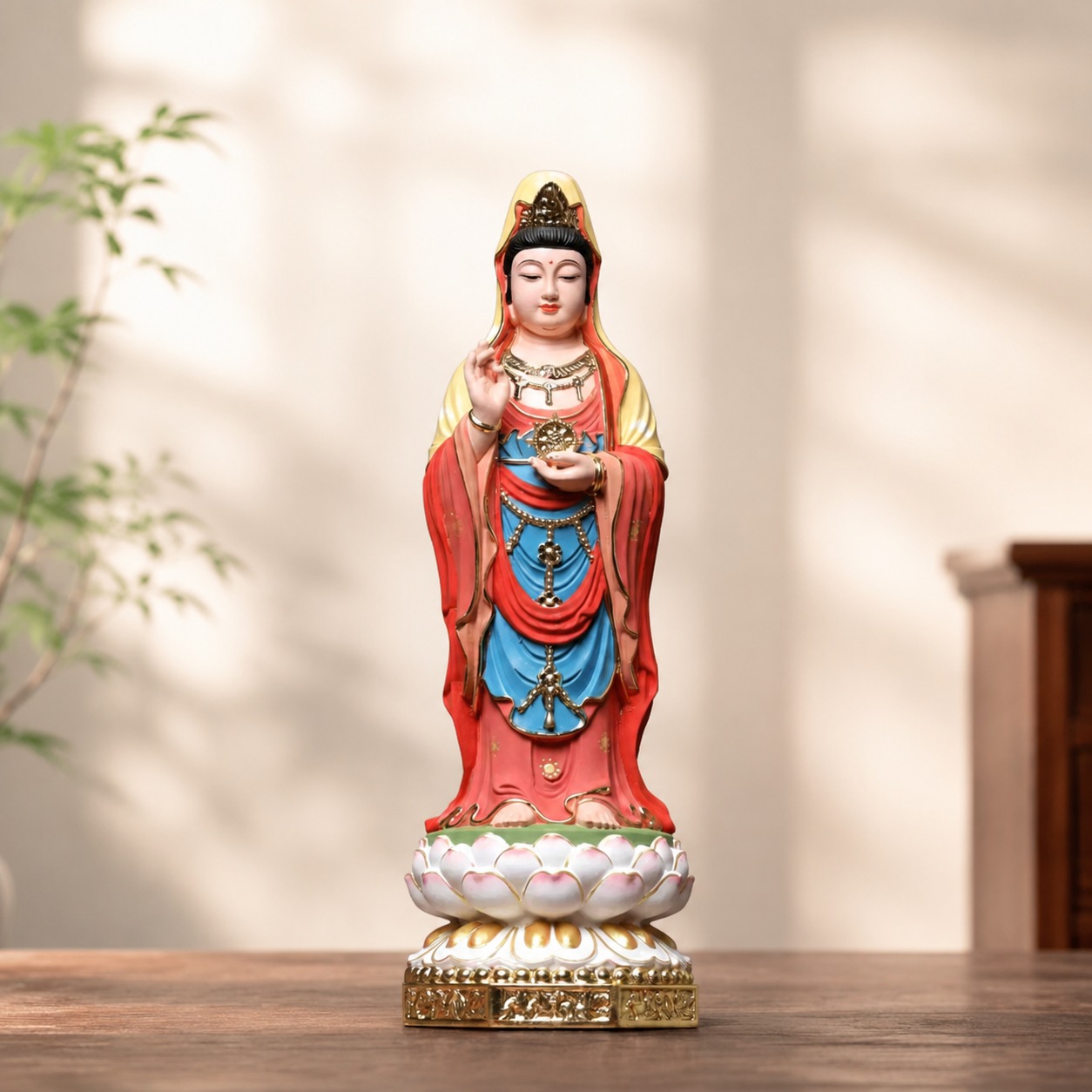
Nanhai Guanyin Wood Statue
Use the current product gallery to inspect the crown, hands, lotus, robes, base and visible finish from several angles.
Read the product page for verified dimensions, current material wording, availability and policies. Cultural identification is not a promised result.
View current gallery