Antique Wooden Buddha Statue: How to Judge Age and Authenticity
“Antique,” “vintage,” “old” and “antique-style” are used loosely on wooden Buddha statue listings. This guide explains what each word usually means, which physical signs carry weight, how China’s export rules bear on old pieces, and what to ask a seller before you buy.

An antique wooden Buddha statue is one that is genuinely old, but no retail label guarantees that. “Antique,” “vintage,” “old” and “antique-style” are used loosely, and no single physical sign proves age. Judge a piece by several signs together, such as irregular wear at contact points, varied tool marks, natural checking in the wood and an unaltered base, and by the evidence the seller puts in writing.
One point up front so nothing is hidden: Carvzen sells newly made wood carvings. We do not sell antiques, and this guide is not a route to one of our products. If you want a genuinely old temple piece, buy from a specialist dealer or auction house that provides a condition report. What we can offer here is a way to read the evidence.
What the words on a listing usually mean
There is no single retail definition of “antique” that every seller follows. Dealers often use age thresholds as a rule of thumb, but the number varies by seller, by country and by purpose, whether customs, insurance or auction. The useful question is not “is it called antique?” but “what does the seller mean, and what is the evidence?”
Ask for the estimated date, the basis for that estimate and any provenance.
Usually makes no claim about a specific century.
Almost always a new object. A legitimate decorative choice when labelled honestly.
Should be described as newly made, with size and material stated.
If a listing says “antique” but gives no date, no origin and no photographs of the base or interior, treat it as a description of appearance, not a verified fact.
Physical signs that carry weight
Specialists describe authentication as the convergence of several signs, and they recommend independent appraisal for anything valuable. With that caveat, these are the observations commonly pointed to on wooden Buddhist figures.
On old pieces, wear tends to be irregular and concentrated where hands and cloth touch: hands, feet, nose tip and base edges. An even, all-over “worn” look is a warning sign because it is easy to produce with abrasion and stain.
Hand finishing leaves varied striations. Marks that are perfectly regular, or that look added afterwards, deserve a closer look.
Aged lacquer can develop a network of fine cracks as wood moves with humidity. The pattern is irregular; evenly spaced cracks may be artificial.
Wood dries and moves over time, so real age often shows as cracks that follow the grain and darkening that is uneven rather than one coat of colour.
Handwork usually shows small asymmetries and variations in thickness. Mould lines and very even interiors point to production copies.
Old gold leaf tends to wear and flake unevenly, revealing what lies beneath. Modern gilding often shows uniform coverage.
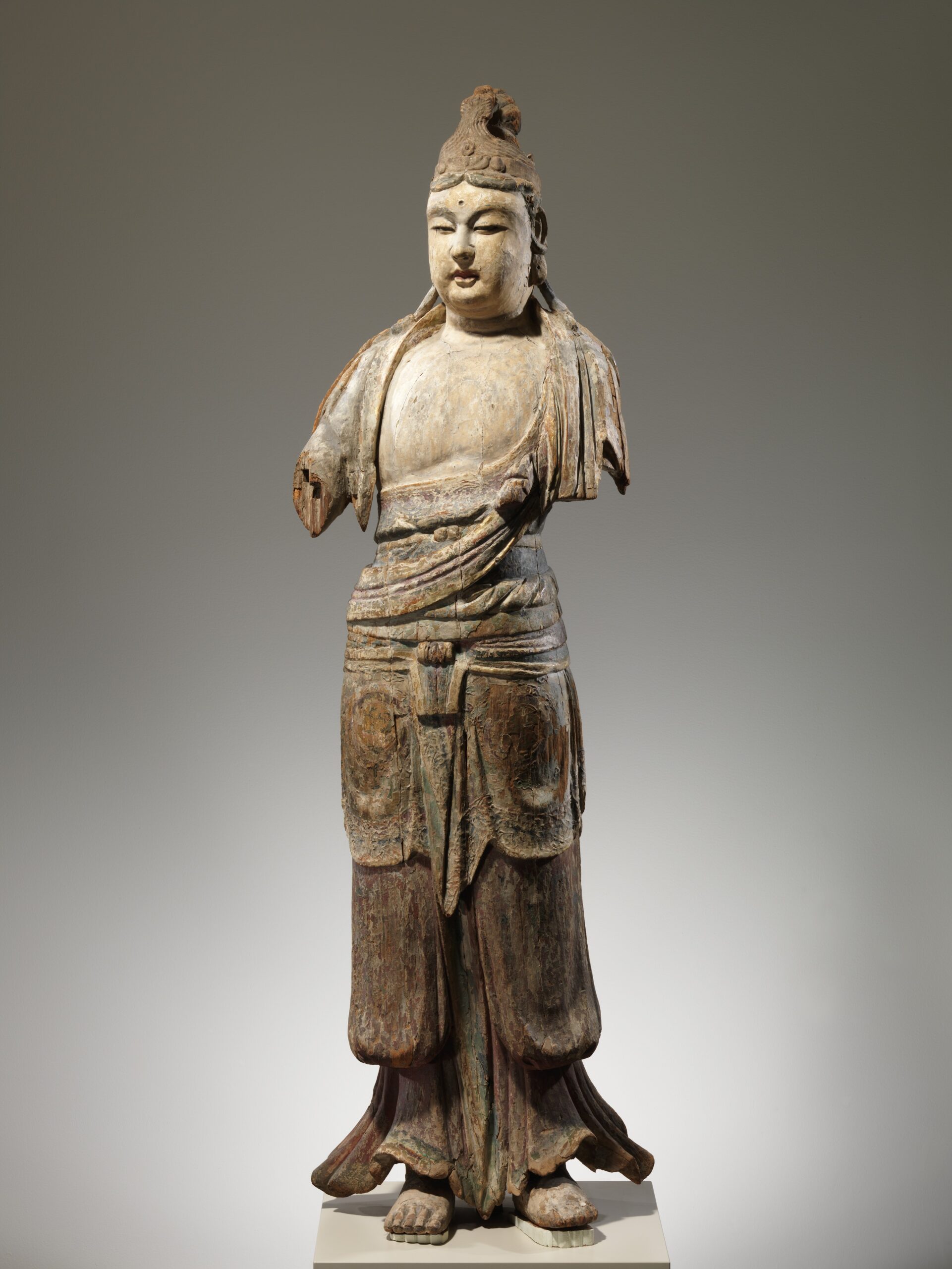
Every one of these signs can be imitated, and some genuinely old pieces have been cleaned, repainted or restored, which changes how they look. That is why a photograph of the front alone is not enough evidence for anyone, including us.

Exporting old Chinese pieces: the paperwork question
If a piece is described as an old Chinese temple statue and offered from China, the export rules matter. According to guidance published on China Customs’ English site, objects created after 1949 are not classified as cultural relics and are handled as ordinary goods. Cultural relics that pre-date that, other than those in prohibited categories, can be exported only with approval from the state cultural relics authority. Certain categories, such as rare and precious relics, cannot be exported at all.
We are summarising one official source, and detailed procedures change. Confirm the current requirements with the relevant authorities before buying anything you are told is old. A seller who says a genuinely old Chinese wooden statue ships abroad with no paperwork should be asked to explain that in writing.
What to ask a seller before buying
- The date or period claimed, and what it is based on: provenance, comparison, testing or an opinion.
- Photographs of the base, back and any interior, plus close-ups of wear points and any lacquer or gilding.
- The wood, if known. If a species has not been verified, an honest listing says only “wood.”
- Restoration history. Repainting, regilding and replaced parts are normal on old pieces but affect value and should be disclosed.
- A clear return policy that applies if the description proves wrong.
- Documents. For anything of significant value, ask what export or import paperwork exists.
A seller who answers these plainly is worth more than a seller with a beautiful photograph.
“Antique-style” is not a bad thing
A new wooden Buddha with an aged finish can be a perfectly good purchase if you want the look without the condition risks of old wood or the legal complications that can come with genuine antiques. What matters is honest labelling: wording that says the piece is newly made, gives dimensions, shows the base and back, and does not imply a date it cannot support.
That is how we describe our own pieces. We state the size, show the actual item, list wood only as “wood” unless the species has been verified, and avoid implying an age or origin we cannot document. Each item and its packaging are checked before shipment.
Caring for old and new wood alike
Wood reacts to humidity and heat. Old, lacquered or gessoed surfaces are especially sensitive to sudden change, and cracks can widen when a piece moves between very dry and very damp rooms. Our guide to caring for a wooden statue in dry or humid homes covers stable conditions, safe dusting and the warning signs to watch for. If you are still working out what a figure depicts, see Maitreya vs. the Laughing Buddha and how to recognize Guanyin in Chinese art.
Frequently asked questions
How can I tell if a wooden Buddha statue is really antique?
No single sign is enough. Look for irregular wear at contact points, varied tool marks, natural checking in the wood, an unmodified base and evidence of age in lacquer or gilding, then ask for provenance. For valuable pieces, get an independent appraisal.
Does a dark, worn look mean a statue is old?
Not by itself. Dark, worn finishes can be produced quickly with stain and abrasion. What matters is whether the wear is irregular and consistent with how the object would actually have been handled.
Is “antique-style” the same as antique?
No. Antique-style normally describes a new piece finished to look old.
Can genuine antiques be exported from China?
Only under China’s cultural relics rules, and some categories cannot be exported. According to China Customs guidance, items created after 1949 are not classed as cultural relics. Confirm the current rules before relying on any seller’s claim.
Should I buy old wood or new wood?
It depends on what you want. Old pieces carry history and risk: condition, restoration and paperwork all matter. New carvings carry none of that history and are simpler to verify and ship.
Does Carvzen sell antiques?
No. Carvzen sells newly made wood carvings and describes them as such.
Sources and further reading
- China Customs (English): What are cultural relics prohibited from or permitted for export?
- HD Asian Art: Antique vs. reproduction Buddhist statues, a collector’s guide
- The Metropolitan Museum of Art: Attendant Bodhisattva, object 28.122.1 (Public Domain)
- The Metropolitan Museum of Art: Bodhisattva, object 61.237 (Public Domain)
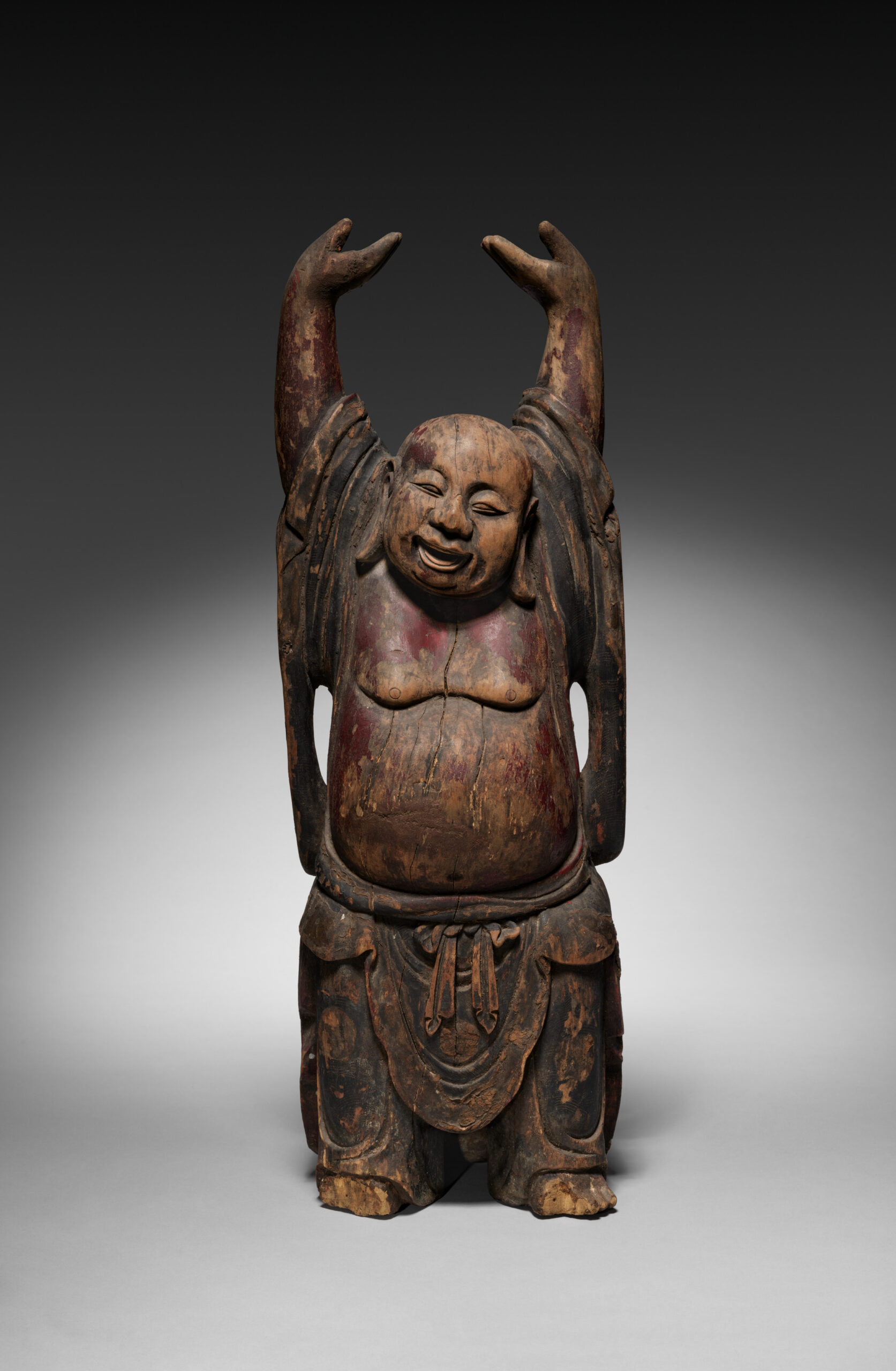
- Cleveland Museum of Art: The Monk Budai, object 1973.26 (CC0)
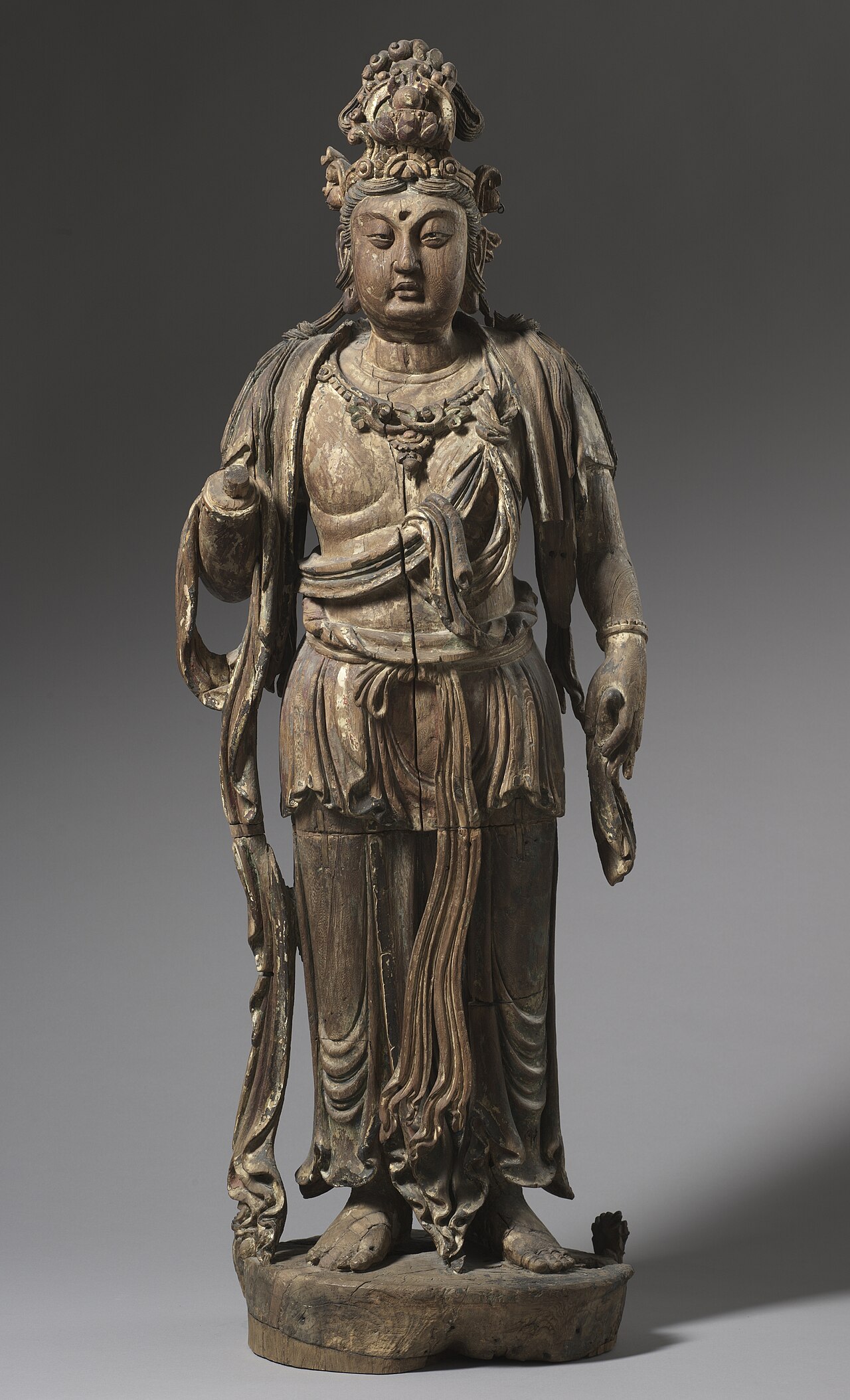
- Cleveland Museum of Art: Standing Guanyin, object 1980.80 (CC0)
- Cleveland Museum of Art: Standing Bodhisattva, object 1963.581 (CC0)
The article uses five credited museum images: two from The Metropolitan Museum of Art (Public Domain) and three from the Cleveland Museum of Art (CC0). They are historical collection objects, not Carvzen products.
A current wood carving
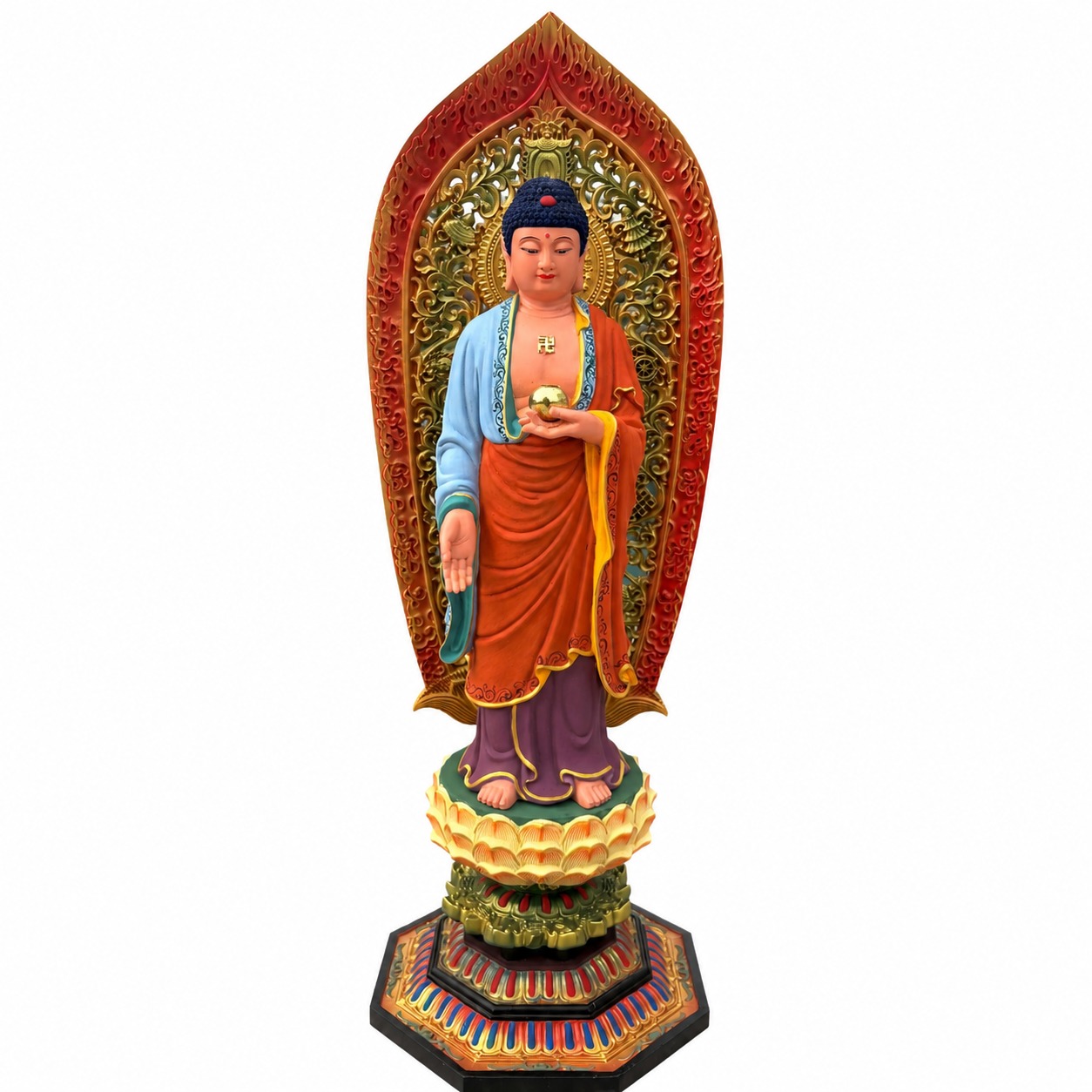
Painted Medicine Buddha Wood Statue
Explore a current wood carving through its real product gallery and listed facts. It is a newly made piece, not an antique.
View current gallery