Nezha Meaning: Third Lotus Prince, Symbols and Statue Forms
Nezha is a youthful deity whose image developed through Buddhist transmission, Chinese religious practice, Ming fiction, opera and modern screen adaptations. This guide separates those layers, explains his most familiar attributes and shows what a current statue can—and cannot—establish.
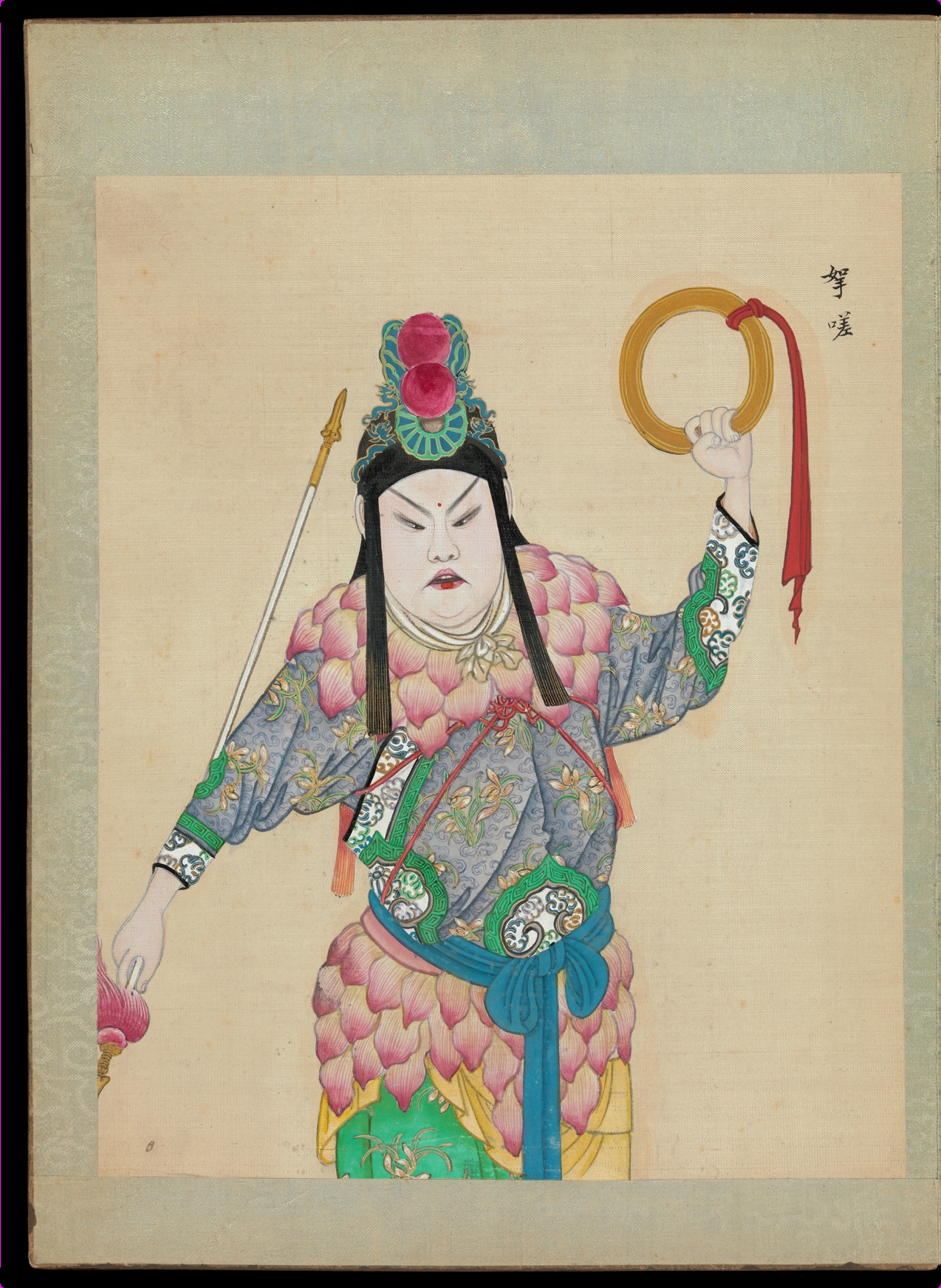
In English, Nezha (哪吒) is usually kept as the deity’s name rather than translated. He is a youthful figure in Chinese religious and literary traditions, often called the Third Prince or Third Lotus Prince and known in living worship as the Marshal of the Central Altar. Familiar attributes include a ring, sash, spear and wheels. These names and images accumulated over time; they do not come from one fixed version of a single story.
A Nezha image may be approached devotionally, culturally or decoratively. Those settings are not interchangeable. A statue can represent the figure and display familiar iconography, but it does not guarantee protection, safety, luck, success, spiritual benefit or any other result.
From Nalakūvara to a Chinese divine child
Meir Shahar’s historical study traces Nezha through a long process of transmission and reinvention. The name is connected with Nalakūvara in Indian mythology and with materials carried into China through esoteric Buddhist texts and ritual traditions. Chinese religious literature, drama and storytelling then developed Nezha into the divine child familiar today.
This history is better understood as cultural transformation than as a simple claim that one modern character was copied intact from another culture. Shahar follows different layers—from Indian sources and medieval Buddhist materials to Chinese fiction, performance and contemporary worship. Each layer contributes something, and none should be used alone as the complete biography of every Nezha image.
The lotus-body story in Investiture of the Gods
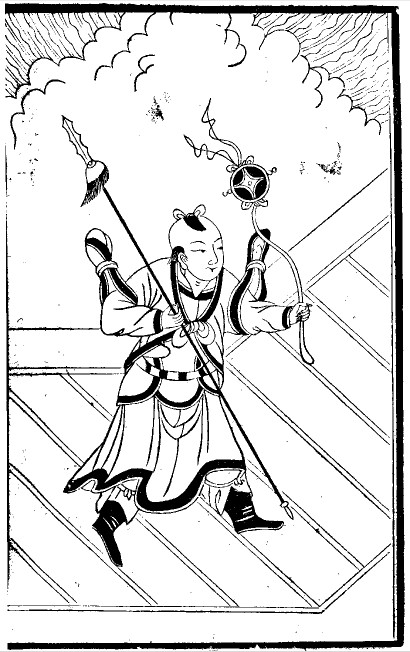
The late-Ming novel commonly known in English as Investiture of the Gods or Fengshen Yanyi supplies much of the plot now associated with Nezha. Its chapters describe conflict involving the Dragon King’s family, Nezha’s break with his mortal body and his return through a body formed from lotus material by his teacher, Taiyi Zhenren.
This literary rebirth is why “Third Lotus Prince” is such a recognizable title and why lotus imagery appears in later adaptations. The novel also helps organize the familiar set of weapons around the character. It is still a work of fiction, however—not a neutral historical record of every earlier belief or a catalogue against which every religious image must be judged.
Journey to the West tells a related—but not identical—version
In chapter 4 of Journey to the West, Nezha appears as a celestial warrior who confronts Sun Wukong. The text describes a three-headed, six-armed battle form and a set of weapons that differs from the compact group most often used in modern popular imagery. Later in chapter 83, the novel retells Nezha’s conflict with his father and lotus-body restoration in its own terms.
The important point is variation. Investiture of the Gods, Journey to the West, temple traditions, opera and recent animation can share names and motifs without agreeing in every detail. When a modern statue carries a spear, ring, sash and wheels, it reflects a recognizable visual vocabulary; it does not prove that its design follows one text exactly.
How to read Nezha’s familiar symbols
British Museum records identify a youthful Nezha figure with a ring, a long sash and firing wheels, offering a useful museum example of the attributes used to recognize him. Popular translations of their Chinese names vary, so it is safer to pair the English term with the visible object rather than insist on one spelling.
The circular weapon is commonly called the Universe Ring or Qiankun Ring. Its presence is a strong clue, but rings also appear in other visual contexts.
The flowing red sash is often called the Huntian Ling. In sculpture, its loops can shape the silhouette and create fragile projecting sections.
A pointed spear is prominent in fiction, opera and many modern figures. Its length and angle matter when checking display clearance.
Wheels at or beneath the feet are among Nezha’s most distinctive modern markers. Their number and design vary by image.
Attributes help identify a subject. They do not authenticate age, ritual use, geographic origin, material or production method. Those claims require evidence specific to the object.
Why Nezha statues do not all look alike
Some images present a child or adolescent warrior with one head and two arms. Others use multi-headed and multi-armed martial forms. Costume can resemble armor, lotus-petal dress, theatrical clothing or a designer’s modern reinterpretation. Facial expressions range from stern to playful.
Variation can reflect different texts, performance traditions, regional worship, workshop models and contemporary design choices. A listing should therefore describe what is actually visible—pose, implements, base and finish—without claiming that one version is the only correct Nezha.
Opera, procession and living practice
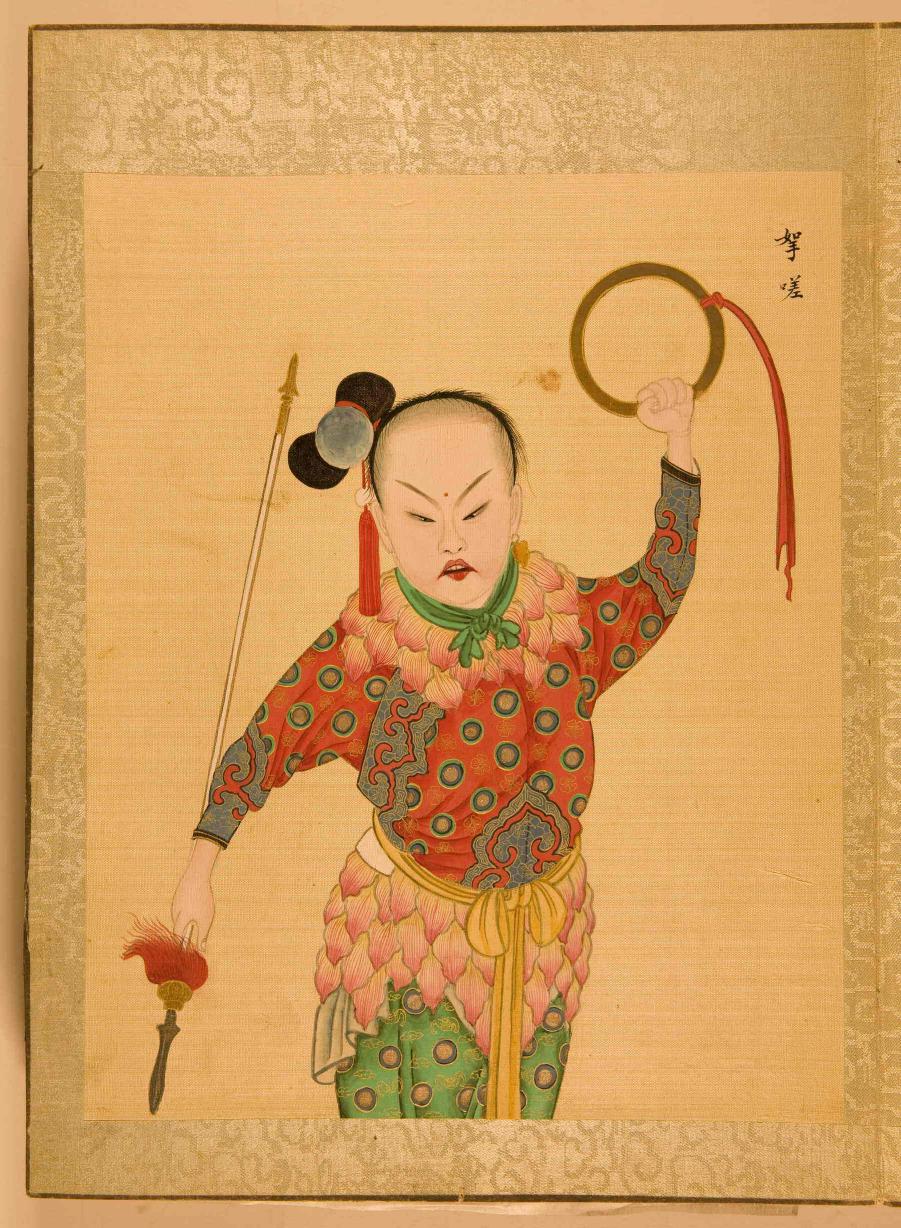
Nezha has not remained only on the page. Regional opera, puppet theatre, temple festivals and processional performance continue to make the divine child visible in different communities. Official cultural documentation from Macao, for example, discusses local Nezha legend and procession as a living folk-religious tradition rather than as a single national ritual template.
Living practices should be described with their location and community attached. A processional deity figure, an altar image, a Peking opera costume and a decorative carving may all be called Nezha, but they serve different purposes. None should be presented as evidence that every owner must display or treat a statue in the same way.
Modern films reshape the character again
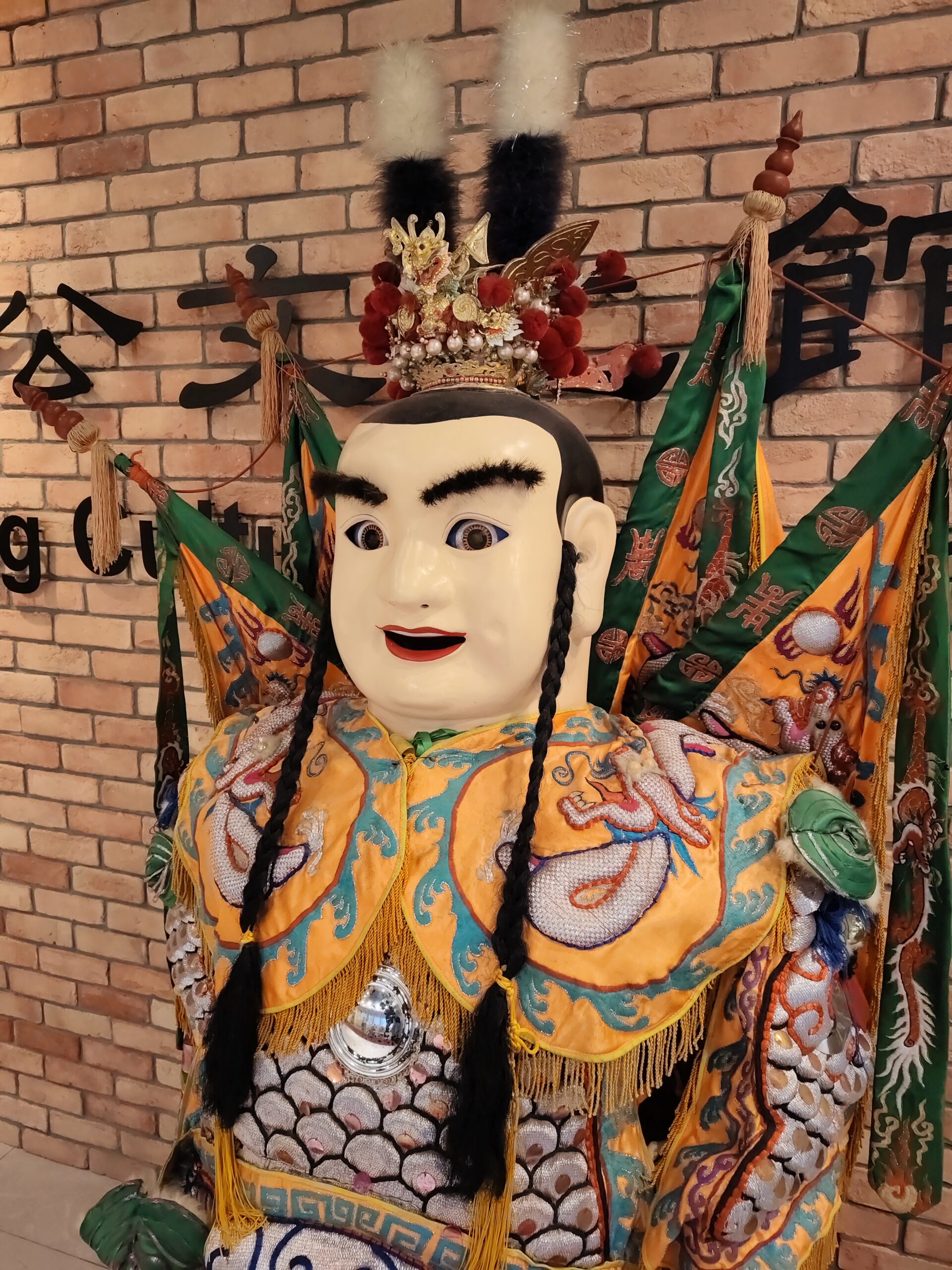
Animation, television, games and film have introduced Nezha to audiences who may never have encountered the earlier religious or literary sources. Academic research on Chinese animation shows that modern screen versions repeatedly redesign the character and change the social questions carried by the story.
That adaptability is part of Nezha’s modern importance, but a recent film should not be used as a shortcut for all earlier history. Screen costumes, personalities and plot relationships are creative adaptations. A useful cultural guide can explain the connection while keeping the adaptation, the classical novels and living worship in separate evidence categories.
What a current Nezha statue can—and cannot—tell you
Real product photographs can establish visible features: the pose, which objects are present, how a sash curves around the body, whether wheels are part of the base, where projecting pieces need clearance and how the photographed surface appears.
Images alone cannot prove wood species, age, temple origin, ritual consecration, maker identity, production method or protective function. Museum and literary sources explain the represented subject; they cannot fill missing facts in a retail product record.
Nezha is described as a protector in particular religious and cultural traditions. Owning or positioning a decorative statue does not guarantee protection, safe travel, courage, luck, success or spiritual results.
Display and placement without a universal formula
Devotional placement belongs to particular temples, households and religious communities. There is no single direction, room or height that can be stated as mandatory for every Nezha image.
For cultural or decorative display, begin with practical object care. Use a stable surface, leave space around a spear, sash or wheel, avoid heat and standing moisture, limit prolonged direct sunlight and place the figure where projecting parts will not be knocked. For devotional use, follow the practice of the relevant community rather than generic online “placement rules.”
What to check before buying a Nezha statue
A careful listing should let the actual object—not a promise—lead the decision.
Compare the title with visible features such as the ring, sash, spear and wheels.
Review the front, angle, detail, back and base where available.
Use listed measurements instead of judging scale from a cropped or generated scene.
Separate confirmed product facts from visual assumptions and cultural interpretation.
Also read the current Shipping Policy and Returns & Refunds information before checkout. The product page remains the source for the current gallery, measurements, material wording, price, availability and policies.
Frequently asked questions
Is Nezha a god, a Buddhist figure or a literary character?
All three descriptions can be relevant in different contexts. His history includes Buddhist transmission, Chinese religious worship and major roles in fiction and performance. The contexts overlap, but they are not identical.
Why is Nezha called the Third Lotus Prince?
“Third Prince” identifies him within the family of Li Jing in familiar Chinese narratives. “Lotus Prince” reflects the lotus-body rebirth story made especially famous by Investiture of the Gods.
What are Nezha’s main weapons?
The ring, long sash, spear and wind-fire wheels form the most familiar modern set. Other texts and images give him different or additional implements, especially in multi-armed battle forms.
Are Nezha and Ne Zha different?
No. They are English romanization and spacing choices for the same Chinese name, 哪吒. “Nezha” is common in scholarship and collection records; “Ne Zha” is familiar from film titles and popular media.
Does a Nezha statue need to face a particular direction?
No universal direction applies to every tradition or owner. Devotional settings should follow relevant community practice; decorative display can prioritize stability, respectful handling and suitable environmental conditions.
Sources and further reading
- Meir Shahar, Oedipal God: The Chinese Nezha and His Indian Origins, University of Hawai‘i Press
- Meir Shahar, “Indian Mythology and the Chinese Imagination: Nezha, Nalakūvara, and Kṛṣṇa”
- Investiture of the Gods, chapter 14: Nezha manifests as a lotus incarnation
- Journey to the West, chapter 4: Nezha confronts Sun Wukong
- Journey to the West, chapter 83: Nezha’s lotus-body account
- British Museum: carved figure of Nezha, 19th–20th century
- Humanities and Social Sciences Communications: transformation of Nezha in Chinese animation
- Cultural Affairs Bureau of Macao: The Legend of Nezha
- The Metropolitan Museum of Art: One Hundred Portraits of Peking Opera Characters
Image disclosure: This guide uses Public Domain or CC0 editorial images and one approved Carvzen product image. It contains no AI-generated editorial illustrations.
Current object
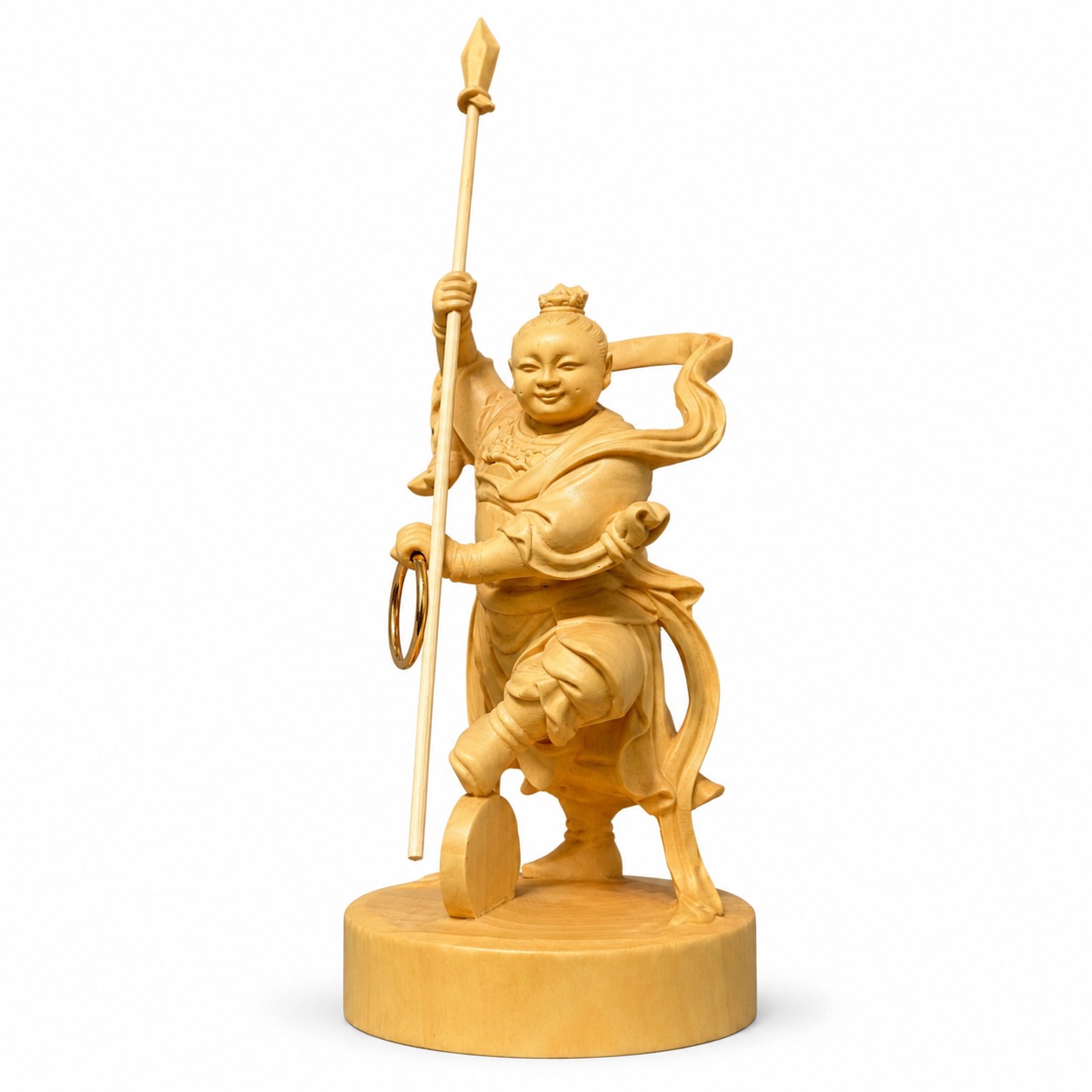
Nezha Wood Statue
A current decorative wood object with an approved eight-image gallery. The supplier-listed approximate height is 4.3 in (11 cm); the exact wood species is not confirmed.
Compare the real gallery, listed measurements, visible finish and current policies. Cultural meaning is not a promised result.
View current gallery