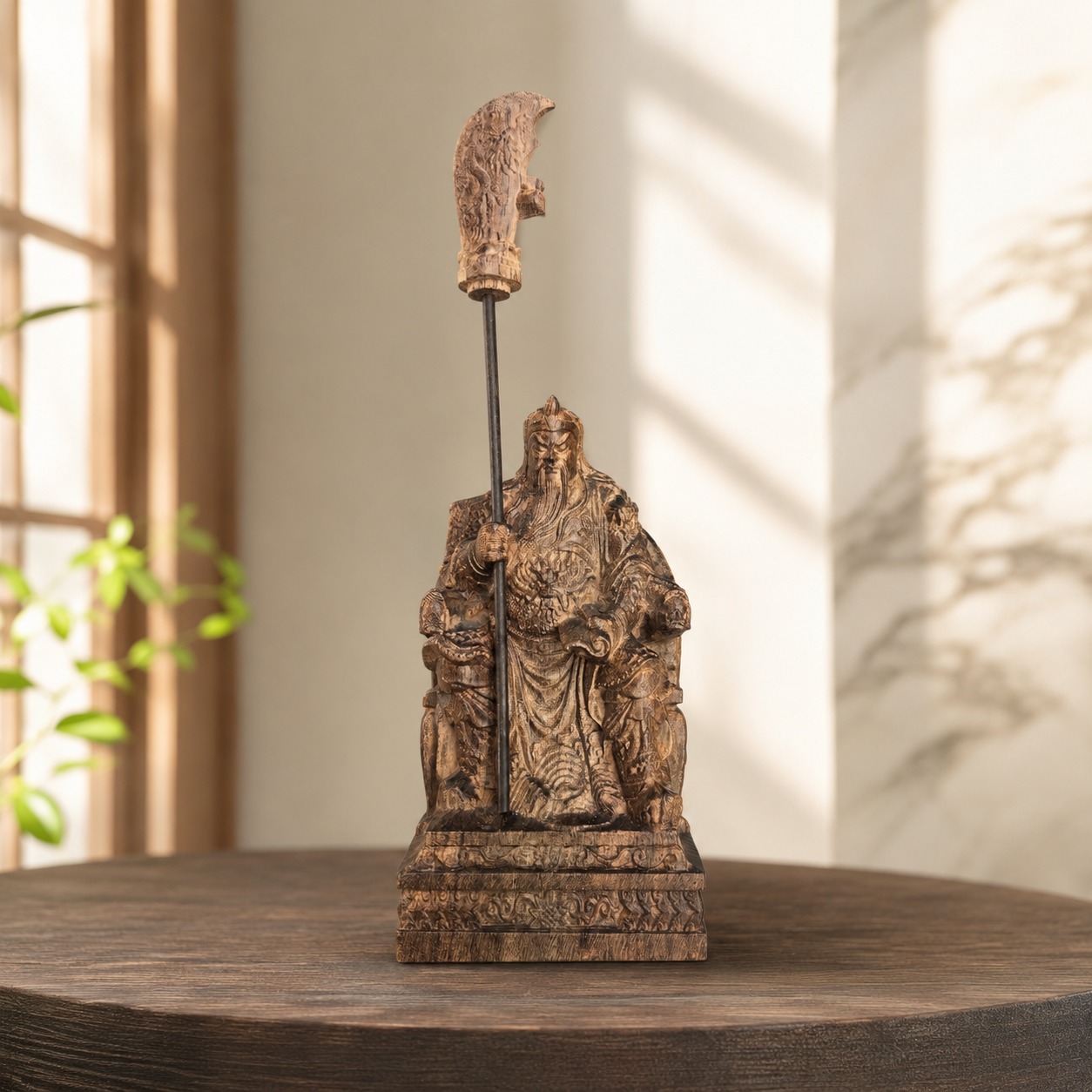
Guan Gong Statue Meaning: History, Symbols and Placement
Guan Gong statues can be read as devotional figures, cultural objects or reminders of loyalty and integrity. This guide separates the historical Guan Yu from his later titles, explains common visual features without treating every depiction as identical, and places modern display customs in their proper context.
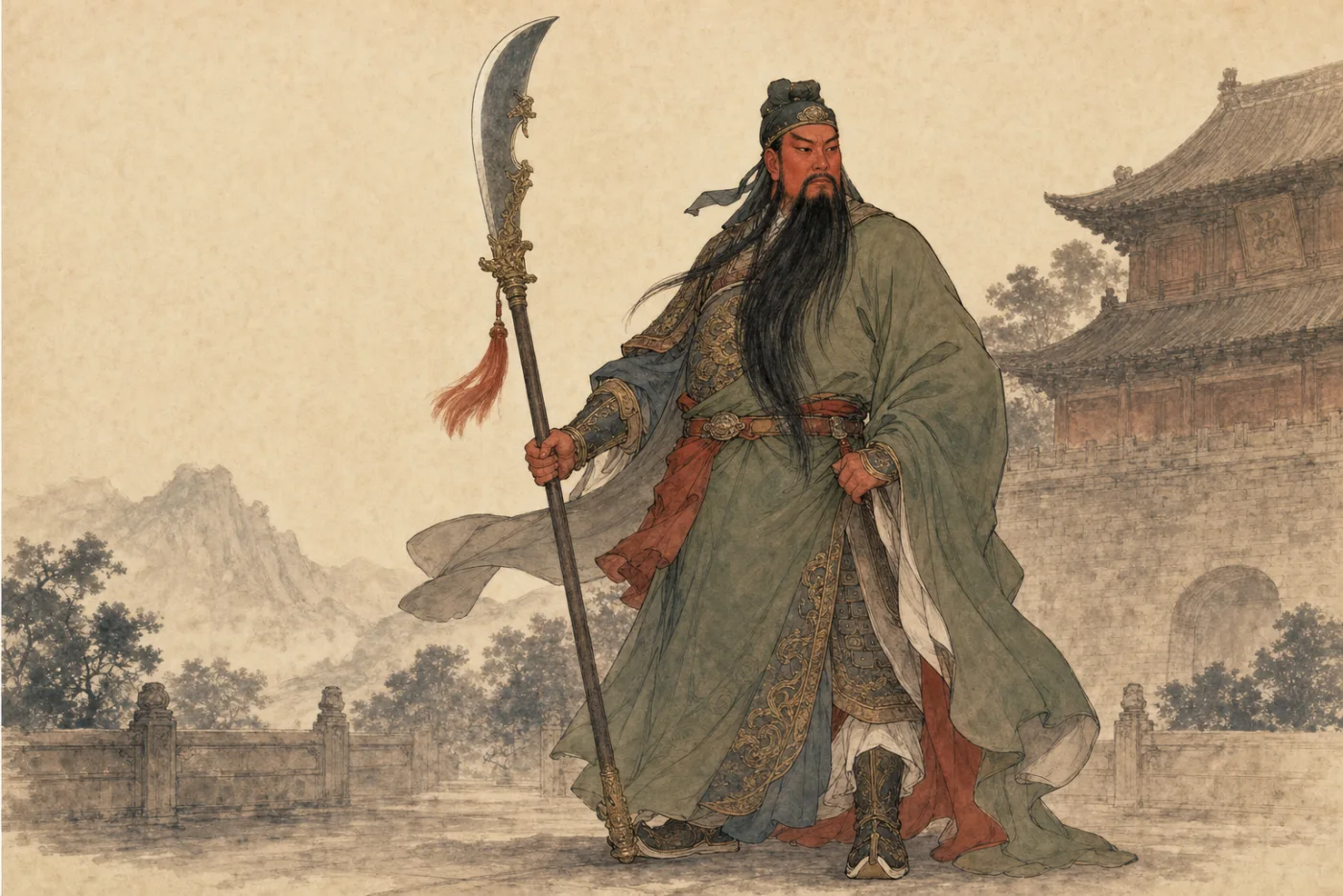
A Guan Gong statue depicts Guan Yu, the historical general also known by the respectful title Guan Gong and the later divine title Guan Di. Depending on the setting, it may be approached as a devotional figure, a cultural object, or a decorative reminder of loyalty, faithfulness and integrity. The object itself does not determine wealth, safety, career success or spiritual results; its meaning depends on the tradition, owner and setting in which it is displayed.
Who was Guan Yu?
Guan Yu was a military general of the Eastern Han dynasty. He served Liu Bei and died in 219. Museum sources describe him as a historical figure renowned for valor, faithfulness, loyalty and righteousness. These qualities became central to the way later generations remembered and represented him.
The historical record and the later cultural image should be kept distinct. A wood statue is not a portrait taken from life. It belongs to a visual tradition that developed as Guan Yu became an important figure in religious and popular culture.
Guan Yu, Guan Gong and Guan Di
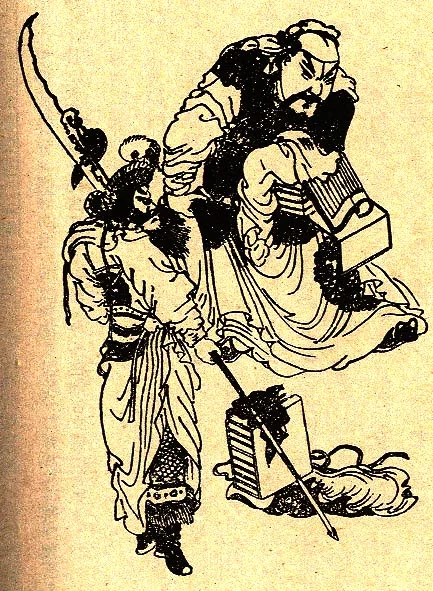
The three names describe related but different aspects of the same figure. Guan Yu is the historical personal name. Guan Gong means “Lord Guan” and is a respectful title. Guan Di, or “Emperor Guan,” reflects the divine rank he received in later tradition.
Understanding the names helps a buyer read product titles more carefully. A listing may use Guan Yu or Guan Gong for the same subject, while Guan Di places greater emphasis on his later divine status. The wording alone does not establish the date, material or ritual use of an individual statue; those details must be verified separately.
How a historical general became a cultural figure
The Metropolitan Museum of Art records that the Ming Wanli emperor elevated Guan Yu to the rank of emperor. Qing rulers later supported shrines in his honor. Museum collections also describe his veneration in religious and popular traditions. This later history explains why Guan Yu can appear in temples, devotional settings and secular displays.
For one owner, the figure may carry religious meaning. For another, it may represent loyalty, courage or integrity. A decorative display does not need to be presented as a universal religious practice, and a devotional interpretation should not be reduced to an interior-design trend. Both contexts deserve accurate description.
How to read visible features
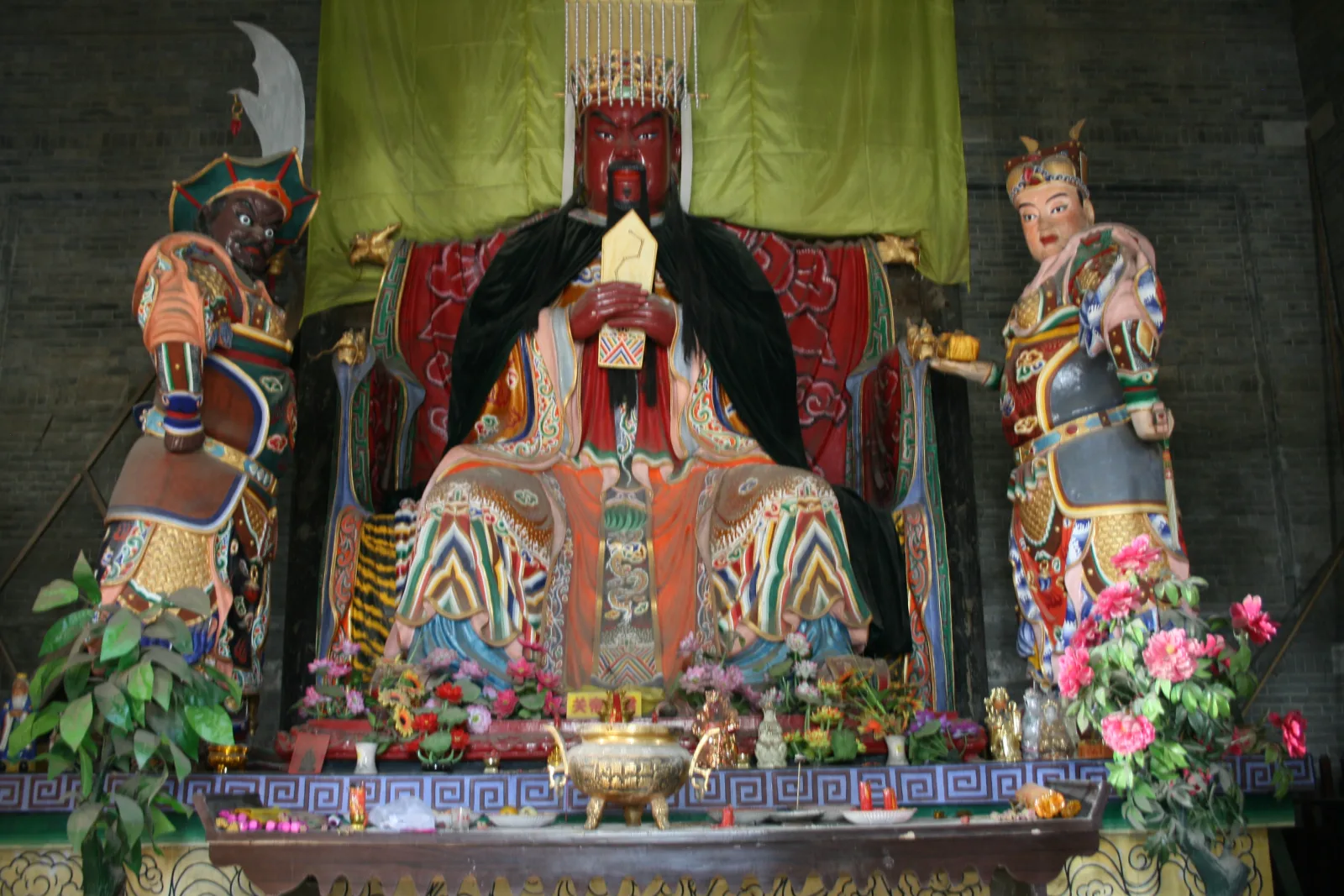
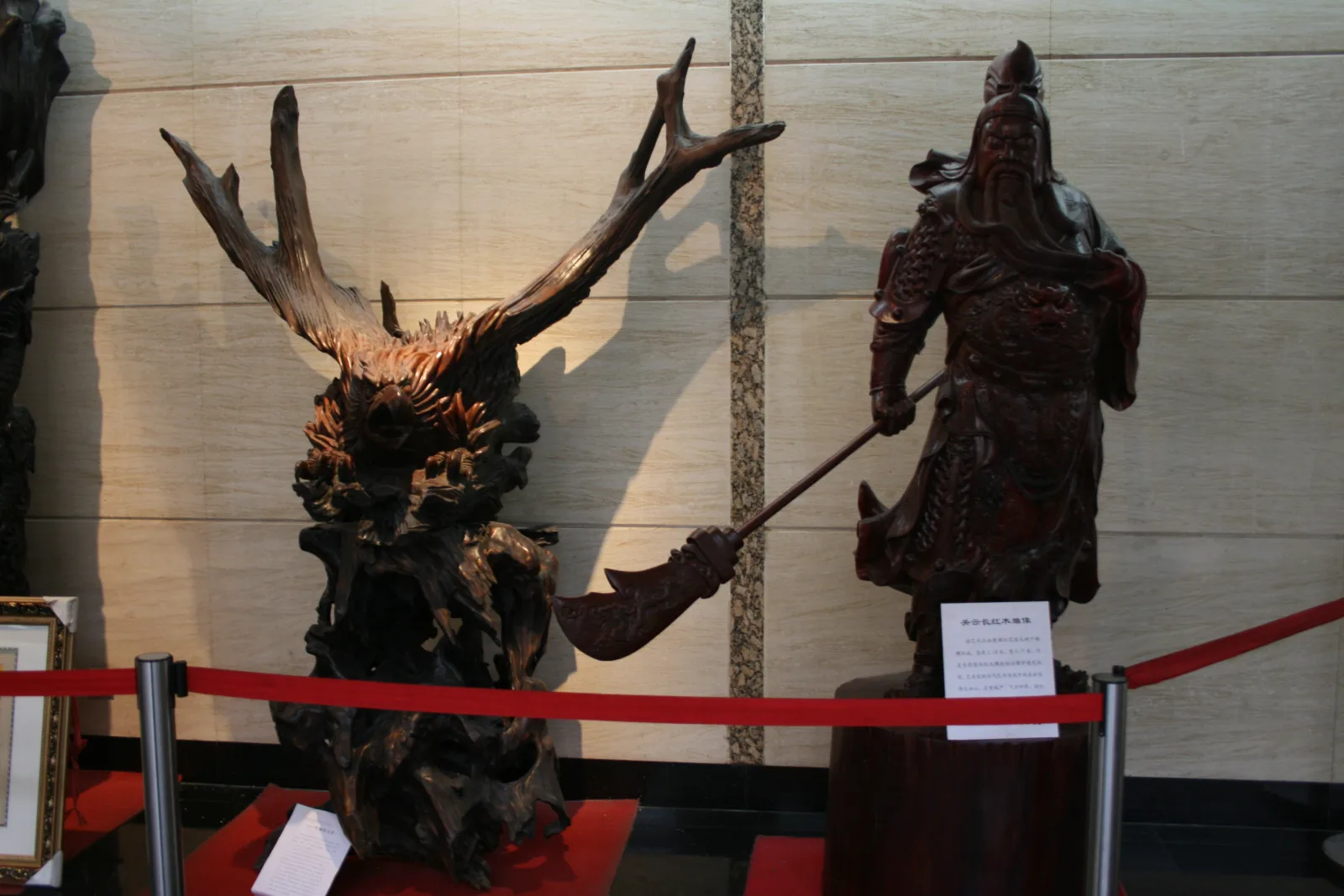
Traditional depictions commonly identify Guan Yu through a long beard and warrior appearance. The developed visual and literary tradition also includes a red face, warrior clothing and a crescent-bladed polearm. Surviving objects do not necessarily show every feature in the same way, so an individual carving should be described from its actual photographs rather than from a fixed checklist.
Begin with the pose and viewing angle. Check whether the figure stands or sits, how the beard is shaped, what clothing and weapon are visible, and whether the product gallery shows the sides, back and base. These are observations about the object in front of you. They should remain separate from assumptions about age, wood species, ritual status or production method.
Scale also changes the visual presence of a carving. Use verified dimensions in inches and centimeters and compare them with the intended shelf, desk or display area. A title or photograph cannot replace a measured size.
Museum objects help explain the subject, but they do not authenticate a modern commercial carving. A museum description of Guan Yu supports the history and iconography discussed here; it does not prove that a current statue shares the museum object’s age, material or use. Those are separate questions, and the answer must come from the current listing and its records.
Placement customs without universal rules
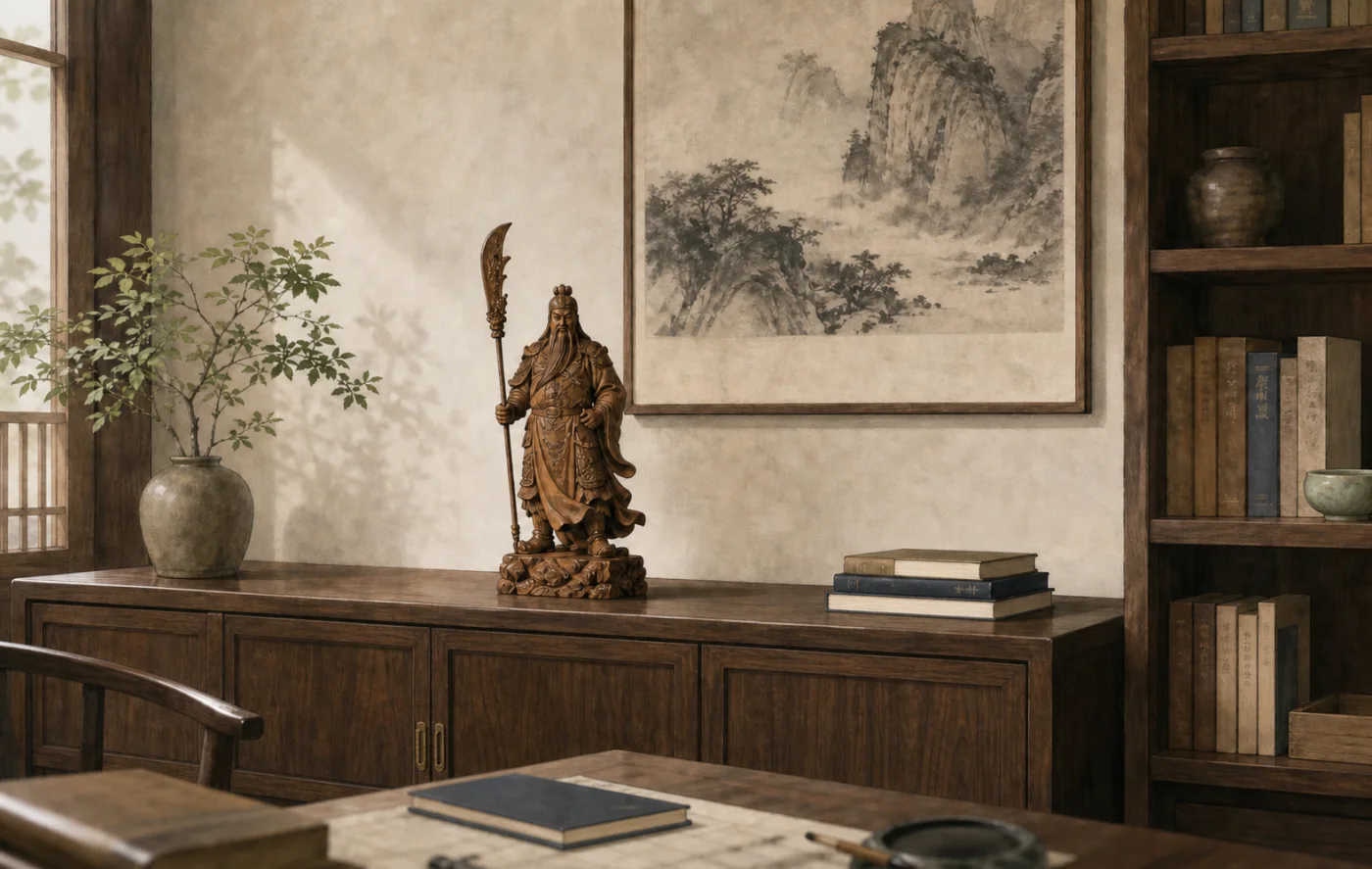
Placement advice belongs to living custom and personal interpretation. Compass directions, room restrictions, altar height and blessing practices are not universal requirements. A claim that every Guan Gong statue must face one direction or occupy one type of room turns a varied tradition into a rule that the available evidence does not support.
A practical approach begins with the owner’s purpose. A devotional setting may follow the practices of a particular family or community. A cultural or decorative display may instead prioritize stability, visibility, respectful handling and a position away from direct heat, moisture or accidental impact.
Displaying a Guan Gong statue does not determine wealth, safety, luck, career success or spiritual results. Cultural context can explain a figure; it cannot promise an outcome.
What a statue cannot establish
A statue cannot establish its own wood species, age, origin or production history simply through appearance. Those claims require product records or other evidence. It also cannot make a financial, protective or spiritual result happen. Carvzen presents current products as wood carvings with cultural context, not as devices that control events.
This distinction does not make the object less meaningful. It allows the history, visible workmanship and personal significance of the figure to stand on their own.
What to check before buying a Guan Gong wood statue
A useful product page should help the buyer judge the actual object rather than rely on one promotional angle or a list of claimed powers. Compare the complete silhouette, verified dimensions, visible finish and the way projecting parts meet the body and base.
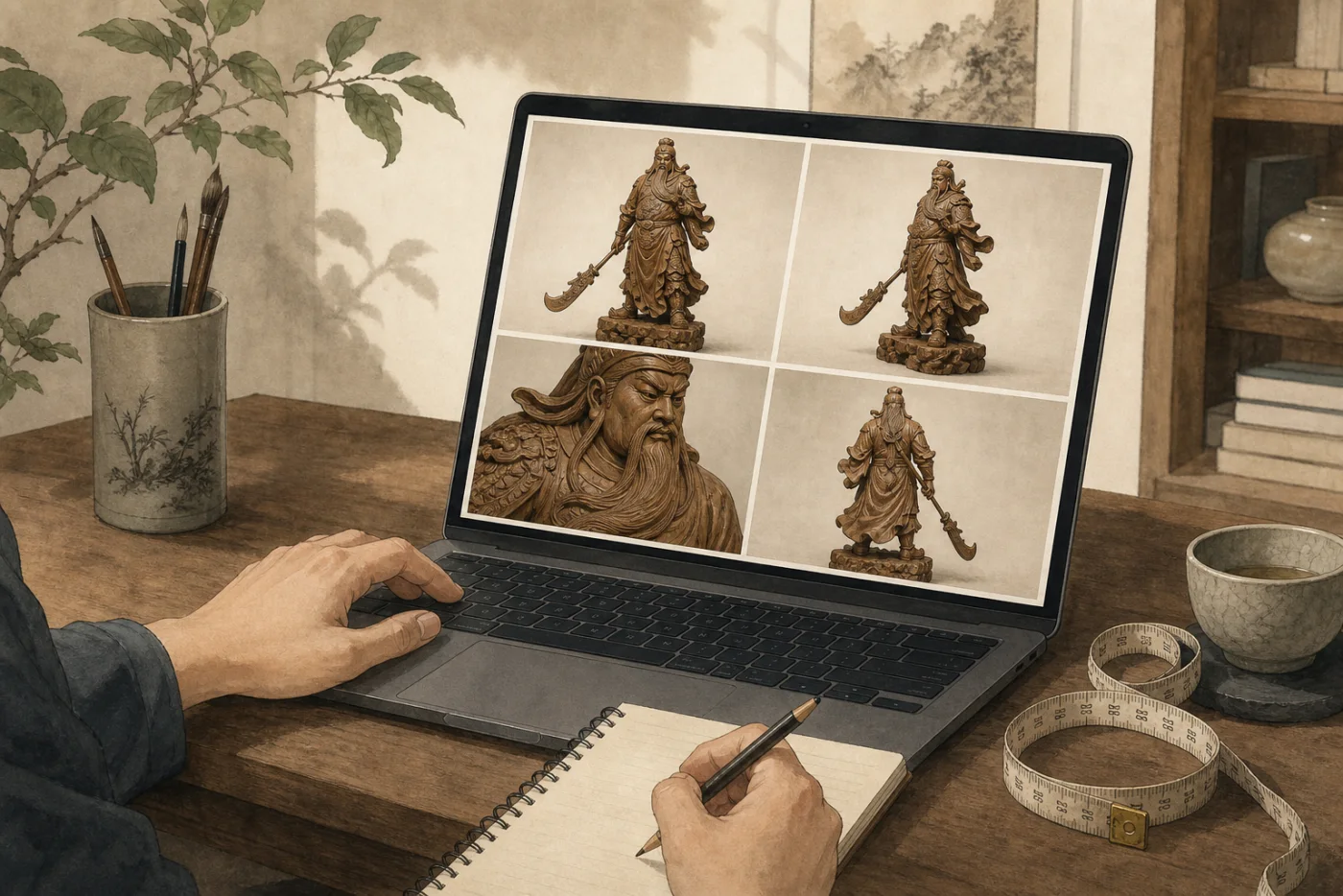
Confirm the complete figure, weapon, base and overall proportions.
Judge depth, stance and how far projecting parts extend.
Review the face, beard, robe lines and surface finish.
Check the rear finish, attachment points and apparent stability.
How current Carvzen wood carvings are made
For carvings covered by the current production process, a machine creates the rough form. Workers then refine visible carving details by hand, sand the surface and apply the painted finish by hand. This is more accurate than describing every stage with one broad craft label.
Because the current listings do not verify every wood species, an unconfirmed material is described simply as Wood. Product pages should be used for the verified dimensions, available views and finish of the individual object.
A machine establishes the main shape.
Visible carving details are refined by hand.
The surface is prepared and smoothed by hand.
The painted finish is applied by hand.
How Carvzen handles an order
Carvzen does not keep long-term inventory for every product. After an order, the item is collected from the production source. Before shipment, the item and packaging are checked. Orders are normally dispatched from China within 3–5 days.
Shipping is included for destinations Carvzen is able to serve; some risk destinations are excluded. If an item arrives damaged in transit or the wrong item is received, Carvzen offers refund or replacement support after verification. Current details are maintained on the Shipping Policy and Returns & Refunds pages.
- Confirm the item and size. Match the selected object and variation to the order.
- Inspect visible surfaces and finish. Review the main carved and painted areas for obvious issues.
- Check projecting parts and the base. Look for visible looseness and apparent instability before packing.
- Protect the item for tracked transport. Prepare the carving and packaging for shipment from China.
Frequently asked questions
Is Guan Gong the same person as Guan Yu?
Yes. Guan Yu is the historical personal name. Guan Gong is a respectful title meaning Lord Guan, while Guan Di reflects his later divine rank.
Does every statue use the same symbols?
No. A long beard and warrior appearance are common identifiers, while other features can appear in different combinations. Read the actual listing photographs and description.
Does the statue need a particular direction?
There is no single placement rule that applies to every owner, tradition or setting. Treat placement advice as living custom rather than a universal instruction.
How is the statue made?
For the current process described by Carvzen, a machine creates the rough form, followed by hand refinement of carving details, sanding and a hand-applied painted finish.
Sources and further reading
Current objects
Compare current Guan Yu objects.
These are separate modern decorative objects. Compare each listing’s real gallery, listed measurements, material wording and visible finish. Cultural meaning is not a promised result.
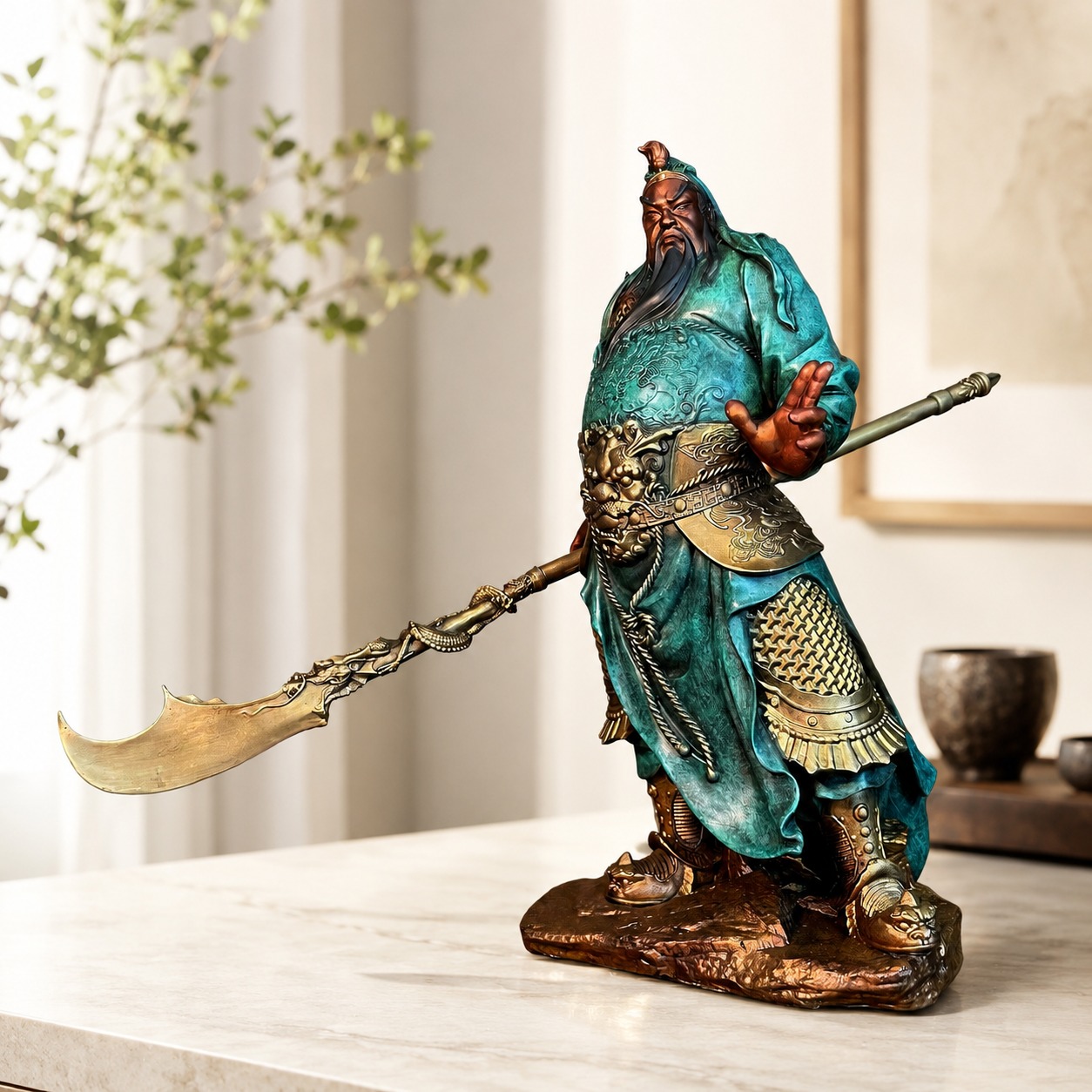
Guan Yu Copper Alloy Figurine Loyal Warrior Statue
View current gallery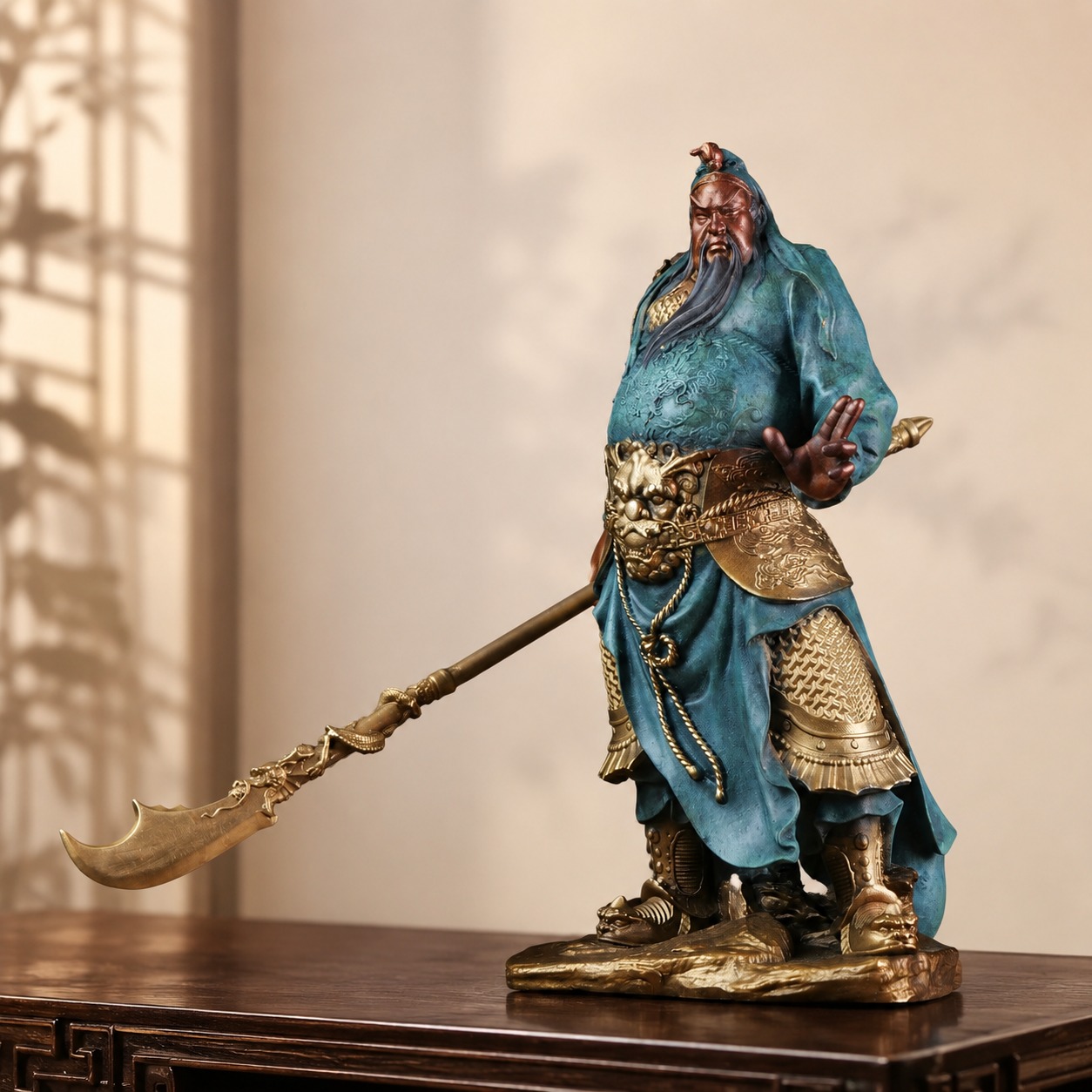
Guan Yu Brass Statue with Horizontal Blade
View current gallery