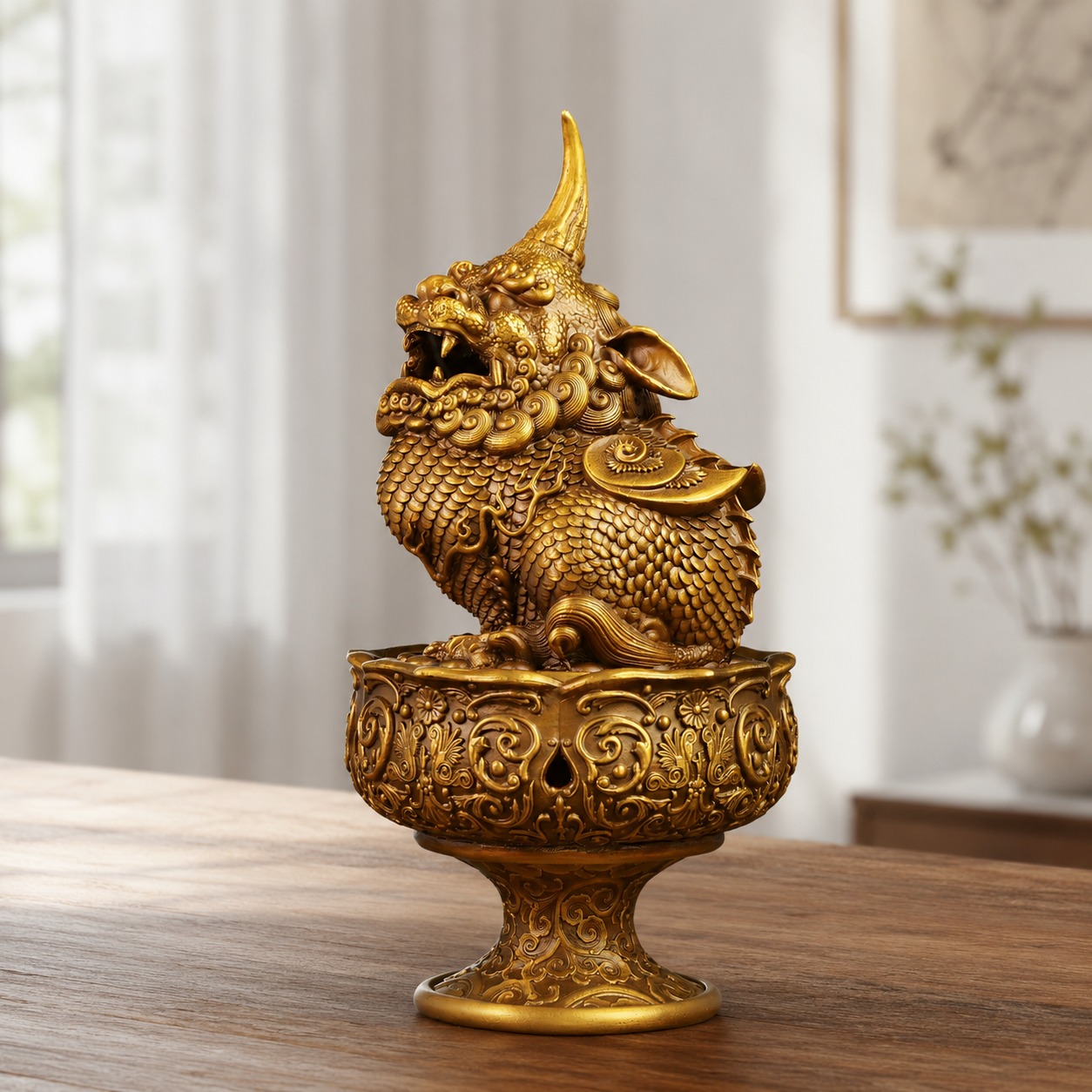
Pixiu Statue Meaning and Placement: A Cultural Guide
Pixiu appears in Chinese visual culture as a mythical guardian beast. Later customs associate the figure with good fortune and protection, but those meanings are traditions rather than promised effects. This guide explains the documented background, what a buyer can inspect, and why placement advice has limits.
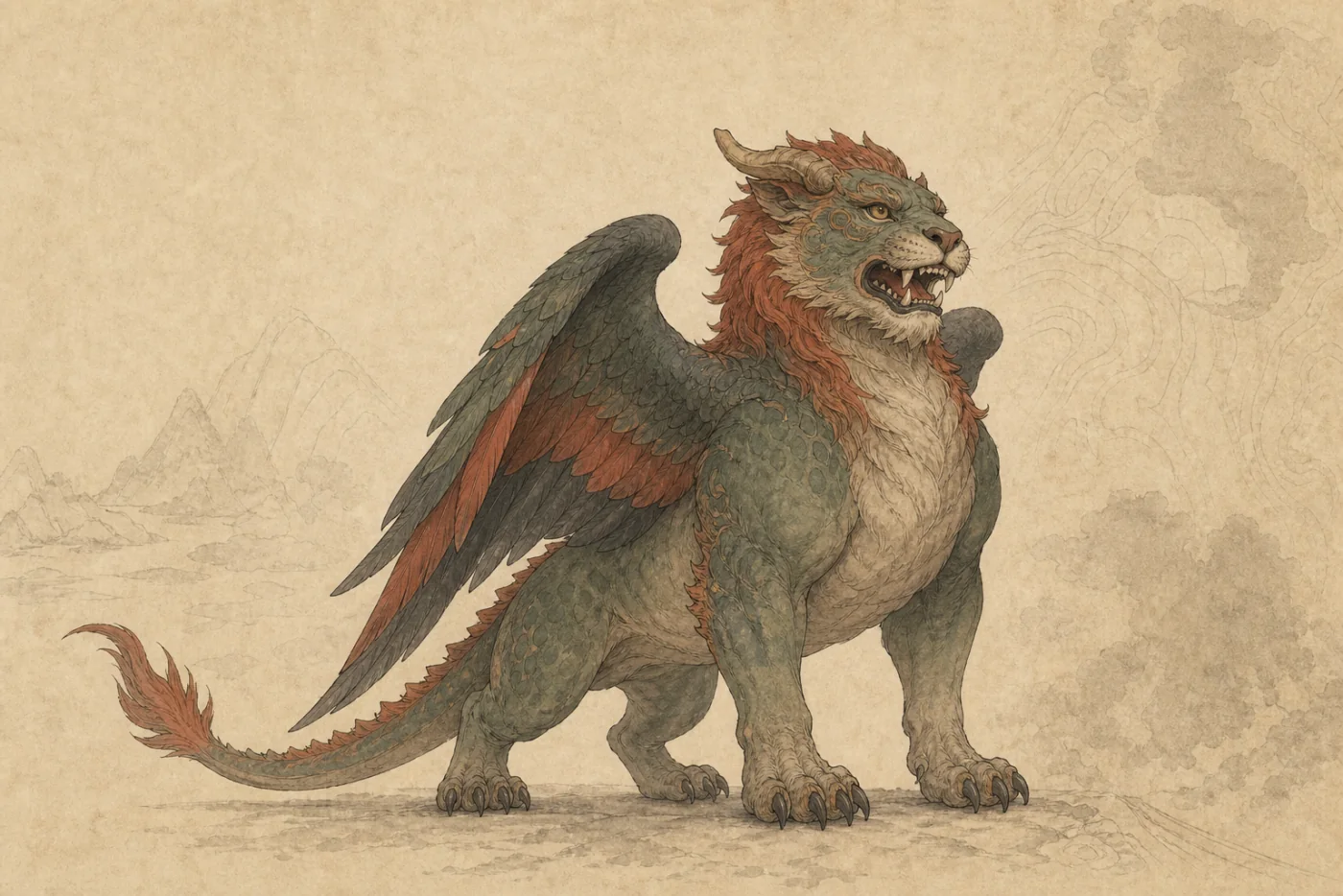
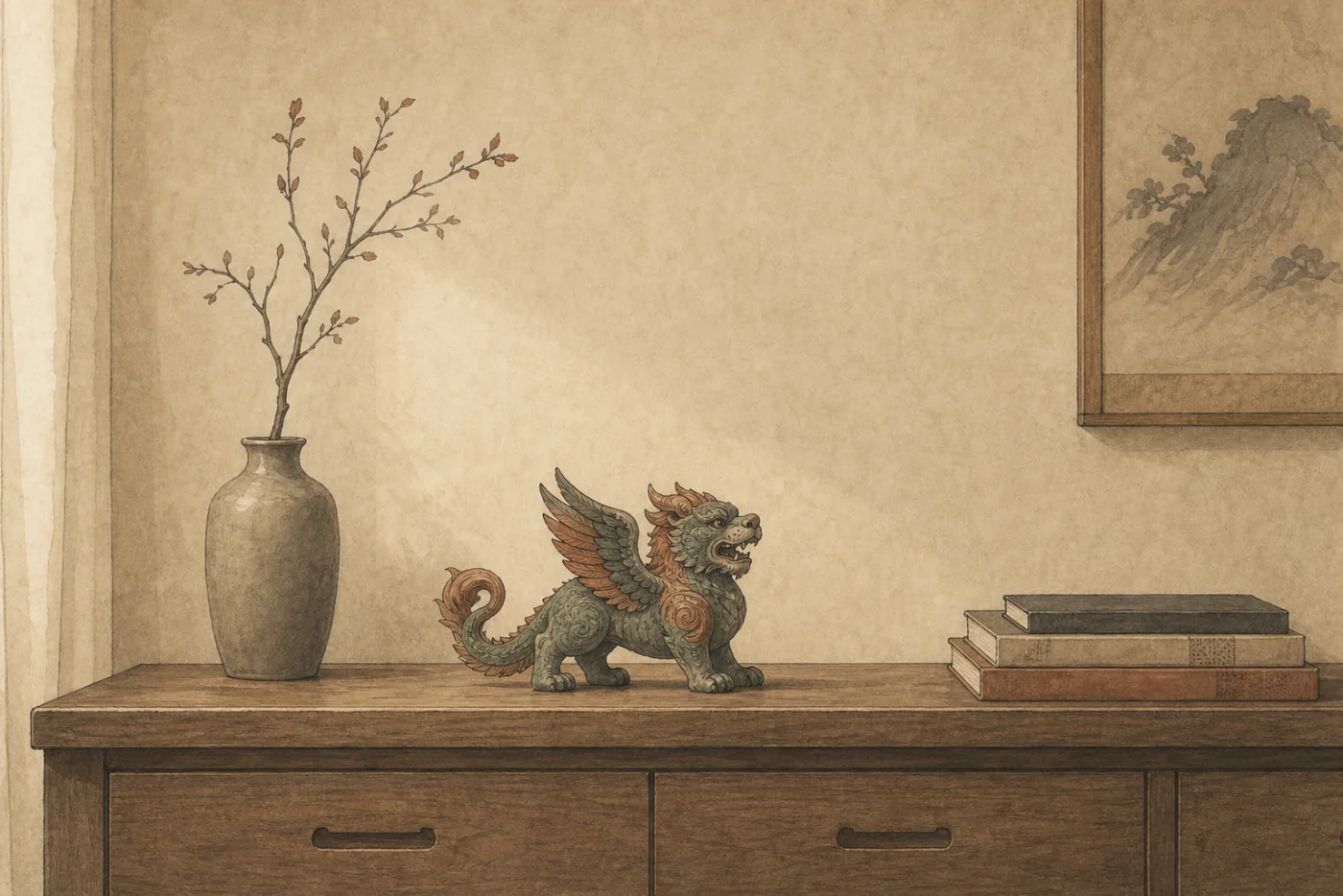
The National Museum of Natural Science describes Pixiu as a mythical tomb-guardian beast. Its collection includes a winged ceramic example with a tiger- or lion-like face. Later traditions connect Pixiu with seeking good luck and warding off evil, but those ideas describe cultural meaning; they do not make a statue control events.
What Pixiu is
Pixiu belongs to the broad world of Chinese mythical animals. The museum description is useful because it begins with an actual object rather than a modern sales promise. The documented figure was made for a tomb-guardian context, giving the creature a protective role within that object’s historical setting.
This background does not mean every modern Pixiu statue has the same date, material, function or appearance. A contemporary listing needs to be read as an individual object. Its product photographs and verified facts should determine what can be said about its scale, surface and finish.
What the documented museum object shows
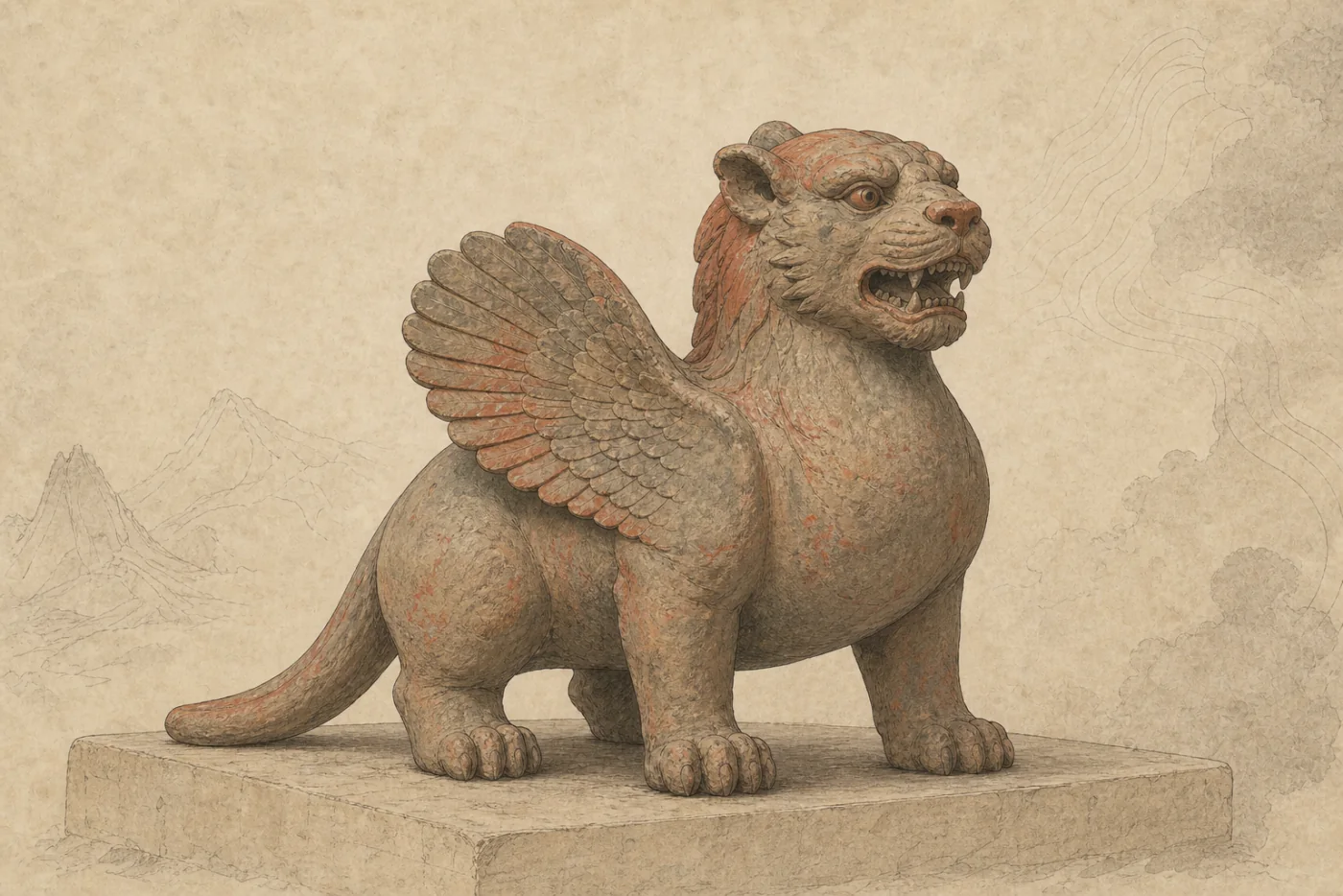
The museum example is ceramic, winged and described as having a tiger- or lion-like face. Those are facts about that particular object. They provide a useful point of reference, but they should not be turned into a claim that every figure must reproduce the same details.
When comparing a modern statue, look first at what is visible. Are wings shown? How is the face modeled? Does the gallery include a front, side, back and base? A careful listing should allow the buyer to inspect the actual item rather than relying only on a symbolic description.
Later symbolism and its limits
The museum also describes later Pixiu traditions in terms of seeking good luck and warding off evil. These associations help explain why the figure remains popular, but they are cultural interpretations rather than measurable product functions.
A responsible description can explain what people have associated with the figure while avoiding a predicted financial, protective or spiritual result. A buyer may value Pixiu for its story, visual presence or personal meaning without treating the carving as a mechanism that changes luck.
Pixiu symbolism belongs to cultural tradition and personal practice. A decorative object does not determine prosperity, safety or spiritual outcomes.
How to inspect visible details
Start with the listing images and verified dimensions. A photograph should make the pose, facial treatment, visible surface and base understandable. Dimensions in inches and centimeters help translate a close product image into physical scale.
Material claims require records. If a wood species has not been verified, the accurate description is simply Wood. The same principle applies to process claims: do not infer a production method, age or place of origin from color or grain alone.
Use the gallery to compare symmetry, contact points, the stability of the base and any visible painted finish. These are practical observations. They say more about the object a buyer will receive than an unsupported list of powers.
A museum source and a current product listing answer different questions. The museum source supports the historical and cultural explanation of Pixiu. It does not authenticate a modern statue’s material, date or production method. The listing must supply those product facts independently, and any detail that has not been verified should remain explicitly unknown.
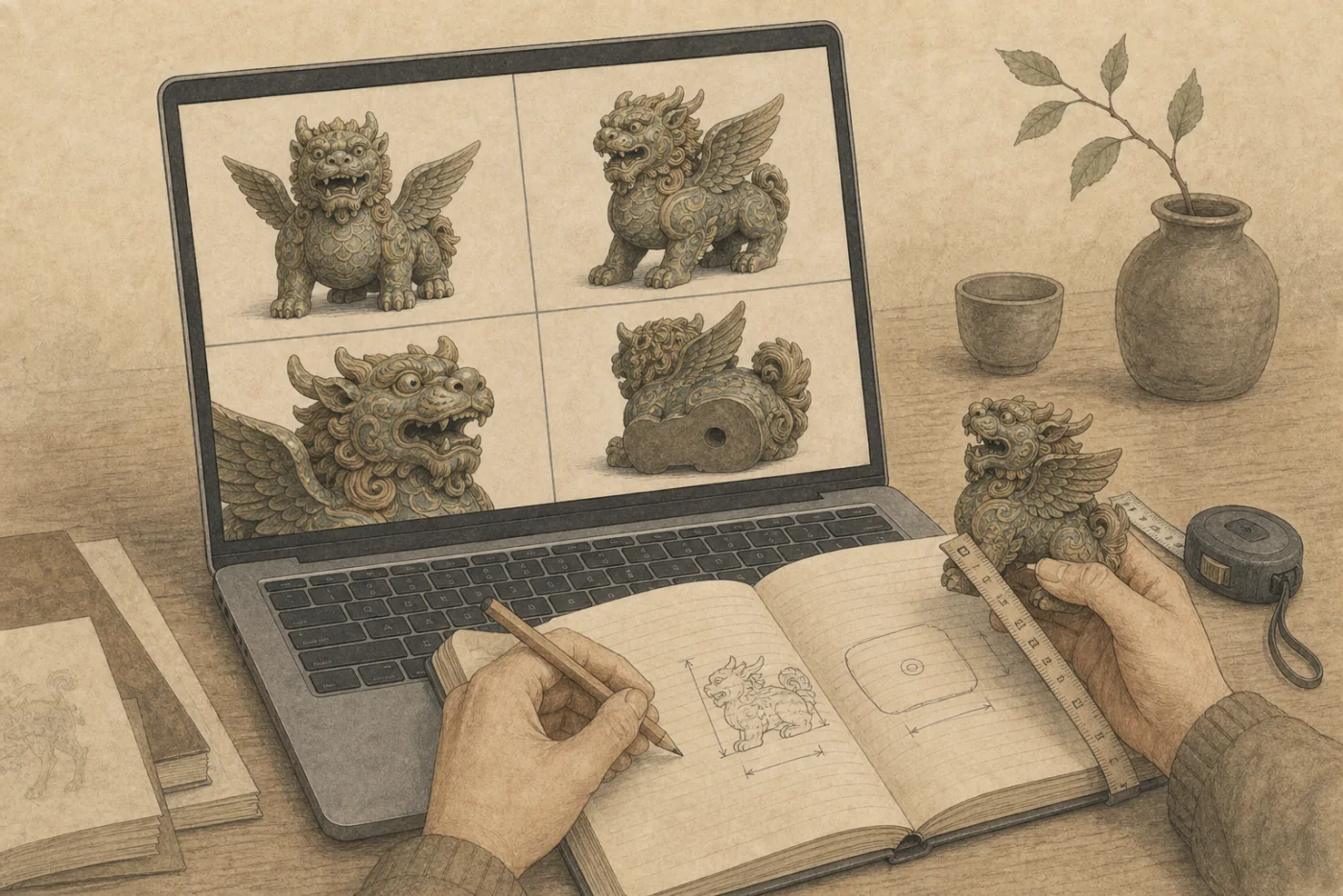
Identify the complete figure, wings, tail and stance.
Judge depth and projecting parts rather than relying on one angle.
Review facial modeling, visible finish and transitions.
Check rear finish, contact points and apparent stability.
Placement customs are not one fixed system
Placement and orientation advice belongs to modern custom and personal practice rather than one universally binding rule. Different sources may propose different directions, rooms or heights. Presenting one version as mandatory hides that variation.
For a decorative display, practical questions are often more useful: Is the surface stable? Can the object be seen from its strongest angle? Is it away from direct heat, moisture and accidental impact? A person following a religious or family practice should use the guidance of that specific tradition rather than a generic product claim.
Questions to check before buying
- Is the subject clear? The listing should identify the figure without inventing a story about the individual object.
- Are dimensions verified? Check height, width and depth rather than judging scale from a cropped photograph.
- Is the material wording accurate? An unconfirmed wood species should not be presented as certain.
- Can you inspect the finish? Look for useful views of the front, sides, surface and base.
- Are symbolic claims separated from product facts? Cultural explanation should not be written as an outcome.
- Are shipping and damage procedures clear? Read the current policy pages before checkout.
How Carvzen handles an order
Each item and its packaging are checked before shipment. Orders are normally dispatched from China within 3–5 days. These are operational facts, not symbolic claims.
Carvzen does not currently present a Pixiu product in the three-item featured collection, so this guide does not create a false product or category link. Readers can review the current Shop and use the formal policies for the latest shipping and returns information.
Current product pages remain the source for each object’s real gallery, listed measurements, material wording, price and availability. This guide explains the cultural subject; it does not authenticate an individual object or promise an outcome.
Frequently asked questions
Is Pixiu a historical animal?
No. The museum describes Pixiu as a mythical beast represented in an archaeological object.
Does every Pixiu statue look the same?
No. The museum example provides one documented form. Modern objects should be described from their own visible details.
Is there one correct placement?
No single placement rule applies to every tradition and owner. Orientation advice belongs to variable modern custom and personal practice.
What should I inspect first?
Begin with verified dimensions and clear photographs of the actual object, followed by material, finish, shipping and damage information.
Sources and further reading
Current objects
Compare current Pixiu objects.
These are separate modern objects. Compare each listing’s real gallery, listed measurements, material wording, visible finish and intended use. Cultural meaning is not a promised result.
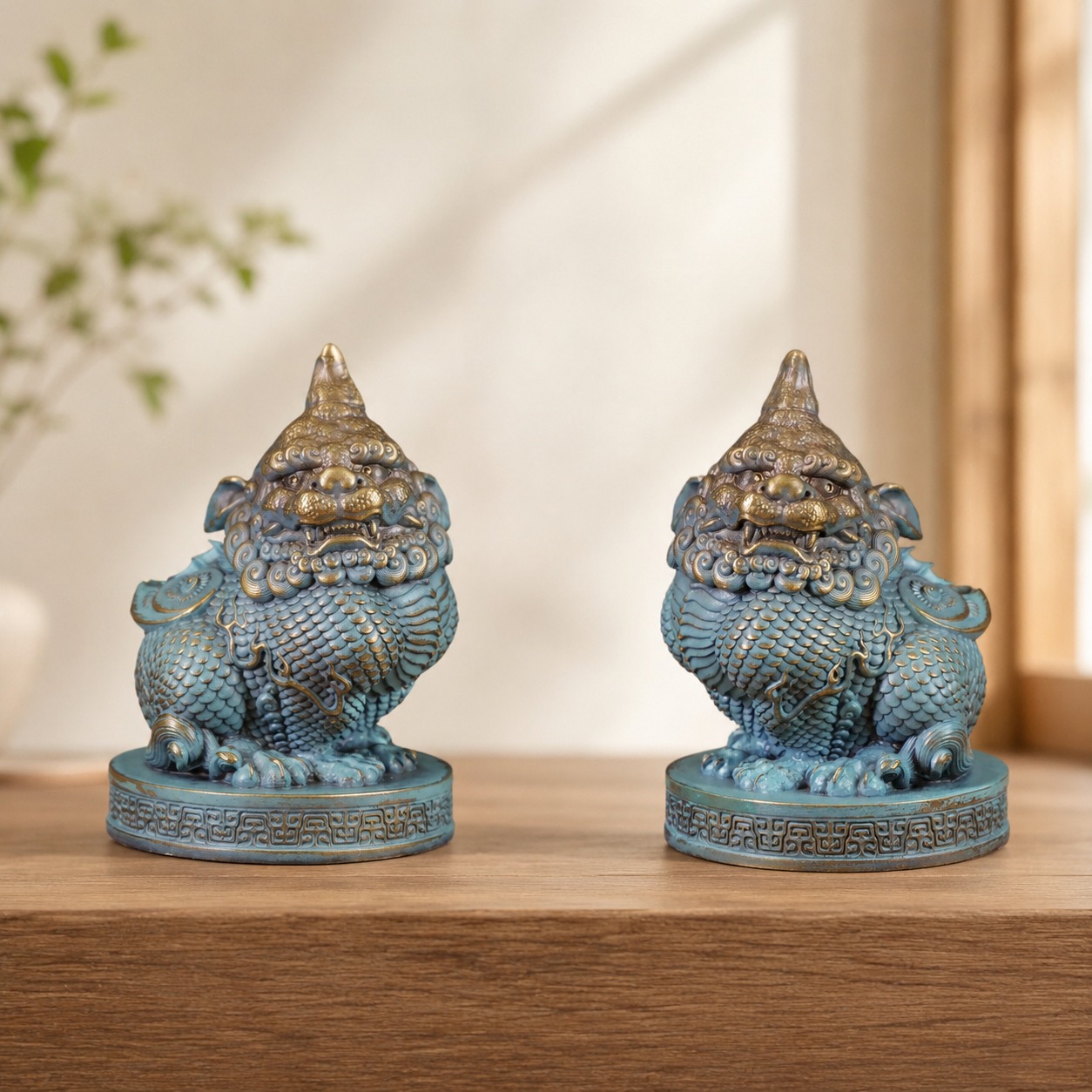
Pixiu Brass Statue
View current gallery