How to Care for a Wooden Statue in Dry or Humid Homes
Wood responds to the air around it. The safest home-care strategy is not a miracle oil or rigid universal number, but a stable environment, gentle dry dusting, careful placement and early attention to warning signs.
To care for a wooden statue at home, keep its surroundings as stable as practical, away from direct sun, heaters, air vents, damp exterior walls and water. Monitor the room with a basic hygrometer, make seasonal corrections gradually and remove loose dust with a very soft, dry brush only when the surface is firm. Do not apply oil, wax, cleaner or polish unless the finish and treatment are known to be compatible.
This guide is preventive care for modern decorative carvings and stable wooden objects. It is not a restoration manual. Historic, valuable, lacquered, gilded, painted or already damaged pieces can react differently and deserve advice from a qualified conservator.
Why wood reacts to a dry or humid room
Wood is hygroscopic: it absorbs moisture when relative humidity rises and releases moisture when the air becomes drier. As this happens, wood swells and shrinks. The movement is often small, but repeated or abrupt changes can stress joints, checks, fills, glue lines and painted finishes.
The Canadian Conservation Institute emphasizes that there is no single perfect relative-humidity value for every collection. The U.S. National Park Service gives museum reference ranges around the middle of the scale, while also noting that acceptable conditions differ between dry and coastal climates. For a household object, the practical lesson is more useful than a rigid target: avoid extremes and rapid swings, learn the normal seasonal pattern of the room, and change it gradually.
A consumer digital hygrometer placed near the display area—not touching the statue—can reveal whether a heater, rainy season, basement wall or air-conditioning cycle is producing large changes. Record readings for a week before reacting to one unusual number.
Care in a dry home or heated winter room
Very dry indoor air can encourage shrinkage, brittle finishes, loosened joints and new or widening splits. The risk is greater when a statue moves suddenly from a humid environment into strong central heating, or when it sits directly above a radiator or in the stream of a heating vent.
Use a hygrometer to see whether dryness is persistent or only a brief fluctuation.
Keep the statue away from radiators, fireplaces, heat vents and hot appliance tops.
If humidification is needed, treat the room rather than blowing mist directly at the object.
Photograph existing checks so a genuinely new or widening crack can be recognized.
Do not try to correct dryness by wiping the statue with water or coating it with oil. Surface moisture does not solve the room condition, and unknown finishes may stain, soften, blanch or trap residues.
Care in a humid home or rainy season
High humidity can swell wood, weaken some glues, affect coatings and encourage mould or insect activity. Conservation guidance treats sustained damp conditions—especially around 70–75% relative humidity and above—as a serious warning zone, not as a normal display environment.
Look first for the local cause. A statue against a cold exterior wall may experience a damper microclimate than a hygrometer in the middle of the room suggests. Basements, bathrooms, kitchens, window recesses and areas near wet plants are higher-risk locations. Improve air circulation around the display, address leaks or condensation, and use room-scale dehumidification when appropriate. Do not aim a powerful air stream directly at the object.
If a piece becomes visibly damp or develops a musty smell or mould-like growth, stop handling and cleaning it. Separate it from unaffected objects without spreading dust or spores, photograph the condition and seek professional advice.
Choose a stable display position
A good location protects the statue from more than humidity. Direct sunlight can fade wood, paint and coatings, while repeated heating and cooling near windows or vents can intensify movement. Water from plants, open windows, drinks or wet cleaning can mark a finish and enter cracks.
Use a firm, level surface with enough clearance for projecting arms, robes, staffs or blades. Lift a statue from its base or strongest structural area rather than by a hand, crown, weapon or other narrow projection. If children, pets or vibration are concerns, improve the furniture position or use an appropriate unobtrusive restraint that does not adhere to or stain the finish.
How to remove dust safely
Before cleaning, inspect the surface under good light. If paint, gilding or finish is lifting, powdery or loose, do not brush it. If the surface is firm, use a clean, very soft artist brush and short, gentle flicking motions. Work from upper areas downward while supporting the object securely.
For a detailed, stable carving, a low-suction vacuum can collect dust nearby, but the nozzle should never touch the object. Conservation guidance recommends covering the nozzle with fine mesh so a detached fragment cannot disappear into the machine. If you cannot control the suction or support the statue safely, use the brush alone.
A cloth can snag on carved edges and projecting details. Wet cleaning is also risky when the finish is unknown: unfinished wood can absorb water, while painted, lacquered and resin-coated surfaces vary widely in sensitivity. Begin with the least aggressive method and stop once loose dust is removed.

Should you oil or polish a wooden statue?
Not by default. The Canadian Conservation Institute warns that wood does not need to be “fed.” Commercial polishes, restoration mixtures, oils, waxes and silicone products can build up, attract dirt, darken a surface or complicate later treatment. A product that is suitable for unfinished furniture may be wrong for painted wood, lacquer, gilding, an unknown coating or an intentionally matte finish.
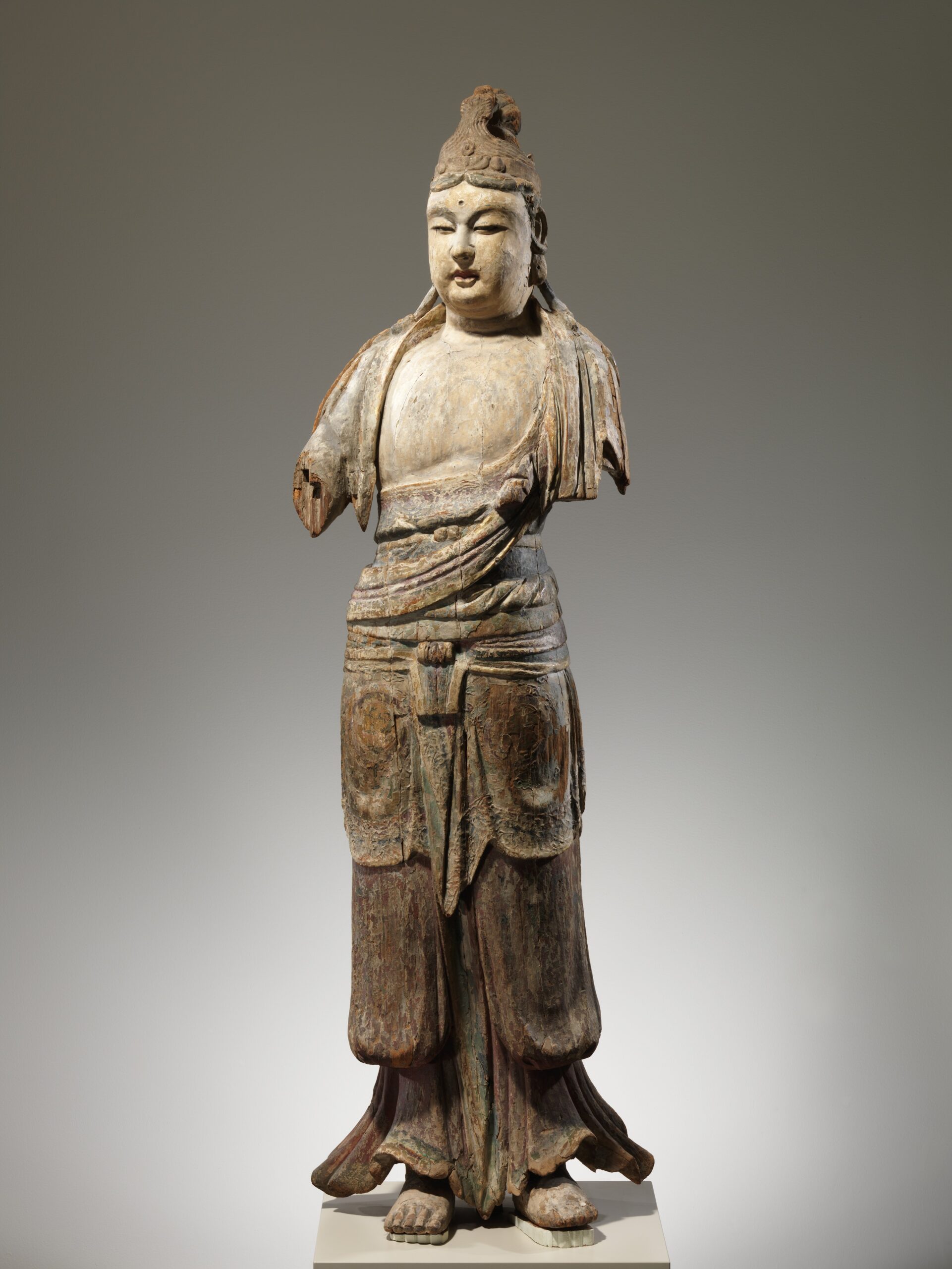
Museum records document wooden sculptures with distinct surface layers. The Met identifies this attendant bodhisattva as willow wood with gesso and pigment. That record applies to this historical object; appearance alone cannot identify the finish on a different statue.

If a manufacturer supplied a specific care instruction for a known modern finish, keep that record and follow it narrowly. Otherwise, preventive care is safer than adding a new material. Do not use cooking oil, essential oil, furniture spray, alcohol, disinfectant, household cleaner or abrasive polish on an unknown statue surface.
When to stop and ask a conservator
Do not continue cleaning when you see loose paint, powdering pigment, lifting gilding, an unstable joint or a crack that appears to be changing. Tiny holes alone may be old, but fresh pale powder appearing beneath them can suggest active wood-boring insects. Photograph the object and the surface below it, note the date and avoid spraying pesticide or filling the holes.
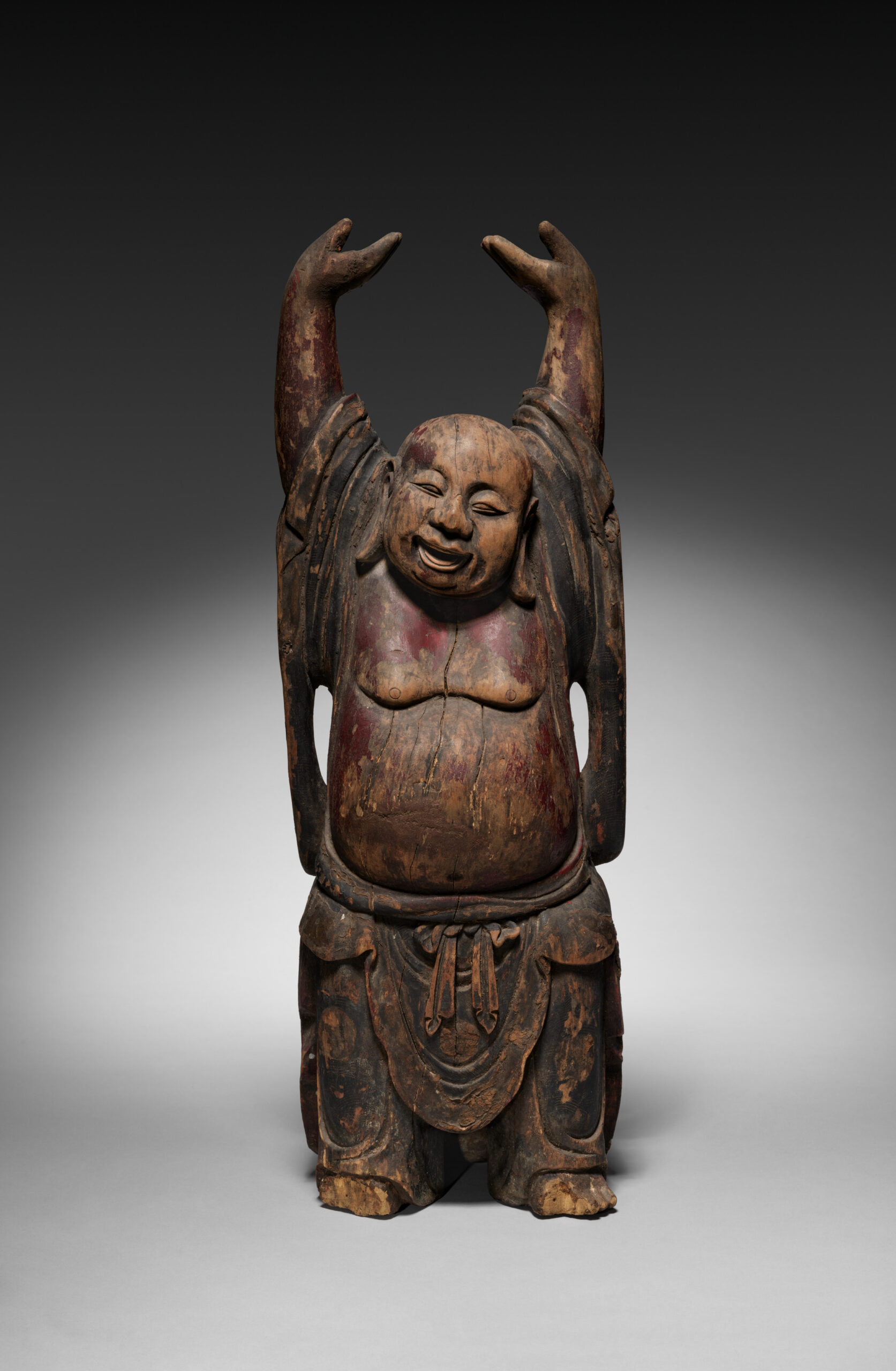
This Cleveland Museum of Art photograph shows a crack and remaining pigment on one historical wood carving. It documents that specific museum object; it cannot tell you whether a crack in another statue is active or stable.
Professional advice is especially appropriate for an object with historical, devotional, financial or personal significance. A conservator can distinguish dirt from an original patina, identify a sensitive coating and recommend a treatment that does not erase evidence or create an irreversible repair.
A simple seasonal care routine
- Check the location. Confirm that sunlight, heat, air vents, damp walls and plant water have not become new risks.
- Read the room. Review hygrometer trends and make slow room-level adjustments rather than reacting to one reading.
- Inspect before dusting. Look for flaking, looseness, fresh cracks, musty growth or new powder.
- Dust only when stable. Use a soft dry brush, support the base and stop before cleaning becomes treatment.
This guide reduces preventable risk; it cannot guarantee that wood will never move or crack. Wood species, grain, construction, age, previous environment and finish all affect how an individual statue responds.
Frequently asked questions
What humidity is best for a wooden statue?
Many museum references use a moderate middle range, often around 40–60% relative humidity, but no single number fits every object or climate. Stability and slow adjustment matter more than chasing an exact reading. Sustained conditions below roughly 30% or above roughly 70% deserve attention.
Can I use a humidifier beside the statue?
Do not direct mist or airflow at the object. If the room is persistently dry, use a clean, well-maintained room humidifier at a distance, monitor the result and avoid a sudden rise.
Can I wipe a painted wooden statue with a damp cloth?
Only when the finish is known, intact and proven water-safe. For an unknown painted or lacquered surface, begin with a soft dry brush. Stop if any colour, flake or powder moves.
Does wood oil prevent cracking?
No general oil can correct low room humidity or prevent all cracking. Oils and polishes can alter an unknown finish and leave residues. Improve the environment instead.
Are small cracks always a defect?
Wood movement and existing checks can be normal, but a new or widening crack, loose joint or lifting finish should be documented and assessed. Compare dated photographs rather than relying on memory.
Sources and further reading
- Canadian Conservation Institute: Basic care—furniture and objects made of wood
- Canadian Conservation Institute Note 7/1: Care and Cleaning of Unfinished Wood
- Canadian Conservation Institute Note 7/2: Care of Furniture Finishes
- Canadian Conservation Institute: Agent of Deterioration—Incorrect Relative Humidity
- U.S. National Park Service Museum Handbook, Appendix N: Curatorial Care of Wooden Objects
- The Metropolitan Museum of Art: Bodhisattva, object 61.237 (Public Domain)
- The Metropolitan Museum of Art: Attendant Bodhisattva, object 28.122.1 (Public Domain)
- Cleveland Museum of Art: The Monk Budai, object 1973.26 (CC0)
- National Park Service: Wood conservation at Nez Perce National Historical Park (photo by Kristine Leier)
The article uses four credited museum and National Park Service photographs. No AI-generated or schematic illustrations are used. Museum objects are identified as historical examples, not as Carvzen products or instructions for treating another object.
A current wood carving
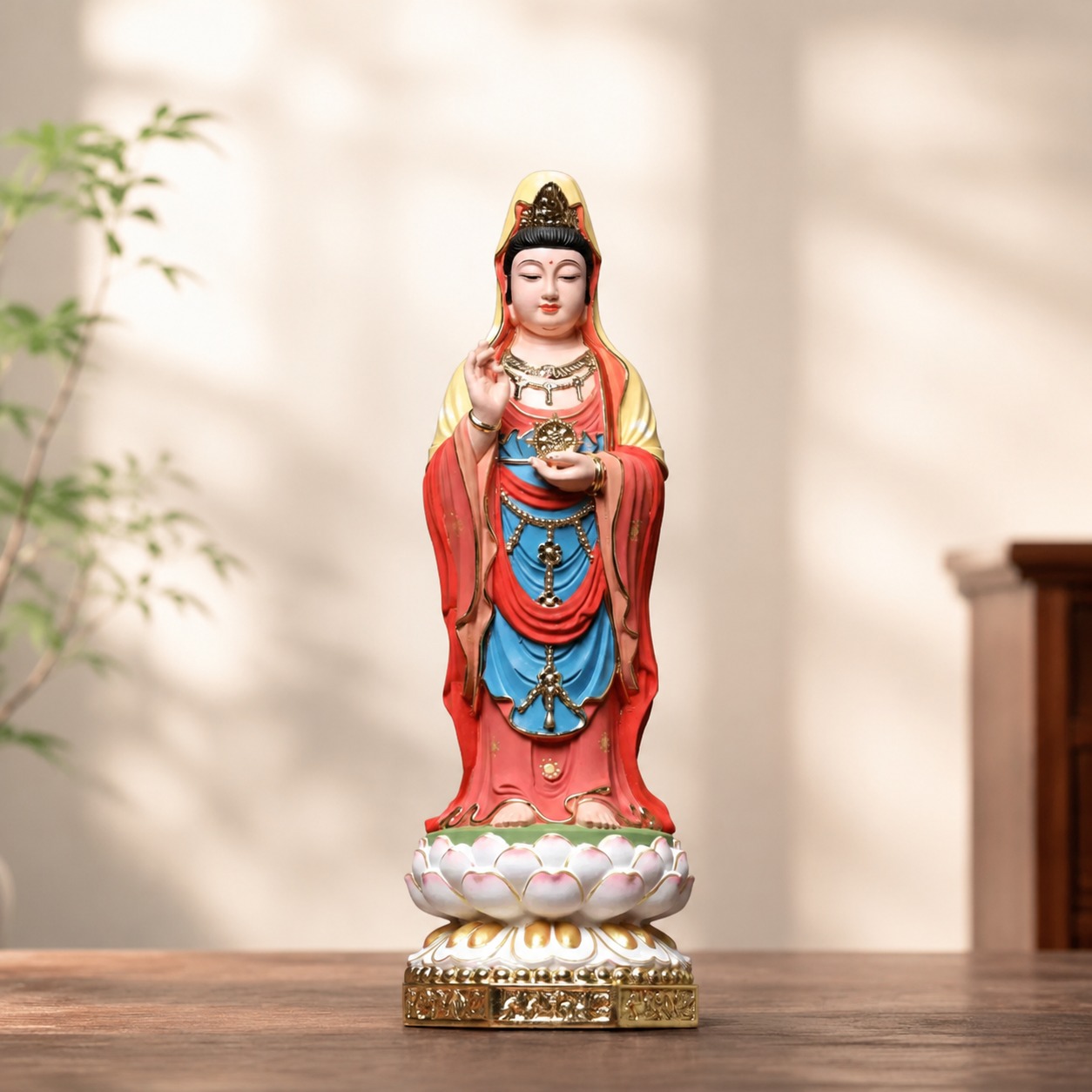
Nanhai Guanyin Wood Statue
Explore a current wood carving through its real product gallery, listed dimensions, visible finish and care information.
View current gallery