Fudo Myoo Statue Meaning: Symbols, History and Buying Checks
Fudo Myoo, also known as Acala or Budong Mingwang, is a Buddhist Wisdom King recognized by a sword, a rope and a surrounding field of flames. This guide separates the deity’s religious and art-historical context from modern decorative use, then explains what an individual statue can—and cannot—tell you.
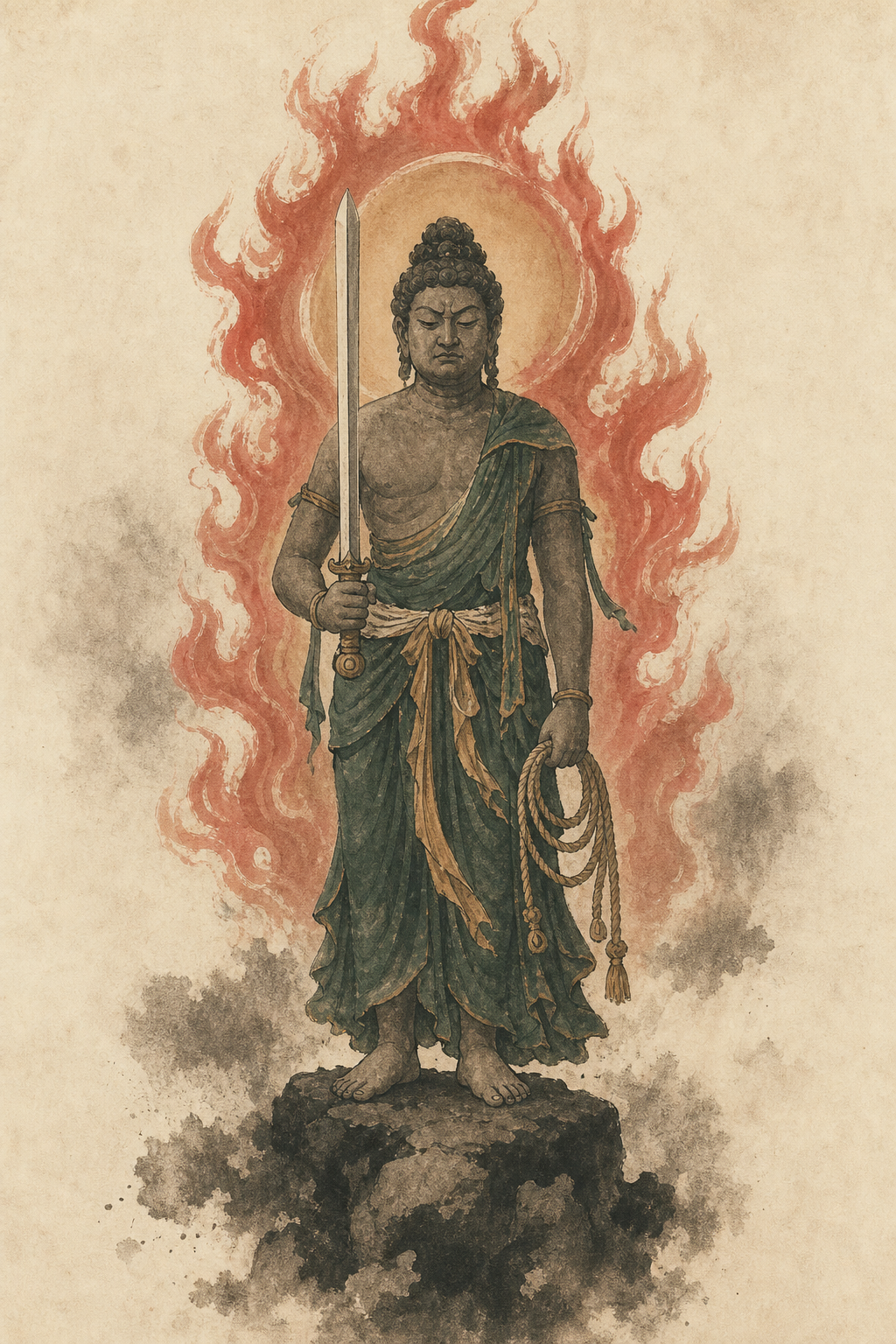
Fudo Myoo is a Buddhist Wisdom King whose fierce appearance belongs to a religious visual language. In Japanese, the name Fudō Myōō is often translated as the “Immovable Wisdom King”; Acala is the Sanskrit name. Museum sources describe Fudo as a protector of Buddhist teaching and an emanation of Dainichi Nyorai in Esoteric Buddhist traditions. A statue may be approached devotionally, culturally or decoratively, but the object itself does not guarantee protection, wealth, luck or a spiritual outcome.
Fudo Myoo, Acala and Budong Mingwang
These names point to connected traditions rather than three unrelated figures. Acala is the Sanskrit name. Fudō Myōō is the Japanese name most often used in museum collections of Japanese Buddhist art. Budong Mingwang is the Chinese name, 不动明王. The English term “Wisdom King” renders Myōō, a category of fierce Buddhist protector figures sometimes called Kings of Brightness.
Names help a reader search across collections, but they do not establish the age, ritual status, material or origin of a modern commercial statue. Those facts have to come from the particular product record and its actual images.
A figure within Esoteric Buddhist traditions
The Metropolitan Museum of Art describes Fudo as the most widely represented of the Japanese Wisdom Kings. Its collection records connect him with Dainichi Nyorai, the central Buddha of Japanese Esoteric Buddhism, and describe temple settings associated with the goma fire ritual. A separate Met essay notes the movement of scriptures, commentaries and iconographic guides through China and Japan; that historical context is more useful than treating every modern depiction as the same object or ritual practice.
Historic works also show variation. Some images depict Fudo standing; others show a seated figure, often with attendants. The British Museum’s nineteenth-century print, for example, places Fudo on a rock with flames behind him and identifies the two attendants Kongara and Seitaka. A product image should therefore be described from its own pose and visible attributes rather than from a fixed checklist.
How to read the familiar symbols
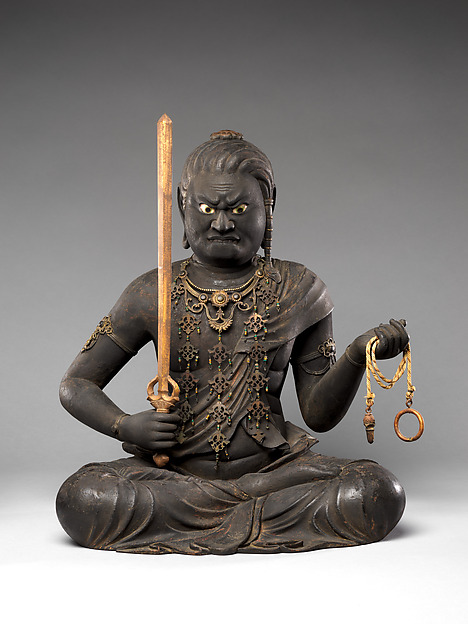
The sword, rope and flame-shaped halo are often visible markers of Fudo. The Met describes the sword as cutting through ignorance and the lasso as restraining those who obstruct the path to enlightenment. In this setting, the attributes are religious symbols, not objects that make a retail carving effective or powerful.
Flames can be just as important to the silhouette as the figure itself. They appear in historical paintings, prints and sculpture, but their shape, colour and scale vary widely. When looking at a current statue, distinguish an iconographic motif from a claim about the particular object’s provenance or ritual use.
What an individual statue can and cannot establish
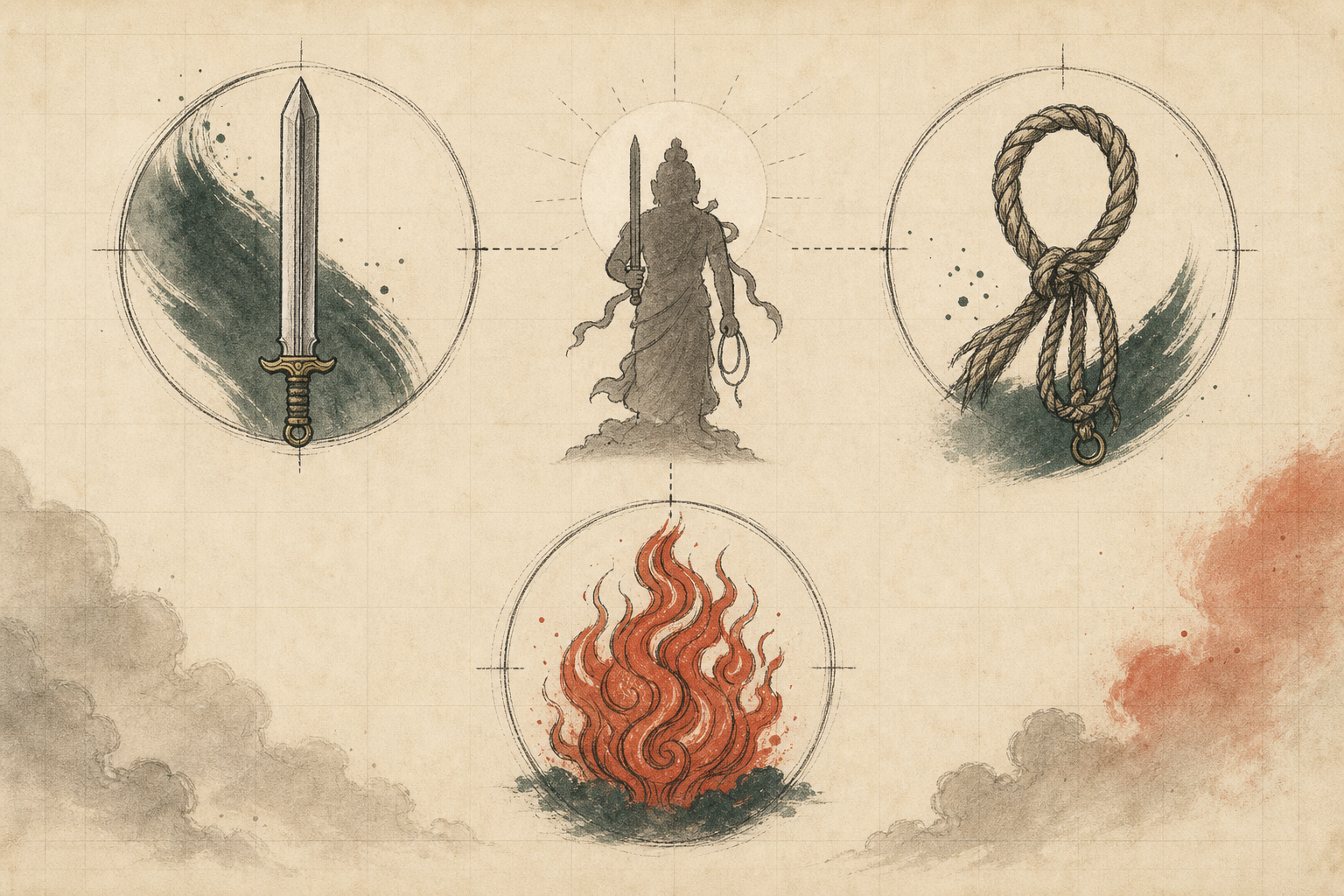
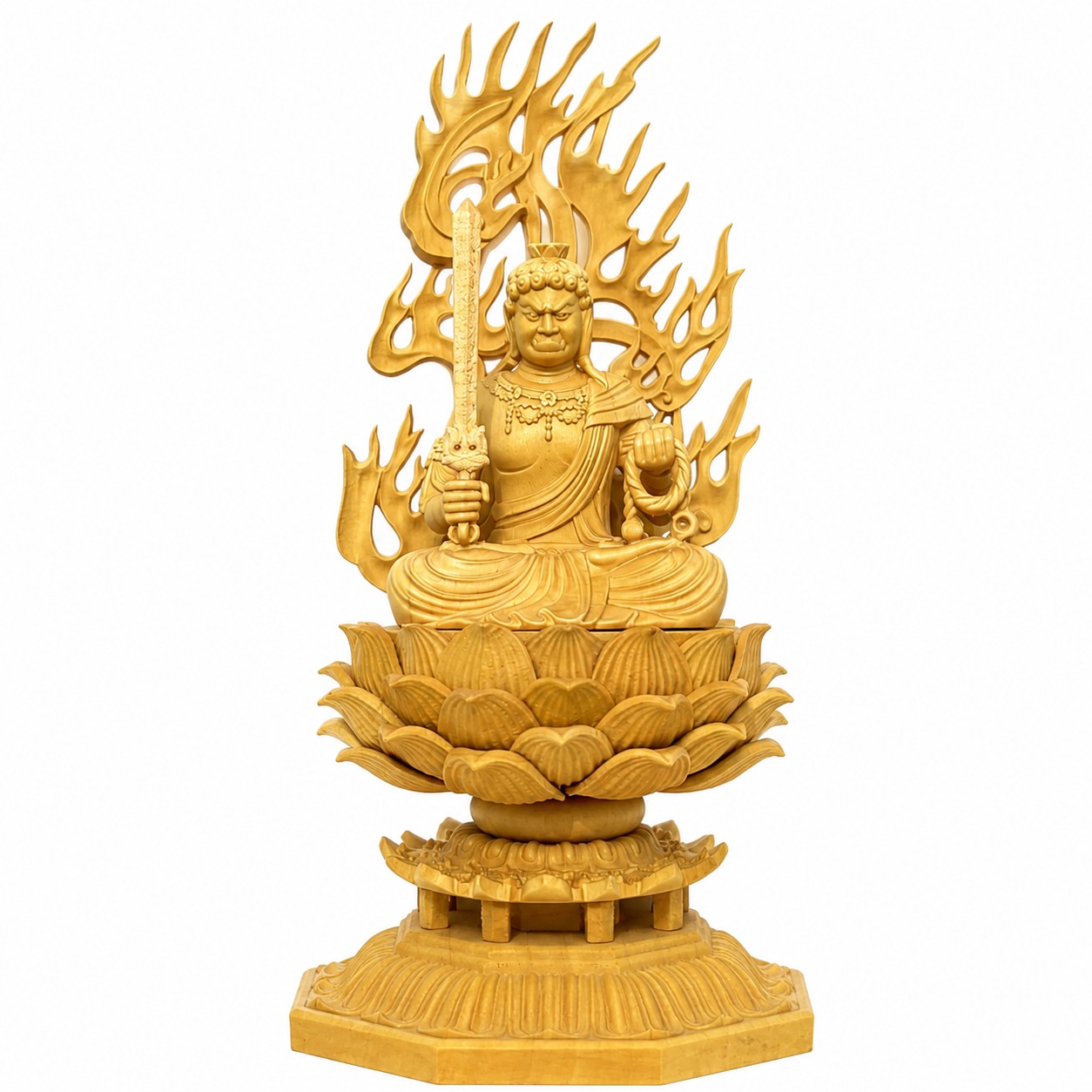
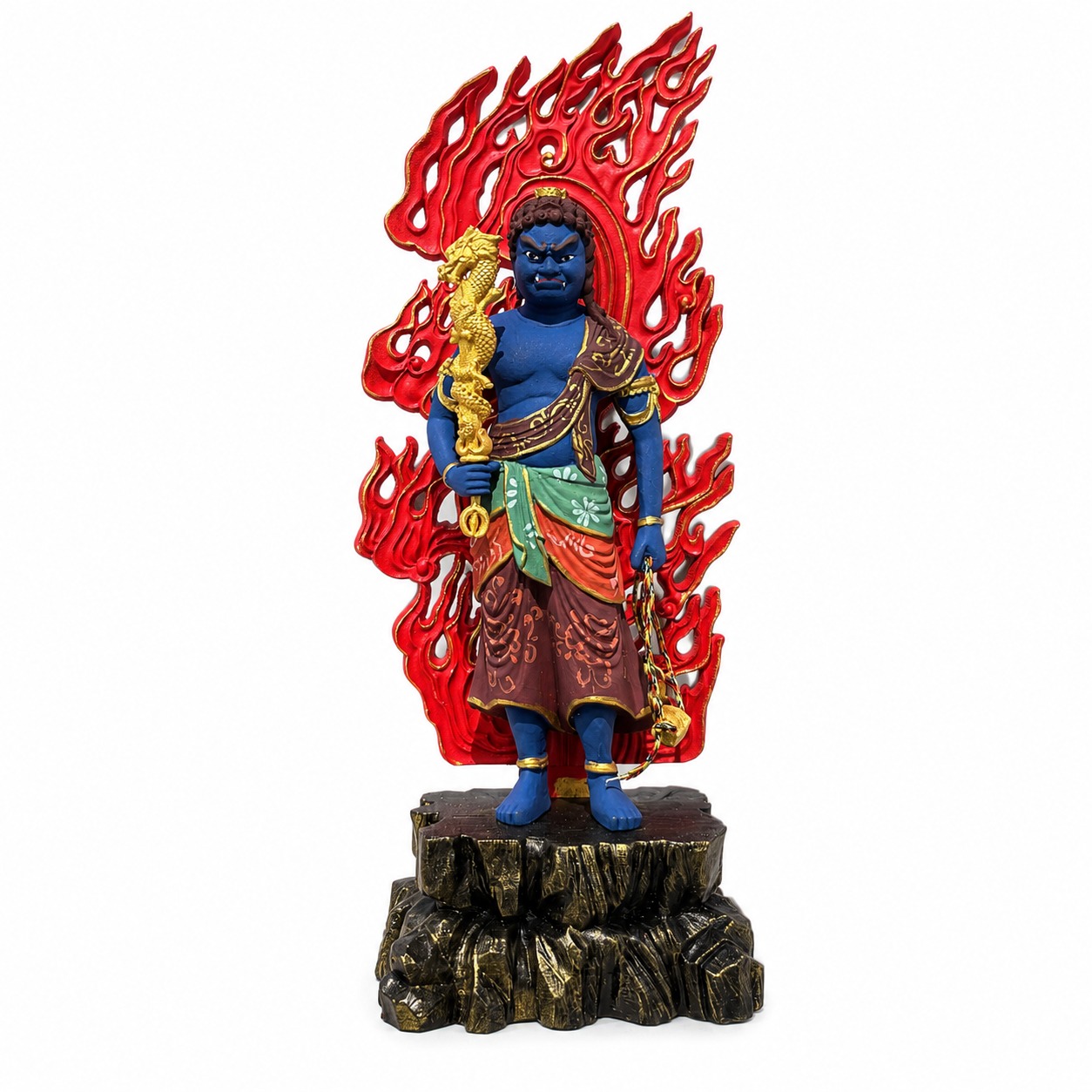
Photos can help a buyer identify visible features: whether a figure stands or sits, whether a sword and rope are present, how the flames meet the base, and how much depth a halo or projecting arm creates. These are useful observations when judging shelf space and surface finish.
A photograph cannot, by itself, prove a wood species, metal alloy, date, temple origin, hand-carved status or ritual consecration. Museum descriptions can explain the subject’s historical iconography; they do not authenticate a current retail object. Keep cultural context and product evidence separate.
Display and placement without universal rules
Placement advice belongs to living custom, family practice and individual religious communities. There is no single direction, room or height that applies to every Fudo Myoo statue. A devotional setting may follow a tradition known to its owner or community; a cultural or decorative setting can instead begin with stable support, clear space around projecting parts and protection from heat, moisture and accidental impact.
A Fudo Myoo statue does not guarantee protection, wealth, luck, health, career success or spiritual results. Cultural context can explain a figure; it cannot promise an outcome.
What to check before buying a Fudo Myoo statue
Read the complete listing rather than relying on a single dramatic image. A useful gallery should show the main silhouette, one angled view, close details and the back or base where available. Check verified dimensions in inches and centimeters, identify projecting parts that need clearance, and look for a plain statement of what is known and what remains supplier-listed.
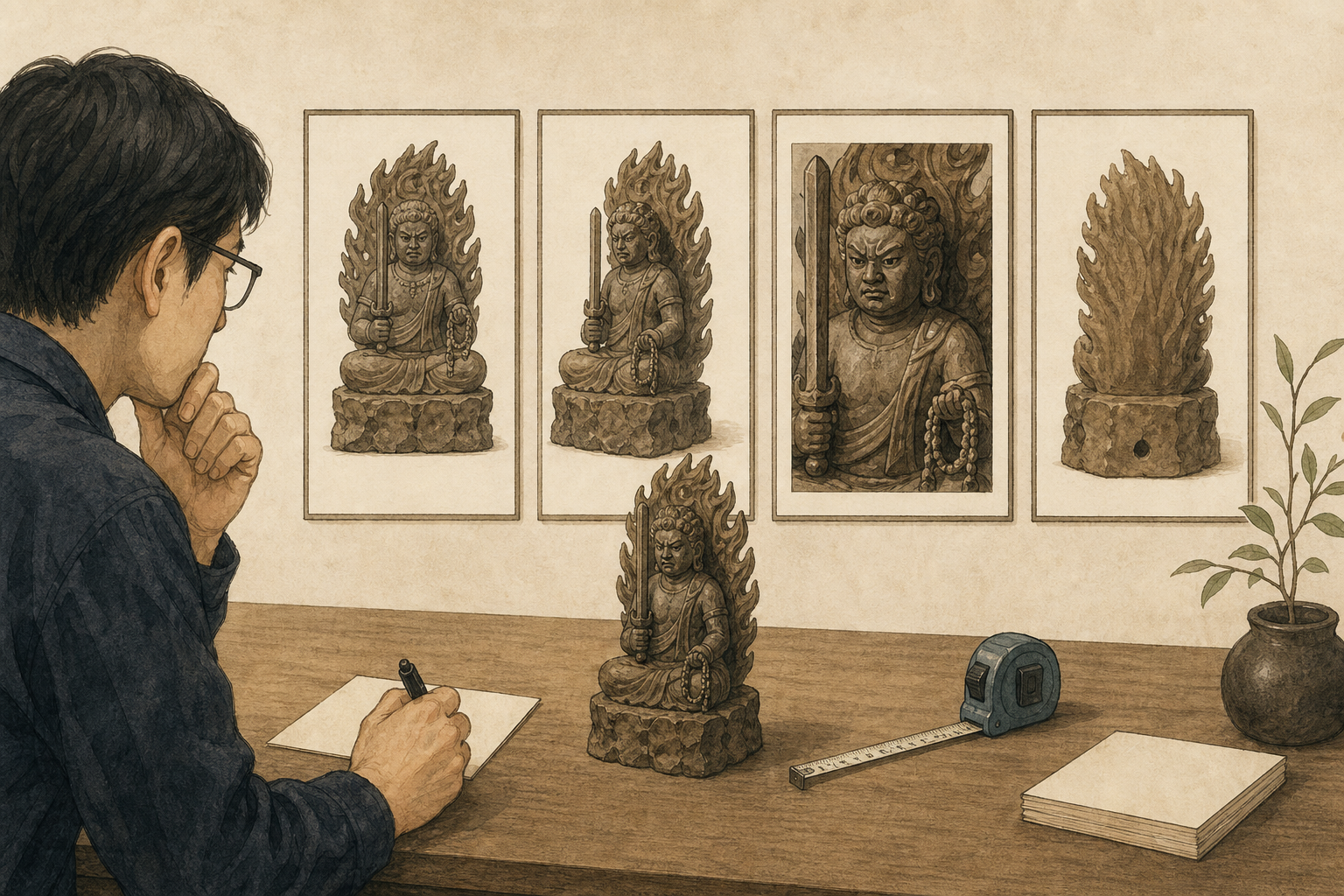
Confirm the pose, sword, rope, flame element and base.
Judge the depth and clearance needed for flames or other projecting parts.
Review the face, robe lines and visible surface finish.
Check rear finish, attachment points and apparent stability.
How current Carvzen wood carvings are made
For wood carvings covered by the current Carvzen production process, a machine establishes the rough form. Workers then refine visible carving details by hand, sand the surface and apply the painted finish by hand. This is more accurate than describing every stage with a single “fully hand-carved” label.
Individual product pages should keep to the facts specific to that object. When a wood species has not been independently verified, Carvzen uses Wood rather than guessing from a photograph or repeating an unconfirmed claim.
A machine establishes the main shape.
Visible carving details are refined by hand.
The surface is prepared and smoothed by hand.
The painted finish is applied by hand where applicable.
What happens after an order
Carvzen does not hold long-term inventory for every object. After an order, the item is collected from the production source. Before dispatch, the product and packaging are checked. Orders are normally dispatched from China within 3–5 days.
Shipping is included for destinations Carvzen is able to serve; some risk destinations are excluded. If an item arrives damaged in transit or is incorrect, Carvzen offers refund or replacement support after verification. See the current Shipping Policy and Returns & Refunds pages for the applicable details.
- Confirm the item and size. Match the selected object and variation to the order.
- Inspect visible surfaces and finish. Review the main visible areas for obvious issues.
- Check projecting parts and the base. Look for visible looseness and apparent instability before packing.
- Protect the item for tracked transport. Prepare the carving and packaging for shipment from China.
Frequently asked questions
Is Fudo Myoo the same as Acala?
They are names used in connected Buddhist traditions. Acala is the Sanskrit name; Fudō Myōō is the common Japanese name; Budong Mingwang is the Chinese name.
What do the sword and rope represent?
Museum descriptions explain the sword as cutting through ignorance and the lasso as restraining obstacles to the path of enlightenment. They are religious symbols, not guarantees of an outcome for an owner.
Must every Fudo Myoo statue be placed in the same way?
No. Placement belongs to particular traditions and personal practice. A decorative display can prioritize stability, respectful handling and conditions that protect the object.
How should I evaluate a current carving?
Check real photographs, confirmed dimensions, visible finish, base and projecting parts. Do not infer wood species, age or ritual status from a single image.
Sources and further reading
- The Metropolitan Museum of Art: Fudō Myōō (Achala Vidyaraja), 12th century
- The Metropolitan Museum of Art: Fudō Myōō, the Immovable Wisdom King, Kaikei
- The Metropolitan Museum of Art: Kings of Brightness in Japanese Esoteric Buddhist Art
- British Museum: Fudo Myo-o print with attendants, 1830s
- British Museum: figure of Acala/Fudo, 12th century
Current objects
Compare current Fudo Myoo objects.
These are separate modern decorative objects. Compare each listing’s real gallery, listed measurements, material statement and finish before deciding what suits your space.
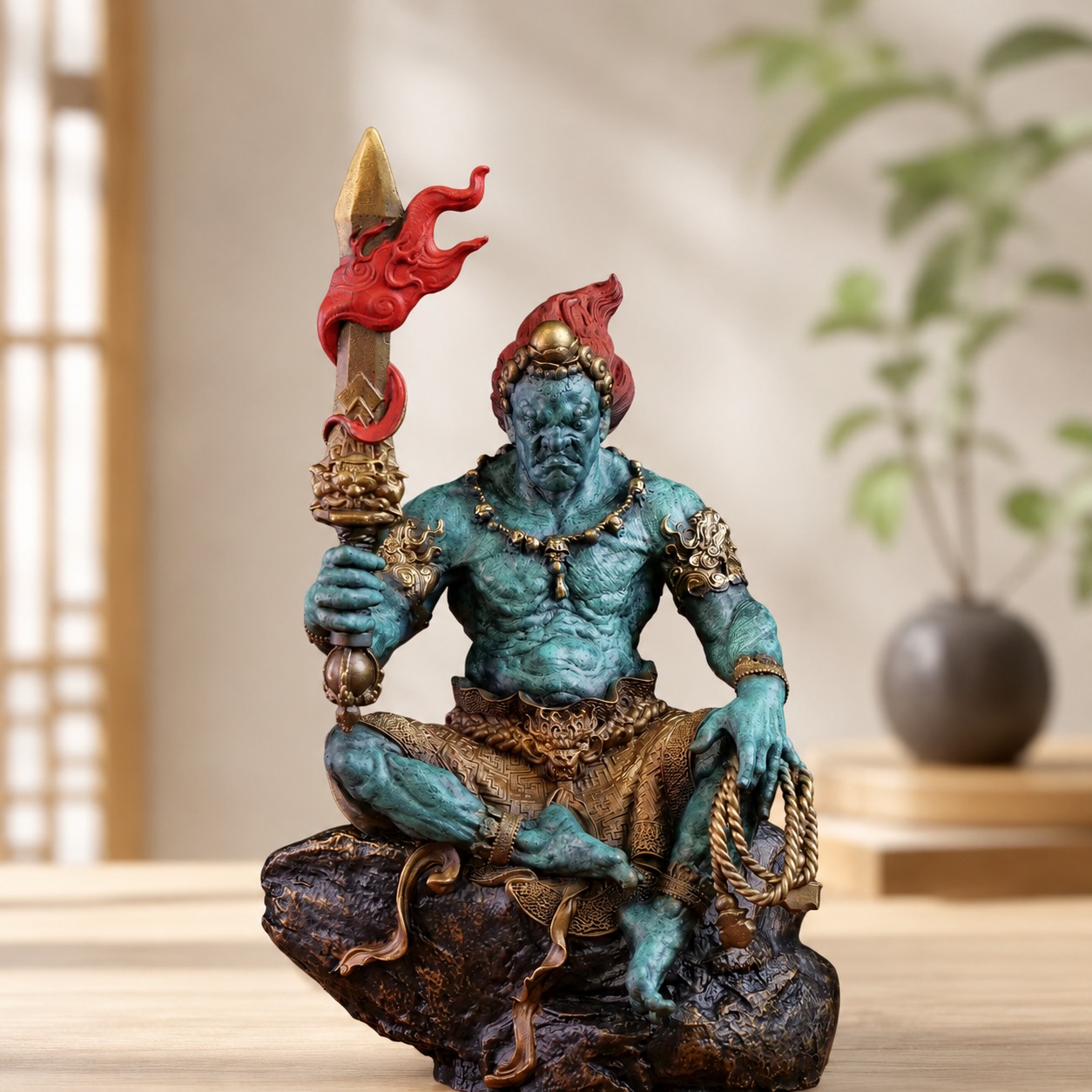
Brass
Seated Fudo Myoo Brass Statue
H 8.1 in (20.5 cm) · W 5.1 in (13 cm) · D 3.5 in (9 cm)
$377.98
View current gallery