Maitreya vs. Laughing Buddha: History, Meaning and Statue Forms
Maitreya, Budai and the Laughing Buddha are related, but the names do not describe one unchanging figure. This guide separates the future Buddha of Buddhist tradition from the Chinese cloth-bag monk and the round, smiling image that later became familiar around the world.
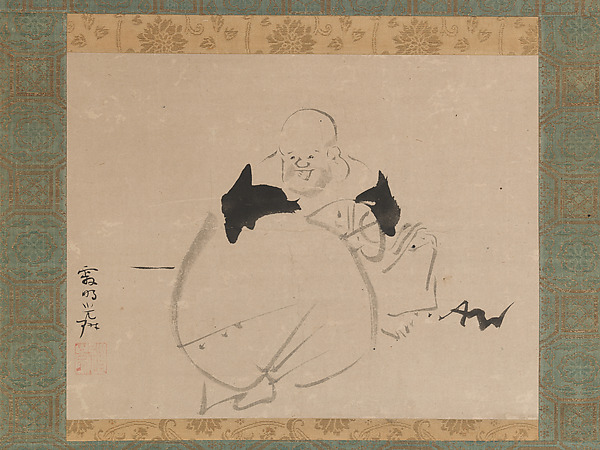
Maitreya and the Laughing Buddha are connected, but they are not simply two visual names for the same historical figure. Maitreya is the future Buddha in Buddhist traditions. Budai was a semi-historical or legendary Chinese monk associated with a cloth bag. Chinese Buddhists came to identify Budai as a manifestation of Maitreya, and the smiling, round-bellied Budai image became widely known in English as the “Laughing Buddha.”
That relationship explains why a round, laughing monk may be labeled Maitreya in an East Asian religious setting. It also explains why earlier Maitreya sculptures from South and Central Asia can look entirely different. A useful identification begins with the date, place, tradition and visible attributes of the image—not with the assumption that Maitreya has only one standard body type.
Who is Maitreya?
Maitreya is understood in Buddhism as the Buddha of a future age. In the familiar sequence, Śākyamuni is the Buddha of the present historical era, while Maitreya awaits the time of his future awakening. Buddhist texts and artistic traditions developed across many regions, so Maitreya may appear as a bodhisattva awaiting buddhahood or as a fully awakened Buddha.
This distinction matters when looking at statues. A bodhisattva form may wear jewelry, a crown and princely dress. A Buddha form may wear monastic robes. Both can represent Maitreya, and neither depends on the later Budai image.
Early Maitreya forms: a princely bodhisattva
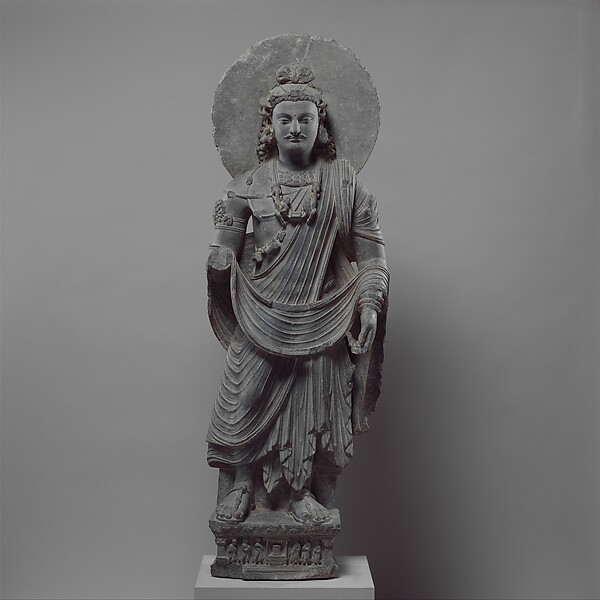
A third-century Gandharan sculpture at The Metropolitan Museum of Art shows Maitreya standing in princely ornaments and draped garments. The museum identifies him by the surviving lip of a sacred-water flask in his left hand and by a looped topknot associated with Maitreya images.
The sculpture is useful because it makes the historical distance visible. It predates the Chinese monk Budai by many centuries and does not resemble the familiar round, laughing figure. The flask, hairstyle and bodhisattva dress belong to a different stage and region of Maitreya iconography.
Maitreya in early Chinese Buddhist art
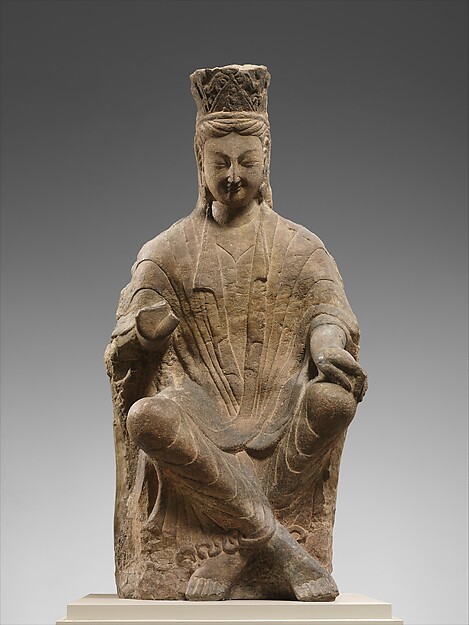
Maitreya also appeared in Chinese art long before the large-bellied Budai form became dominant in popular recognition. A Northern Wei sandstone figure at The Met, dated to about 470–80, is shown as a crowned bodhisattva seated with crossed ankles. The museum compares the posture and crown with early Maitreya images at Yungang and Dunhuang.
Not every early identification is equally certain, and museum catalogues can preserve scholarly debate. That is another reason to avoid a single visual checklist. The crossed-ankle pose can be strongly associated with early Chinese Maitreya imagery, but an individual object still needs its own archaeological and art-historical context.
Who was Budai, the cloth-bag monk?
Budai—literally “cloth bag”—is the name attached to a wandering Chinese monk remembered in accounts from around the tenth century. Museum records describe him as an itinerant figure associated with the Mount Siming area of southern China, carrying his possessions in a patched bag. His biography was elaborated in later stories, painting and religious practice.
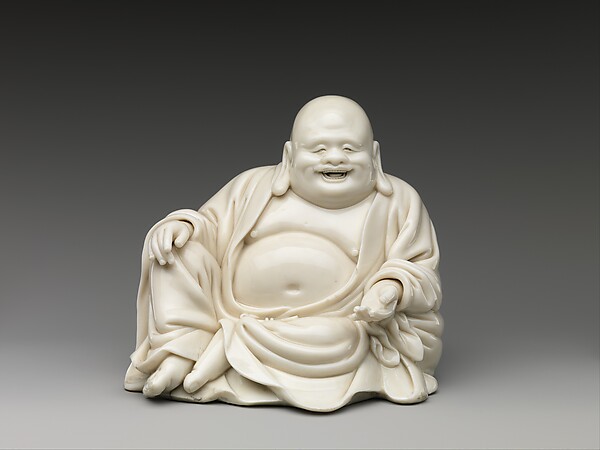
Budai is commonly shown with a shaven head, loose robes, an exposed round belly and a sack. Yet the earliest or less standardized images do not always show him laughing. A Princeton University Art Museum record, for example, describes an early-looking Budai with a downcast grimace. “Laughing Buddha” is therefore a useful popular label for a later familiar type, not a rule for every historical Budai image.
How Budai became identified with Maitreya
Chinese Buddhist tradition came to understand Budai as a manifestation or incarnation of Maitreya. The association appears in medieval accounts and was strengthened by stories about Budai’s final words or verse. Over time, his approachable human form became one of the most recognizable ways to represent Maitreya in East Asia.
The result is a layered identity rather than a simple replacement. “Maitreya” can refer to the future Buddha across Buddhist traditions; “Budai” points to the Chinese monk and the image tradition built around him; “Laughing Buddha” usually refers to the smiling Budai-derived form. In a Chinese temple or devotional setting, calling that form Maitreya can be entirely appropriate. In an art-historical comparison, however, it is still useful to name which form is being discussed.
Why Maitreya statues can look so different
Maitreya imagery spans centuries and regions. A statue may show a jeweled bodhisattva, a monastically robed Buddha, a crossed-ankle figure or the round-bellied Budai form. These are not merely decorative variations on one modern model; they reflect different texts, periods, devotional settings and artistic conventions.
Jewelry, a crown or elaborate hair, draped garments and sometimes a water flask can identify Maitreya before buddhahood.
Seen in important early Chinese examples, often with a crown and bodhisattva dress.
Maitreya may also appear in robes associated with a fully awakened Buddha rather than princely ornament.
A shaven monk with loose robes, a round belly and often a cloth bag; expression and additional attributes vary.
How to read the visible attributes
Attributes are clues, not automatic proof. A water flask and looped topknot support the identification of particular Gandharan Maitreya figures. Crossed ankles and a crowned bodhisattva form are important in some early Chinese examples. A cloth sack is the defining name-attribute of Budai, while a round belly, shaven head and open robe became familiar in later painting and sculpture.
Rosary beads, a staff, children, coins, ingots, gourds or other accessories can appear in later Budai and commercial statue designs. Their presence should be described accurately, but a product image alone cannot establish the age of a motif, a universal symbolic meaning, ritual status, material, maker or promised effect.
Maitreya and Budai can embody hope, generosity or joy within particular religious and cultural readings. A decorative statue does not guarantee happiness, wealth, luck, protection, spiritual progress or any other result.
Hotei: Budai in Japan
Hotei is the Japanese reading of Budai’s name. He became a popular subject in Japanese Zen painting and later joined the group known as the Seven Gods of Good Fortune. Paintings by artists such as Ogata Kōrin often emphasize his broad body, bag and playful character.
This Japanese history adds another layer. A Hotei painting can participate in Zen visual culture, folklore and the Seven Gods tradition at the same time. Those associations should not be projected backward onto every Indian or Chinese Maitreya sculpture.
What “Laughing Buddha” means today
“Laughing Buddha” is now the most familiar English retail and popular-culture name for the smiling Budai type. It is not normally a portrait of the historical Buddha Śākyamuni. Nor is it the only valid image of Maitreya.
Modern listings often add claims about luck, prosperity, money or room-specific placement. Such claims should be treated as contemporary commercial language unless a reliable source connects them to a defined practice. Cultural meaning can be discussed without turning it into a promised outcome.
Display and placement without a universal “wealth corner”
There is no single direction, room or shelf that applies to every Maitreya or Budai image. Temple placement, household devotion, Zen display and decorative collecting have different contexts. If an image is used devotionally, guidance should come from the relevant community rather than a generic online formula.
For decorative display, use a stable surface, keep the object away from standing moisture and strong heat, limit prolonged direct sunlight and allow enough clearance around projecting details. Choose the location for respectful handling and object care—not because a directional promise is guaranteed.
What to check before buying a Maitreya or Laughing Buddha statue
Begin with the actual object record. A culturally informed title is useful, but the gallery and verified specifications should lead the purchase decision.
Compare the title with visible clues: princely dress, monastic robes, crossed ankles, a flask or the Budai cloth bag.
Review the front, side or three-quarter angle, details, back and base where available.
Use listed measurements instead of estimating scale from a cropped or generated room scene.
Use confirmed product facts. Do not infer wood species, age or production method from color and surface appearance alone.
Before checkout, review the current Shipping Policy and Returns & Refunds information. The product page remains the source for the current gallery, dimensions, material wording, price, availability and policies.
Frequently asked questions
Are Maitreya and the Laughing Buddha the same?
They are related but not interchangeable in every context. The Laughing Buddha is usually the Budai-derived East Asian form identified with Maitreya. Maitreya also has much older bodhisattva and Buddha forms that look very different.
Is the Laughing Buddha the historical Buddha?
No. The historical Buddha is Śākyamuni. The round, smiling figure commonly called the Laughing Buddha is Budai, a Chinese monk later identified as a manifestation of the future Buddha Maitreya.
What does Budai mean?
Budai means “cloth bag.” The name refers to the sack associated with the wandering monk and frequently shown in his images. Hotei is the Japanese reading of the same name.
Why do some Maitreya statues have a water flask?
The flask is an identifying attribute in several early Maitreya traditions. The Met’s third-century Gandharan example is identified by the surviving flask and looped topknot.
Does a Laughing Buddha statue bring wealth or luck?
No object can guarantee wealth, luck or another outcome. People may attach personal, devotional or cultural meanings to an image, but those meanings should not be presented as measurable promises.
Sources and further reading
- The Metropolitan Museum of Art: Standing Bodhisattva Maitreya (Buddha of the Future), Gandhara, ca. 3rd century
- The Metropolitan Museum of Art: Bodhisattva (Maitreya) with crossed ankles, Northern Wei, ca. 470–80
- The Metropolitan Museum of Art: Ogata Kōrin, Hotei, after 1704
- The Metropolitan Museum of Art: Buddhist monk Budai, China, 17th–18th century
- British Museum: Budai biographical authority record
- e-Museum, National Institutes for Cultural Heritage: Portrait of Budai
- Princeton University Art Museum: Budai with Staff and Bag
- Megan Bryson, “Who is the ‘Laughing Buddha’?” University of Tennessee Department of Religious Studies
- Yuan Zhang, “Hongzan’s Maitreya Belief in the Context of Late Imperial Chinese Monastic Revival and Chan Decline,” Religions 13 (2022)
Image disclosure: This guide uses four Public Domain museum images and one approved Carvzen product image. It contains no AI-generated editorial illustrations.
Current object
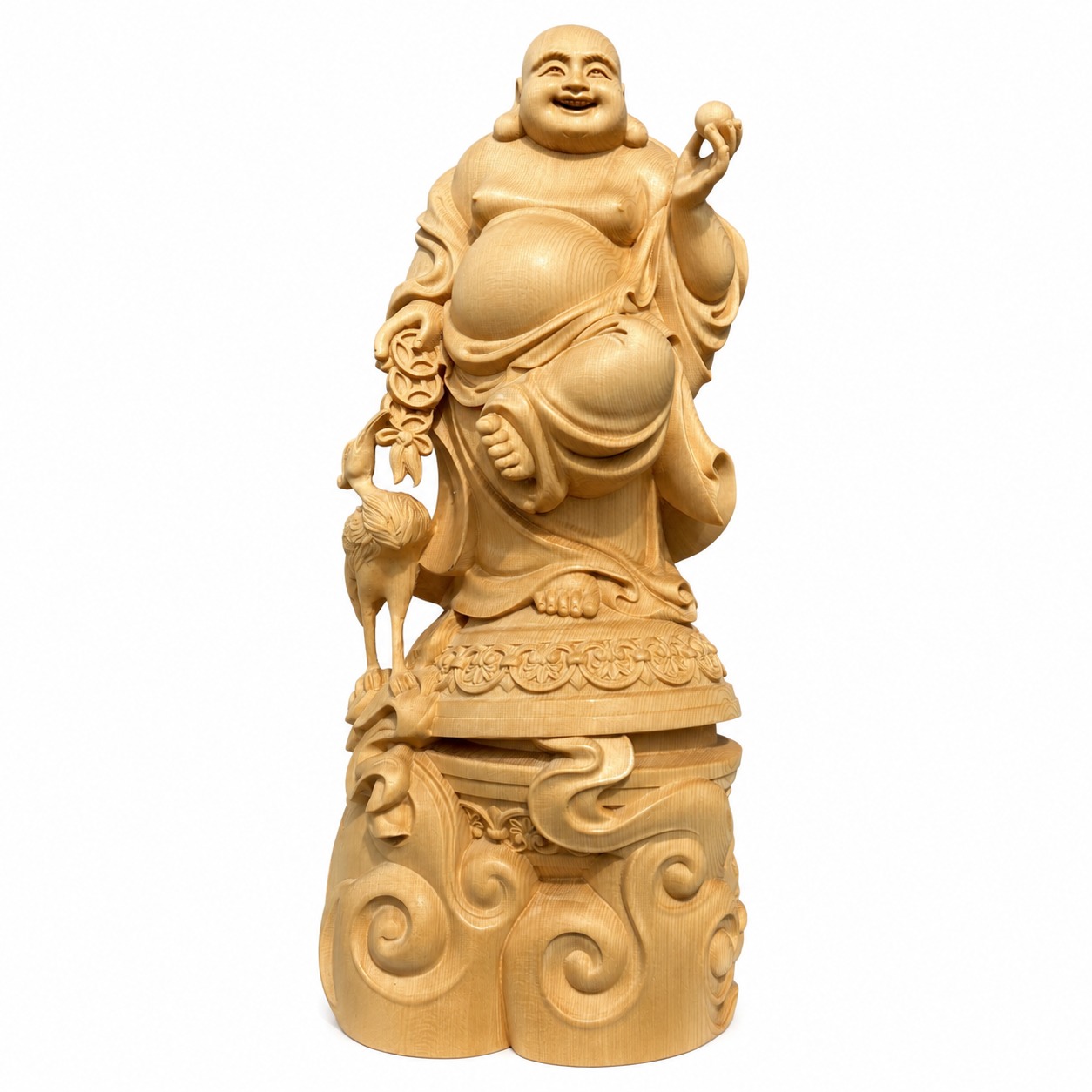
Maitreya Laughing Buddha Wood Statue
A current Hinoki wood object in the Budai-derived Laughing Buddha form, with a supplier-listed approximate height of 11.8 in (30 cm) and an approved eight-image gallery.
Compare the real gallery, listed measurements, visible finish and current policies. Cultural meaning is not a promised result.
View current gallery